Building a small everyday wardrobe
Start with your week and laundry routine, then build combinations from what you already own.
A small wardrobe is useful when its clothes cover your actual days. It is not automatically useful because it contains a fashionable number of pieces or photographs neatly on a rail. Someone who works from home, walks everywhere and attends few formal events needs a different selection from someone with a dress code and frequent travel.
Map the week before counting garments
Write down the situations you dress for in an ordinary fortnight: work, commuting, errands, social plans, exercise and any recurring formal commitments. Note which require genuinely different clothes. A casual office and a weekend lunch may overlap; gym clothing and a wedding outfit probably do not. This is a planning exercise, not a reason to make every garment serve every purpose.
Add your laundry rhythm. If you wash once a week and cannot dry clothing quickly, an extremely small supply of tops may create more work rather than less. Include the climate too. A wardrobe that works indoors in mild weather may fail as soon as rain or cold arrives.
Start with the pieces that already work
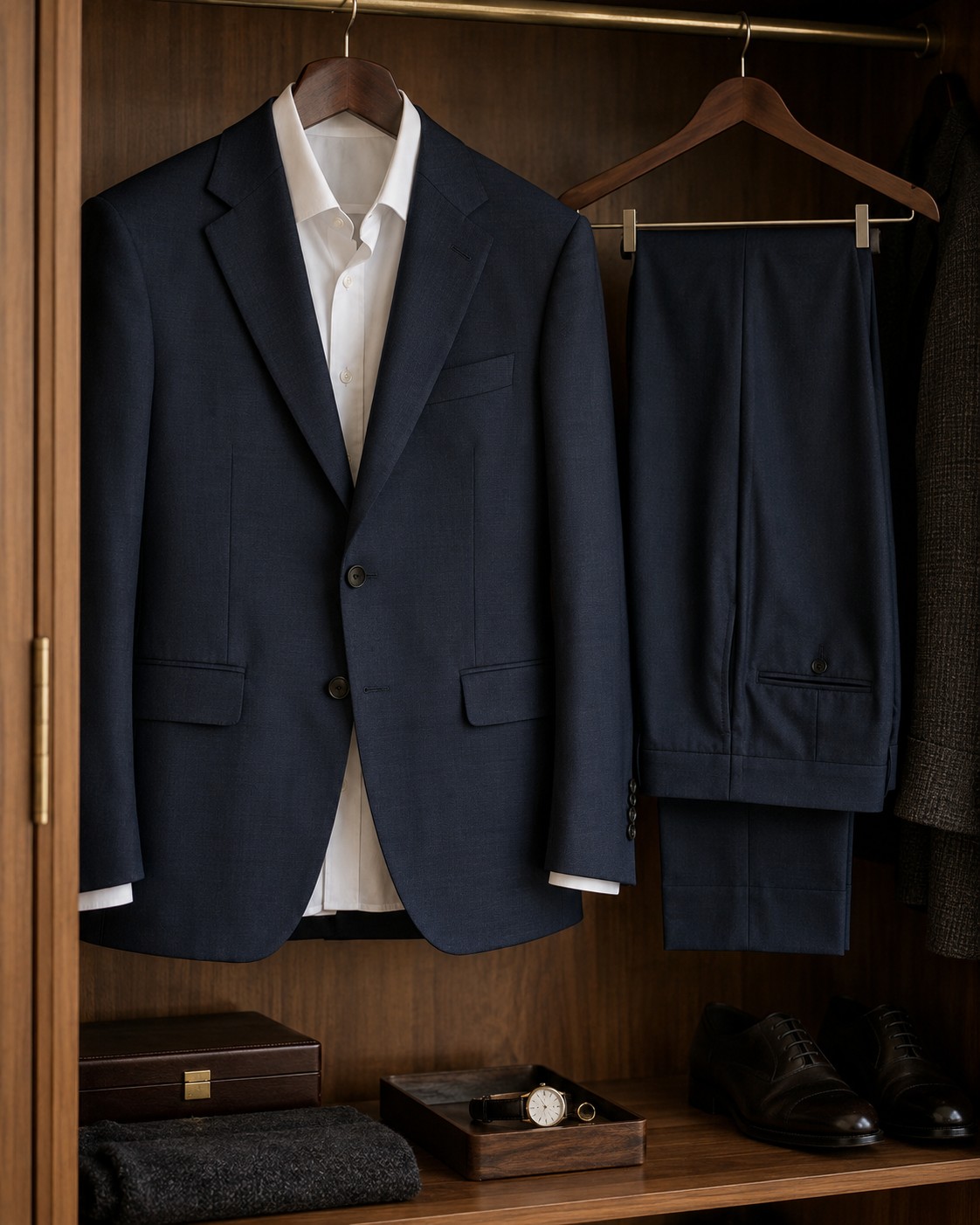
Pull out clothes that fit comfortably and that you have worn recently for the situations on your list. Keep occasion-specific items separately rather than treating them as failures because they are rarely used. A suit needed twice a year can still be useful; it simply does not need to define your everyday wardrobe.
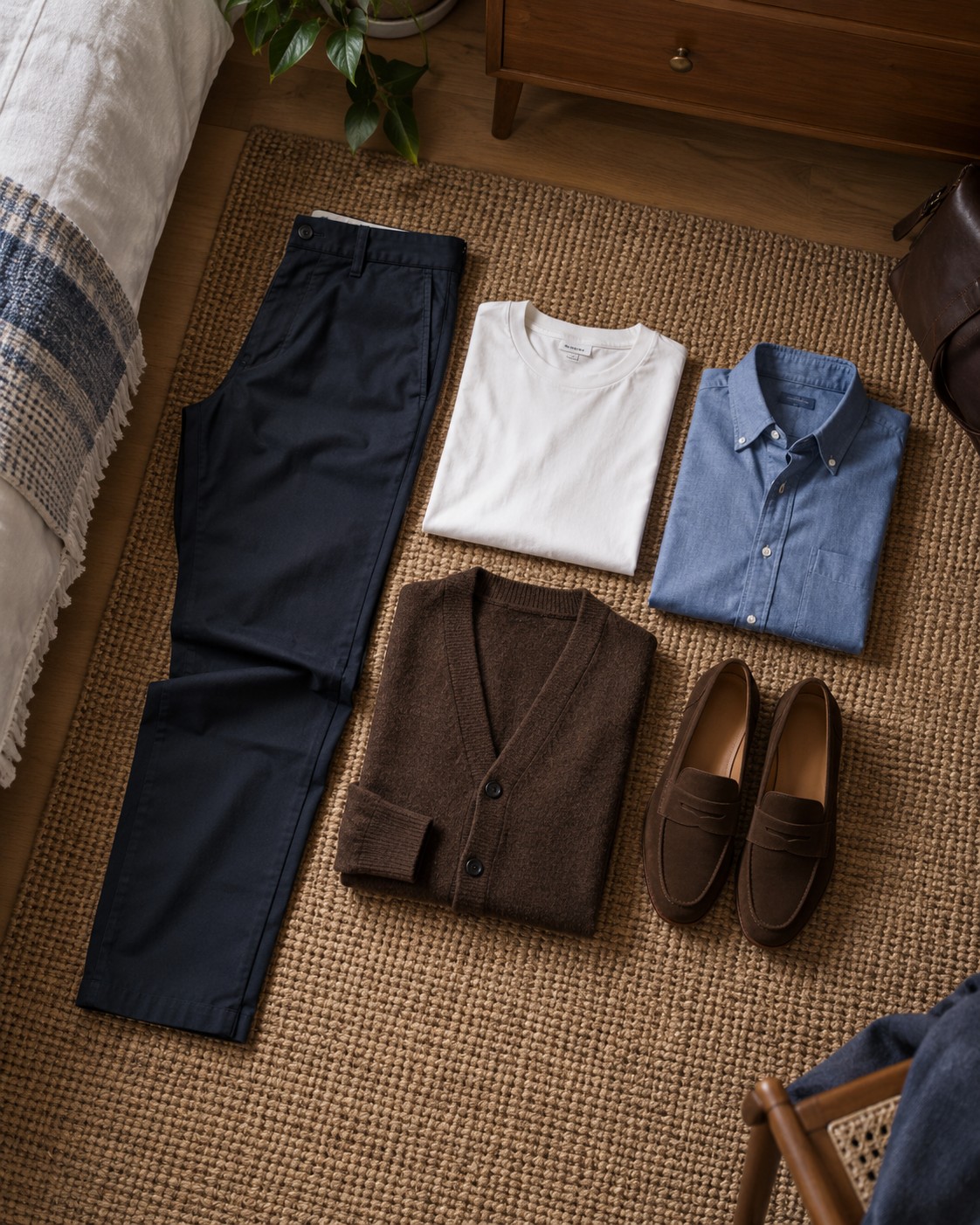
Build complete outfits from the remaining pieces. For example, dark jeans, olive chinos, a few tees, two casual shirts and knitwear might generate several combinations, but the exact number is less important than whether you enjoy wearing them. Include shoes and outerwear in each trial. A collection of compatible tops is not a complete wardrobe if none works with your coat or daily footwear.
Choose a palette from evidence
Notice the colours already recurring. If you own navy, grey and olive, you have a base without needing to replace it with black and beige because a capsule checklist says so. Add lighter or brighter colours where you actually want them. The aim is compatibility, not a ban on personality or pattern.
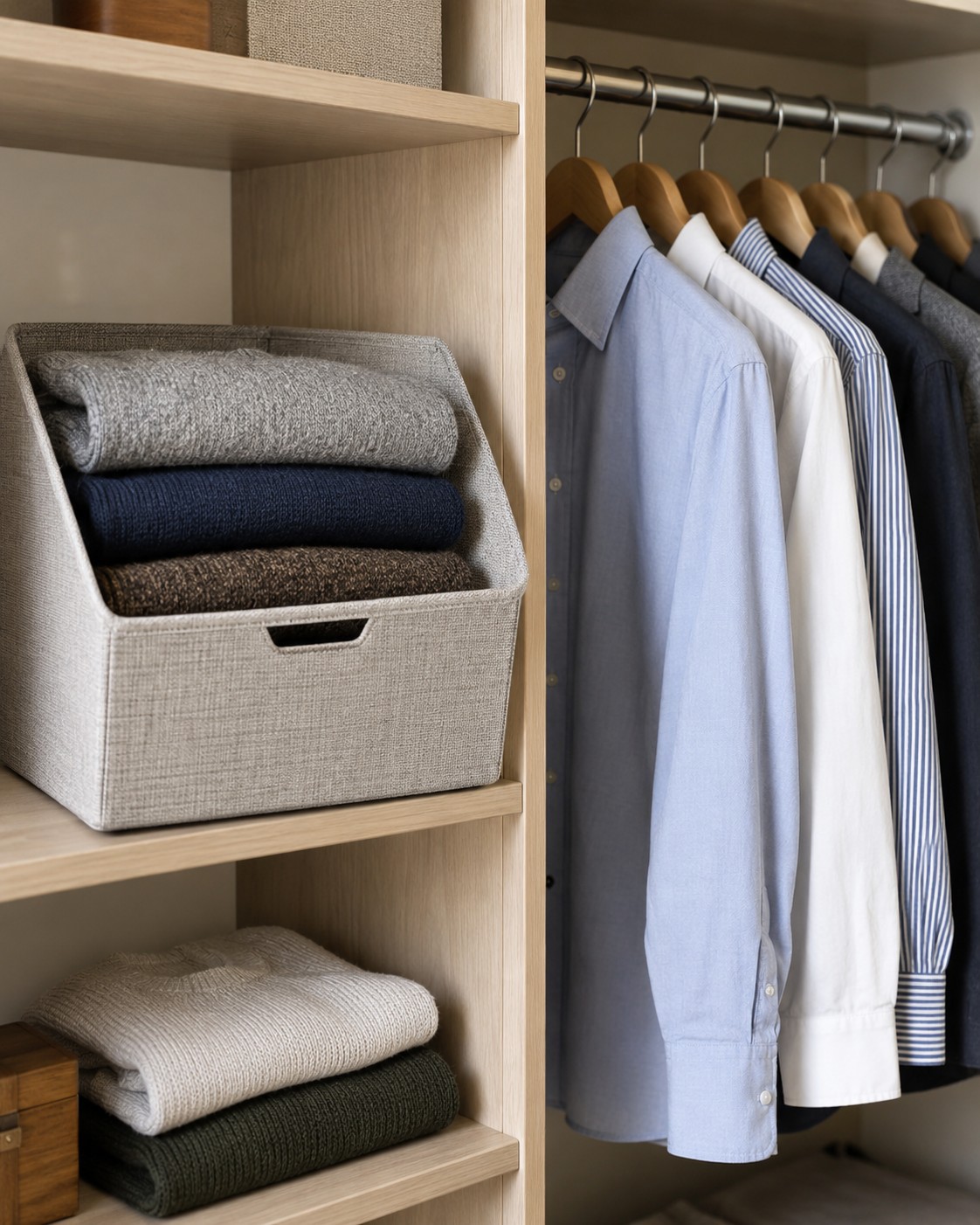
Texture can create variety within a limited palette. An Oxford shirt, a ribbed jumper and a plain tee may share a colour family while producing different outfits. You do not need several near-identical shirts solely to make the wardrobe appear larger. Equally, a duplicate can be sensible if it solves a real laundry or work requirement.
Buy for a named gap
After trying the combinations, list the precise problems. Perhaps you have no trousers comfortable enough for travel, no shoes suitable for wet commutes, or no light layer between a tee and a winter coat. Describe the function before choosing the product. This makes it easier to reject a tempting item that adds no useful combination.
Try any proposed purchase with several existing pieces while you can still return it under the retailer's actual policy. Check fit, care demands and storage as well as appearance. A delicate garment that you will not maintain, or a coat too bulky for your commute, may be a poor fit for the wardrobe even if its colour coordinates perfectly.
Avoid clearing everything out immediately. Put uncertain items aside and revisit them after you have lived with the smaller selection. You may discover that a supposedly redundant shirt is the only one comfortable under a particular jumper, or that your occasion clothes still earn their space. Donate, sell, repair or recycle responsibly when you have made a considered decision.
Run a real-week trial
Before removing the rest of your clothes, dress from the proposed small selection for a normal week. Notice the moments when it fails. Perhaps both suitable work shirts are waiting to be washed, the only rain layer will not fit over a jumper, or the shoes you selected do not suit the longest walking day. Those are functional gaps, not proof that a small wardrobe cannot work.
Keep a short note of the problem and the easiest solution. An alteration, repair or different combination may resolve it without a purchase. If you do buy, choose the missing function rather than another version of the item you already enjoy shopping for. Someone with many jackets and too few usable trousers will not improve the wardrobe by finding a more versatile jacket.
Keep fit changes separate from taste changes. Clothing that no longer fits comfortably should not be retained as a demand on your body. You can set it aside, discuss realistic alterations or replace it when appropriate. The wardrobe should adapt to the person wearing it, not become a project of making that person fit the clothes.
The wardrobe is allowed to change with your circumstances. A new job, different climate or changing body may require adjustments. The success measure is whether you can get dressed for your life with fewer unresolved decisions, not whether you have maintained an arbitrary total of garments.