Repeating outfits without feeling stuck
Repetition can make getting dressed easier while leaving room for changes that matter.
Wearing an outfit again is not a styling failure. Clothes are intended to be used repeatedly, and a combination that suits your life deserves more than one outing. The frustration usually comes from feeling that you have no alternatives, not from repetition itself. Separate those two problems before buying something new.
Identify what makes the outfit useful
Take a familiar combination and name its working parts. Perhaps the trousers are comfortable at a desk, the shoes suit your commute and the jacket handles the weather. Those are reasons to keep it. If you like only the photograph but spend the day adjusting the collar or waistband, it may not be a useful repeat outfit after all.
Write down two or three combinations you genuinely wear. A phone photograph can help you remember them, but there is no need to create a public outfit diary. Include the socks, shoes and outerwear so you are recording a complete solution rather than a top and trousers that still need finishing each morning.
Change one element for a reason
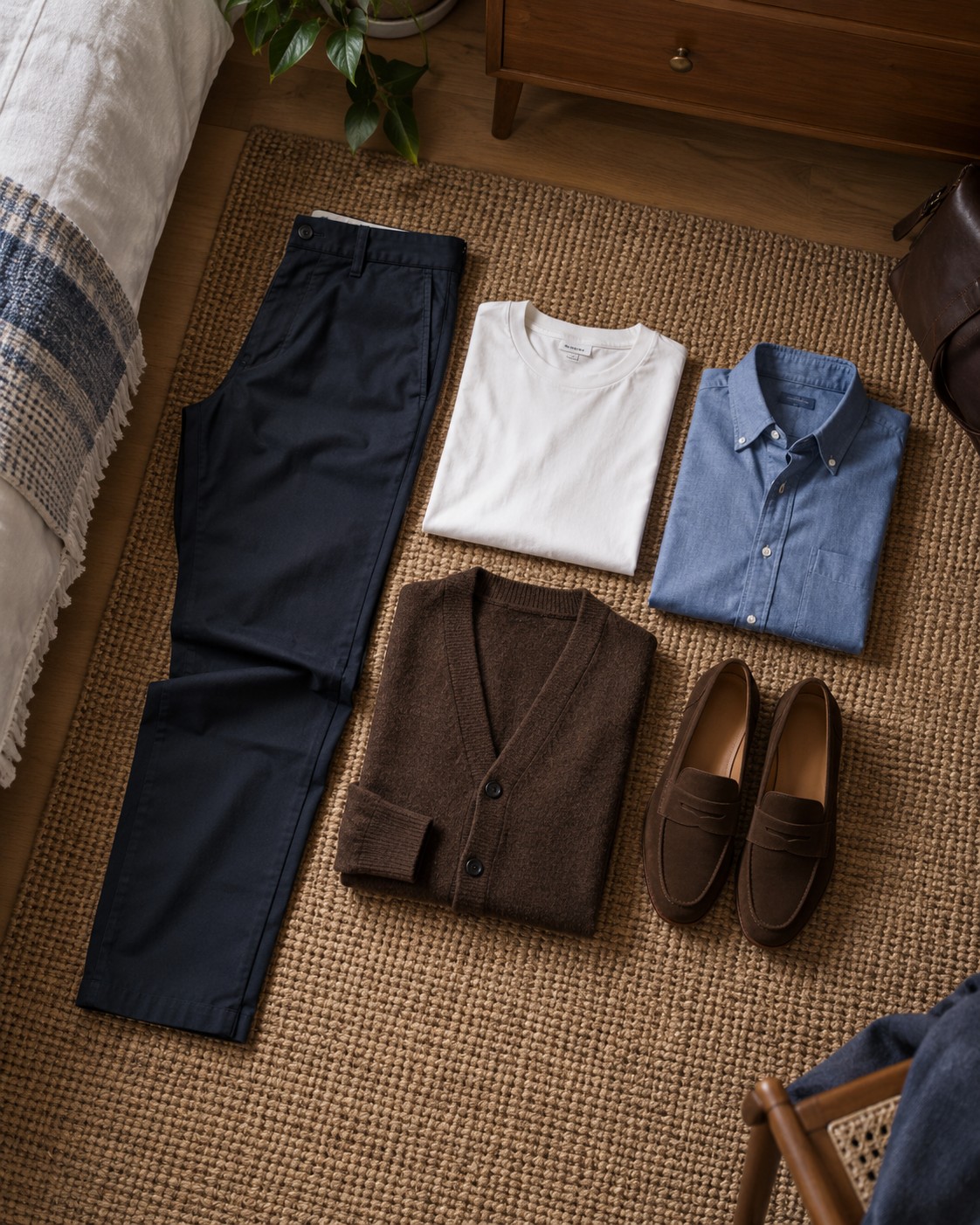
Start with a navy jumper, olive chinos and brown shoes. Changing the jumper to a striped tee makes the outfit lighter and more casual. Keeping the jumper but using dark jeans changes the texture. Adding a different jacket may be enough when the weather shifts. Each version remains related, which means you can judge whether the change improves anything.
Accessories should not become a compulsory disguise. You do not need a different watch or scarf every time you wear the same clothes. If you enjoy those changes, use them; if not, let the outfit repeat visibly. Most people are paying far less attention to your rotation than you are.
Account for care and availability
A favourite outfit can become inconvenient if every piece needs washing at the same time or one item takes several days to dry. Build an alternative around another clean top or trouser rather than buying a full duplicate wardrobe immediately. Follow care labels and allow shoes or garments to dry properly after use when necessary.
If one item repeatedly prevents the outfit from being available, that is a more concrete buying signal than general boredom. You might need another everyday shirt, a suitable wet-weather shoe or a repair to a favourite pair of trousers. Name that gap before shopping so the purchase addresses it.
Keep some repetition across workdays and weekends if your life allows it, but do not force one outfit into incompatible settings. A dress code, physical activity or changing weather may require a genuinely different solution. A small number of reliable combinations should make life easier, not become a rule that stops you responding to the day.
After a few weeks, review which variations you actually wore. Keep the ones that were comfortable and easy to assemble. Drop the versions that required constant persuasion. A personal style can emerge from this repetition: not a uniform imposed from outside, but a set of choices you have found worth making again.