What an Oxford shirt adds to a wardrobe
A textured shirt can bridge the gap between a T-shirt and sharper tailoring without pretending to be either.

An Oxford shirt is useful when a smooth dress shirt feels too formal and a T-shirt feels unfinished. Its visible weave gives it a little substance, which sits comfortably beside denim, chinos and knitwear. That does not mean every Oxford shirt belongs in every wardrobe: the collar, length and overall cut decide how you can actually use it.
The fabric and the collar are separate choices
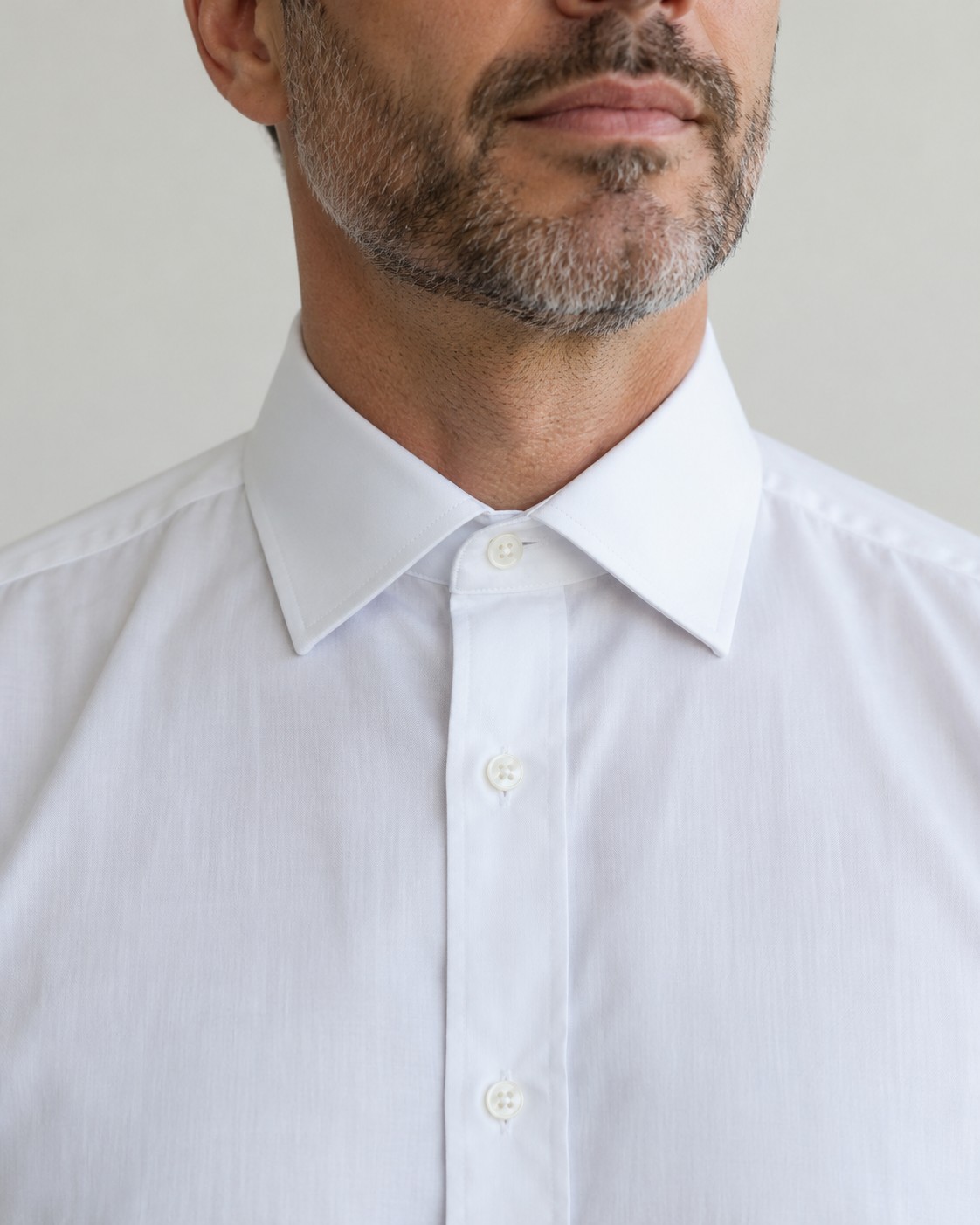
Oxford describes a fabric construction, not a requirement for collar buttons. The familiar Oxford cloth button-down combines the textured cloth with a collar whose points fasten to the shirt. Other collar arrangements exist. If you want something for open-neck wear, fasten the collar-point buttons and see whether the collar sits comfortably without a tie. A stiff, very upright collar may be less appealing for the relaxed job you have in mind.
Look at the shirt from several steps away. White gives more contrast against dark trousers, while light blue is a gentler starting point. A stripe can also be useful, but check its scale against any patterned jackets you already wear. There is no need to buy one of each before you know which gets worn.
Give it a clear role
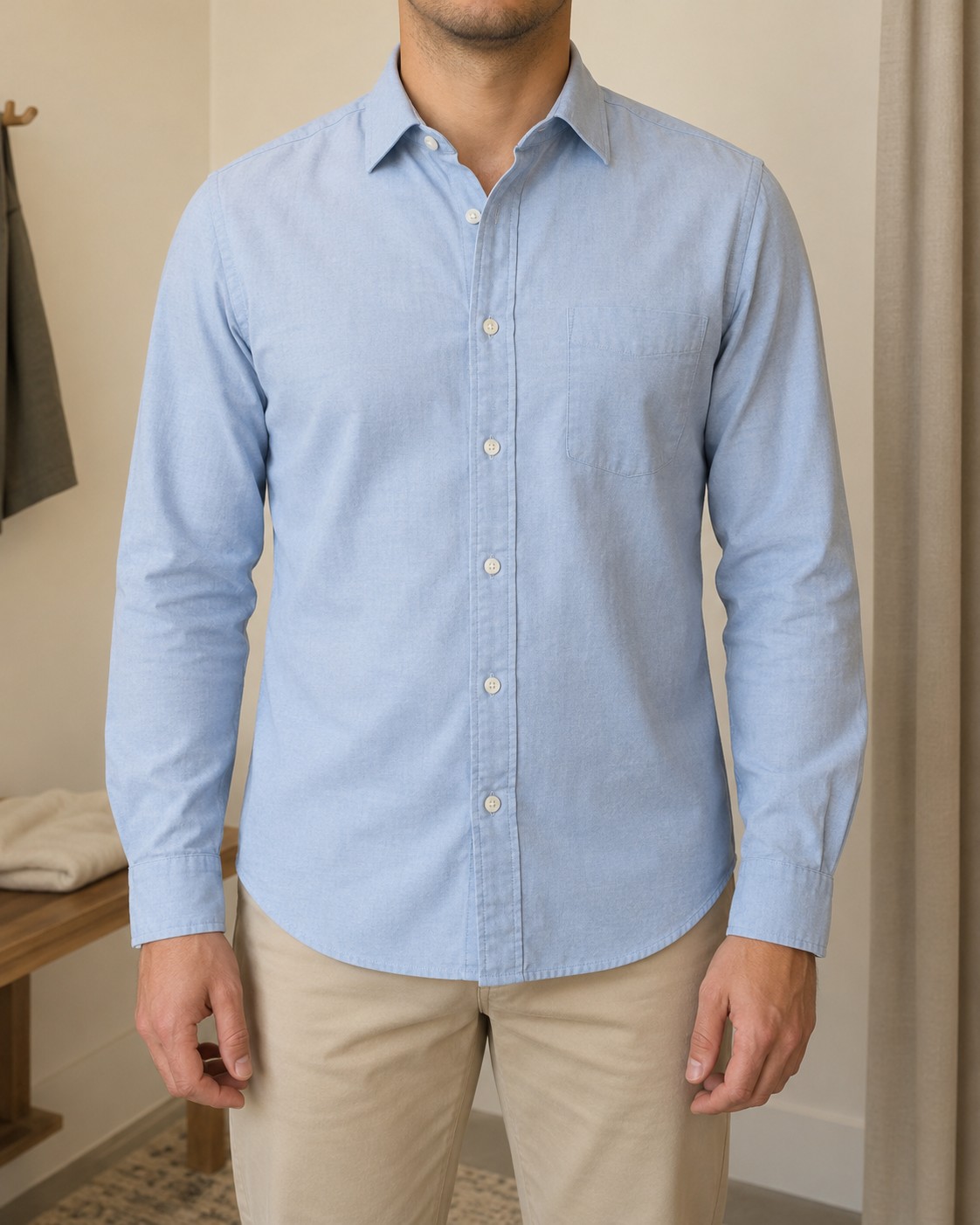
For a casual office, try a light-blue Oxford tucked into olive or navy chinos with brown shoes. The shirt adds a collar without demanding a full suit. If your workplace expects formal business clothing, follow that expectation; textured casual shirting is not an automatic substitute for a dress shirt.
At the weekend, the same shirt can be worn open over a plain T-shirt with straight jeans. It needs enough room through the upper arms for that extra layer. A shirt chosen to sit close under a blazer may not serve equally well as an overshirt. For untucked wear, check the front and back hem in a full-length mirror rather than judging from a cropped product photograph.
Try the ordinary movements
Reach for a shelf, sit down and fold your arms. The placket should not strain across the chest, and the collar should not pull backwards when you move. If sizing up fixes the chest but leaves the neck and sleeves too large, another cut is more promising than accepting several new problems.
Finally, decide how crisp you want it. A lightly rumpled Oxford can look appropriate with jeans; a work outfit may call for pressing the collar and front. Follow the garment's care label rather than assuming all cotton shirts tolerate the same drying routine. Buy the version that suits your normal level of upkeep, not an imagined wardrobe maintained by someone else.