How a casual shirt should fit
A fitting-room check should include sitting, reaching and the way you plan to wear the hem—not just a straight-on look in the mirror.
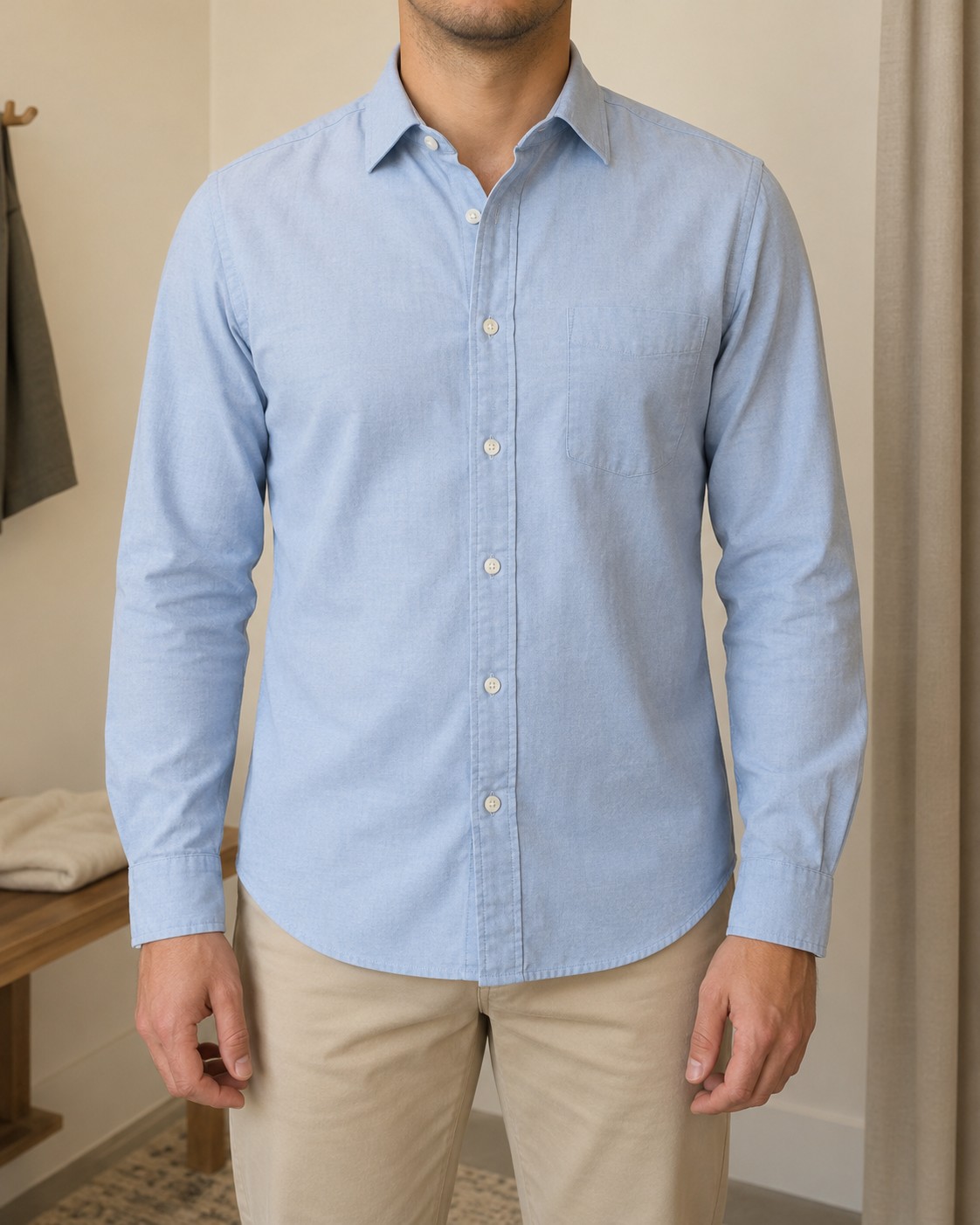
A casual shirt does not need to trace every contour of your body. It needs enough room for ordinary movement, a shape you like and a length that works with the way you wear it. Labels such as slim, regular and relaxed are starting points within a brand, not measurements that remain consistent from one shop to another.
Begin with the intended shape
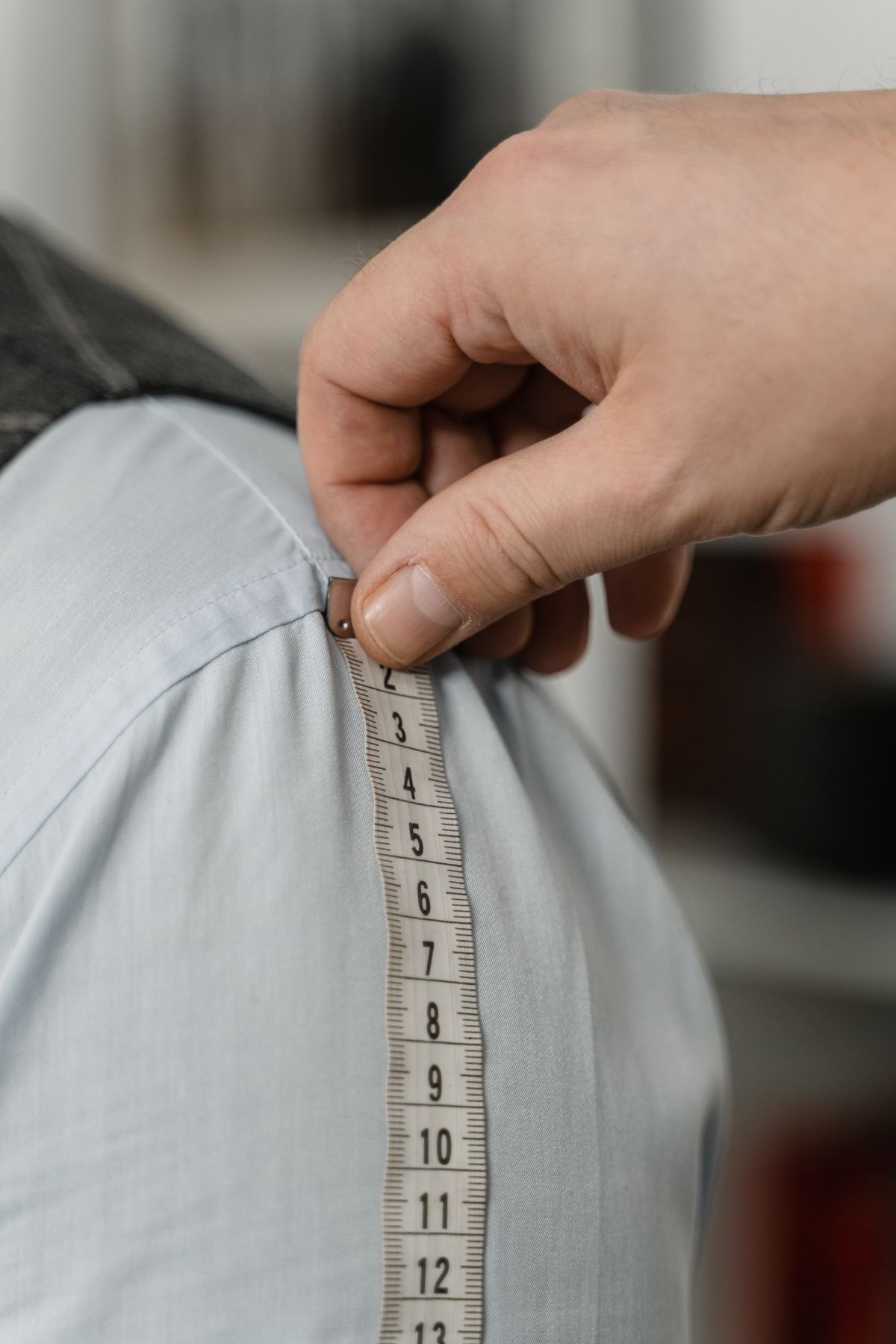
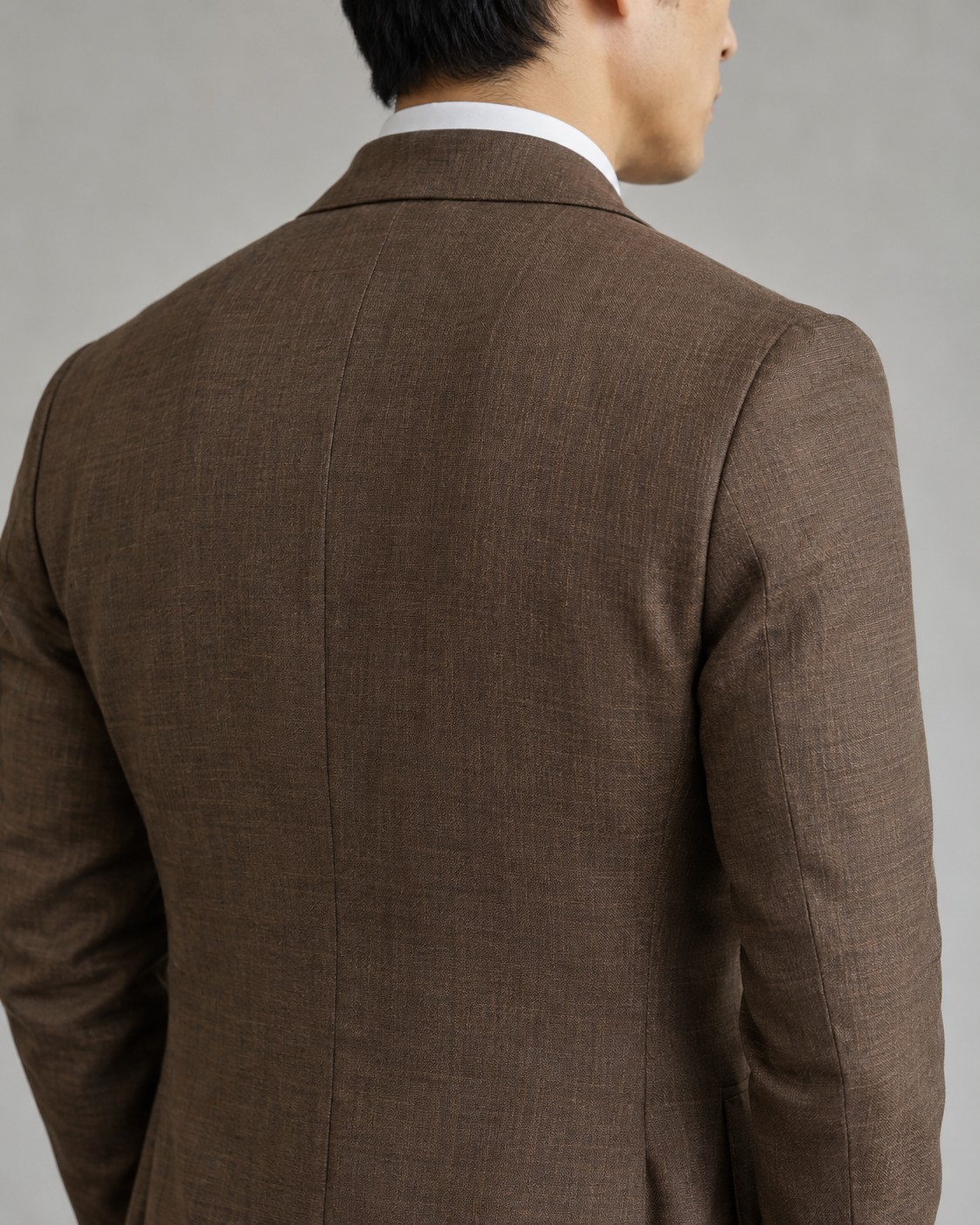
Decide whether you are trying on a conventional shirt, a deliberately dropped-shoulder style or an overshirt intended for layering. Comparing all three against one seam-position rule creates confusion. On a conventional shirt, the shoulder seam usually sits close to the shoulder's edge. A designed drop shoulder can sit lower without being an error. The question is whether the rest of the garment supports that intended shape.
Button the shirt normally and let your arms hang naturally. Look for pulling around the chest, buttons or upper back. A line of strain across the placket is more informative than whether a size label sounds flattering. Conversely, soft folds are normal in a woven garment. A shirt is not a rigid shell, and trying to remove every fold can leave too little room to move.
Use a short movement test
- Sit down as you would at a table. Check whether the front pulls open or the hem catches awkwardly.
- Reach forward with both hands. Notice restriction across the back and upper arms.
- Bend your elbows and bring a hand towards your face. The cuff should not become a tight band around your wrist.
- Return to a relaxed stance. Check whether the shirt settles back into place without constant adjustment.
Some movement of the fabric is expected. The aim is not to keep the shirt completely still while you stretch. Instead, identify pressure, gaps or repeated riding up that would bother you during the day. If one area is tight while another is very loose, a different cut may solve more than going up or down a whole size.
Do the test with the layer you actually plan to wear underneath. An overshirt fitted over bare skin may feel different over a substantial T-shirt. Equally, sizing a light summer shirt around a thick layer you will never use can create unnecessary volume.
Check the hem with your trousers
An untucked shirt should finish at a point that looks balanced with the trouser rise and your preferred silhouette. There is no single centimetre measurement that works for every body and shirt shape. Compare the front, side and back in the mirror. A very long curved tail may be designed to remain tucked, while a shorter, straighter hem is often easier to wear loose.
If you plan to tuck the shirt, check that enough fabric remains inside the waistband when you sit or reach. Then examine the volume above the belt. A small amount of ease is useful; a large balloon of spare cloth might indicate that the waist is too generous for your preference. Do not judge this while holding an unnatural, rigid posture.
Separate an alteration from a different pattern
A tailor may be able to adjust certain lengths or reduce some excess fabric, but altering every part of an unsuitable shirt is rarely a sensible first plan. Shoulder, armhole and collar problems can involve more than a straightforward side-seam adjustment. Ask about the actual construction and cost before buying something on the assumption that it can be transformed later.
For online shopping, compare the retailer's measurement instructions with a shirt you already enjoy wearing. Establish whether the chart describes your body or the finished garment; those are not interchangeable. Note the fabric and care label as well. Do not rely on an imagined amount of future shrinking or stretching to rescue a poor fit. The better choice is the shirt that works now, in the movements and outfit you intend to use.