Why trouser rise changes the whole fit
Where trousers are designed to sit affects the waistband, seat, top length and the way the outfit divides.
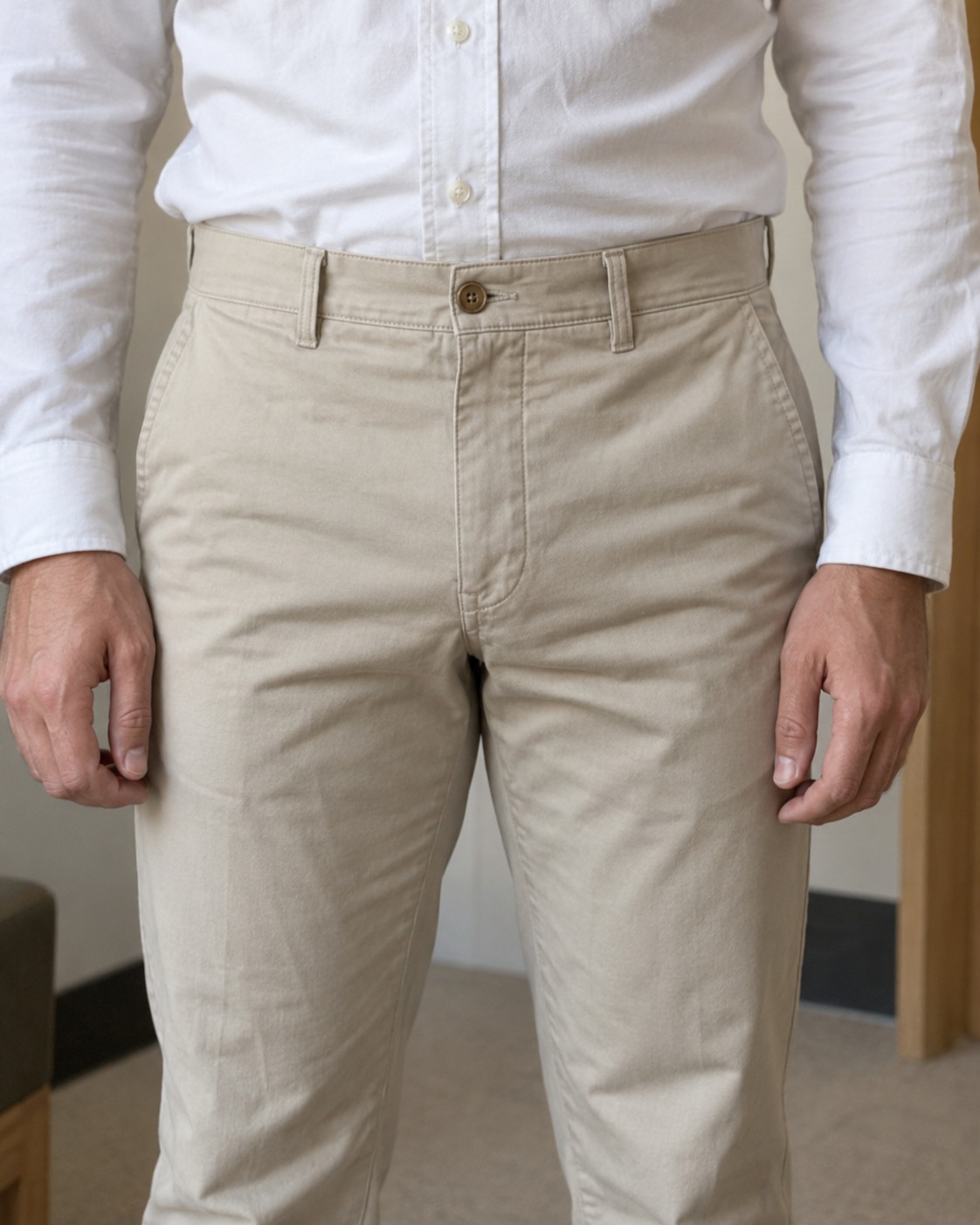
Trouser rise is the distance through the upper part of the trousers from the crotch towards the waistband. Front and back rise are not identical measurements, and their relationship influences how the trousers sit. It is one reason two pairs with the same labelled waist size can feel completely different.
Find the intended position before judging anything else
Put the trousers on and let them settle where the cut seems to allow them to sit comfortably. Do not pull a low-rise pair higher simply because you prefer a high waistband. That can remove room at the crotch without producing the proportions of a genuinely higher-rise pattern.
Likewise, pushing a higher-rise pair far down may leave excess fabric in the seat and change the effective leg length. If you dislike the natural position, another cut is usually more promising than forcing the garment to behave differently.
Check sitting as well as standing
Sit in a normal chair and lean forward slightly. Notice the waistband at the front and back. Does it press uncomfortably, dip more than you want or require you to pull the trousers up before standing? Some movement is normal, but repeated adjustment gives useful information about the fit.
The back rise needs to work with the seat shape. A comfortable front does not guarantee that the back has enough coverage or room. A belt can secure the waist, but it cannot add missing fabric where the pattern is too short.
See what happens to the top half
A higher waistband shortens the visible distance between the trouser top and your shoulders when a shirt is tucked. A lower waistband changes that division. Neither effect is inherently better; it is part of the silhouette you choose.
Try a familiar shirt tucked into each candidate pair. Look at the amount of shirt visible and whether it stays tucked when you reach. Then try an untucked top. A long tee may cover the difference in rise visually, but the comfort underneath still matters.
Jumper and jacket lengths interact with the waistband too. A short knit that works with higher-rise trousers may expose an unwanted gap above a lower pair. That does not make either garment wrong; it means they may not be the best combination.
Use measurements carefully online
If a retailer supplies rise measurements, check how they are taken. Compare them with a pair you own using the same method. Do not mix body measurements, flat garment measurements and different measuring paths as if they were directly interchangeable.
Record what you like about the reference pair: its waist position, seated comfort and relationship to your usual tops. That is more useful than deciding that one rise category must suit every person of your height or build.
When a pair fits well through the seat and thighs but sits at the wrong height for you, keep looking. Hemming the legs or tightening the waistband does not fundamentally redesign the rise. Starting with the right upper-trouser shape makes every later adjustment easier to assess.