Choosing chinos by cut and fabric
Separate the waist, rise, thigh and leg opening instead of hoping one fit label explains everything.
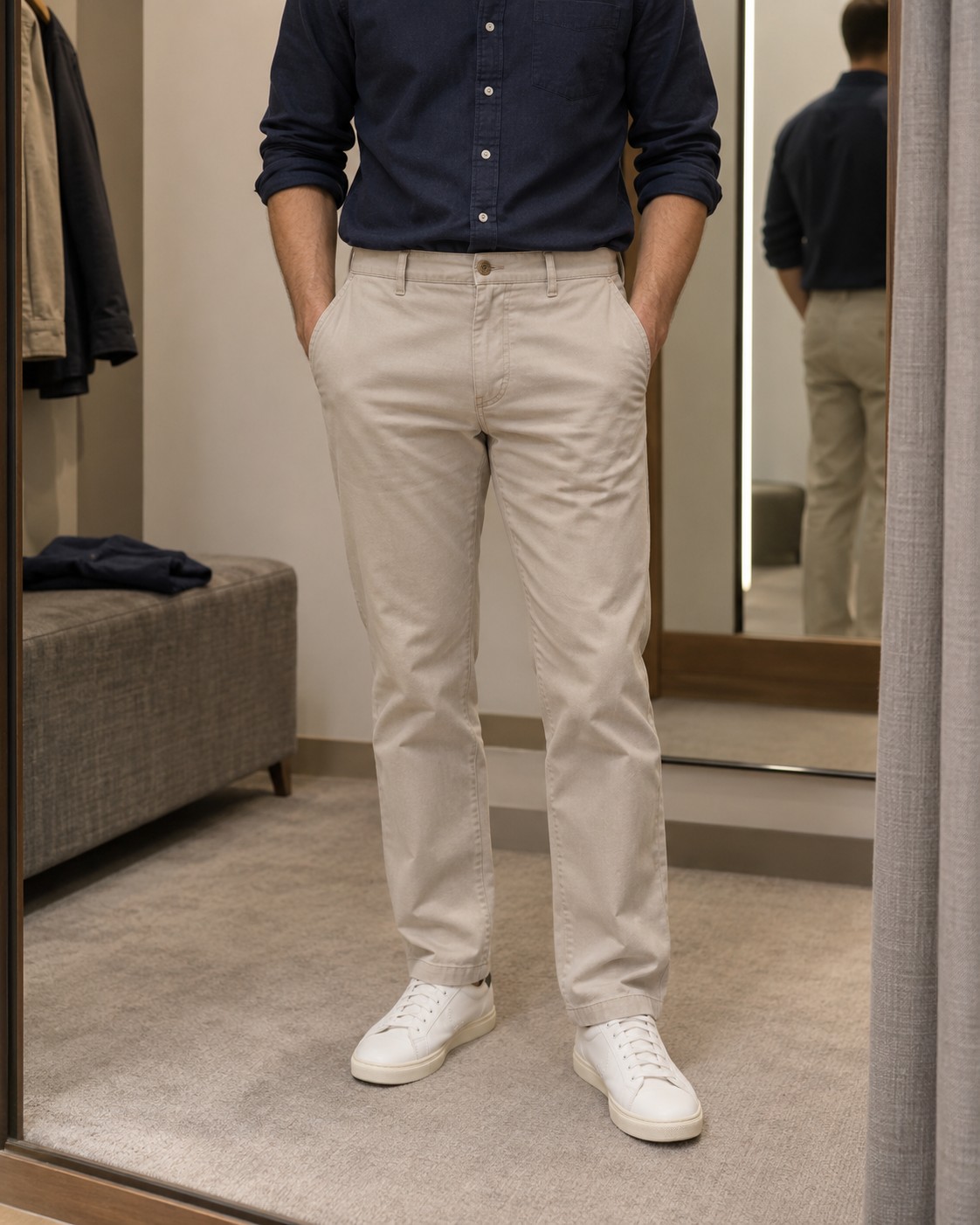
Two pairs of navy chinos can produce very different outfits. One may be a crisp, close-cut office trouser, while another is a soft, roomy weekend pair. The colour name does not tell you how the waistband sits, whether the thighs have enough space or how the hem meets your shoes. Those are the decisions that deserve attention first.
Find the intended waist position
Put the trousers where they feel designed to sit before judging the length. A lower-rise pair pulled upwards to imitate a higher rise may feel tight at the crotch. A higher-rise pair pushed down can create excess fabric in the seat. If the natural position does not suit you, try another cut rather than fighting the garment.
Fasten the waist without holding your breath, then sit for more than a moment. A belt should help secure trousers, not gather several inches of spare waistband into folds. If the waist is close but the seat and thighs are wrong, a different pattern is likely to be more effective than an alteration to the waist alone.
Distinguish room from taper
You can want comfortable thighs and still prefer a narrower opening at the ankle. Conversely, a straight leg does not necessarily mean a loose waist. Read the measurements and try the separate areas rather than relying entirely on terms such as slim, regular or athletic.
Walk, climb a step and sit. Stretch in the cloth may make a close cut feel more forgiving, but it does not automatically fix an unsuitable rise or insufficient room. Look for pulling at the pockets and persistent tension lines as well as obvious discomfort.
Choose the surface for the setting
A smoother, more structured cloth can work with a tucked shirt and leather shoes in a casual office. A washed, softer finish sits easily with tees, overshirts and trainers. These are tendencies rather than dress-code guarantees. The workplace or event still sets the expectation.
Hold the trousers beside your normal tops. Stone, olive, navy and brown each connect with different combinations. If your wardrobe already contains several dark-blue jeans, another navy lower half may add less variety than olive or a muted tan. On the other hand, if you need a discreet work pair, familiarity may be exactly the point.
Finish the fitting with the shoes you expect to wear. Hem width and length work together: a narrow opening can catch on a larger shoe, while a wide opening may need a different length to fall cleanly. Pinning a hem is useful only after the waist position and fit through the upper leg are settled.
Before paying, check the care instructions and whether the fabric looks acceptable after ordinary sitting creases. Chinos are meant to support daily dressing. Choose a pair whose upkeep and movement match your life, not one that only looks convincing for ten seconds in front of a mirror.