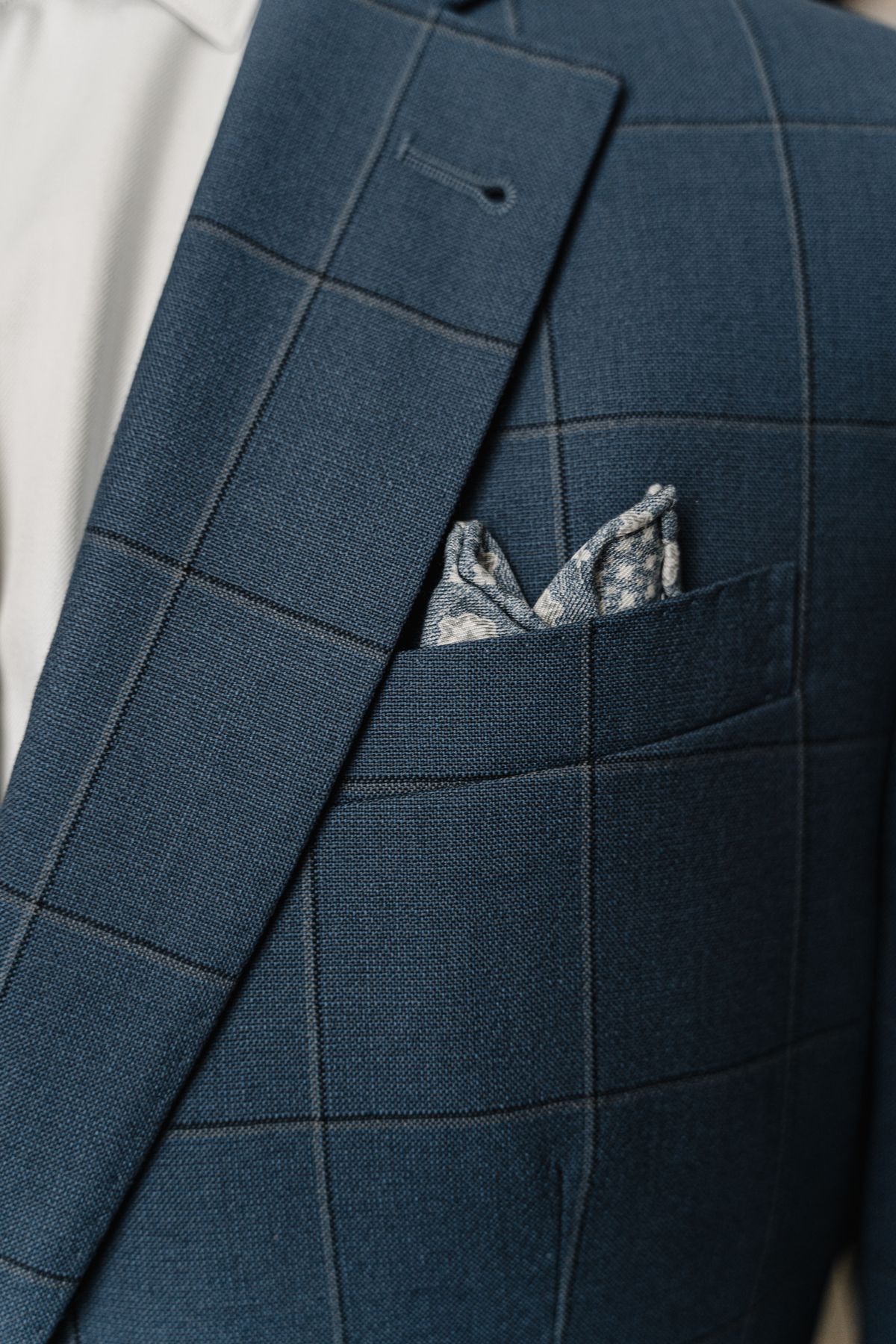
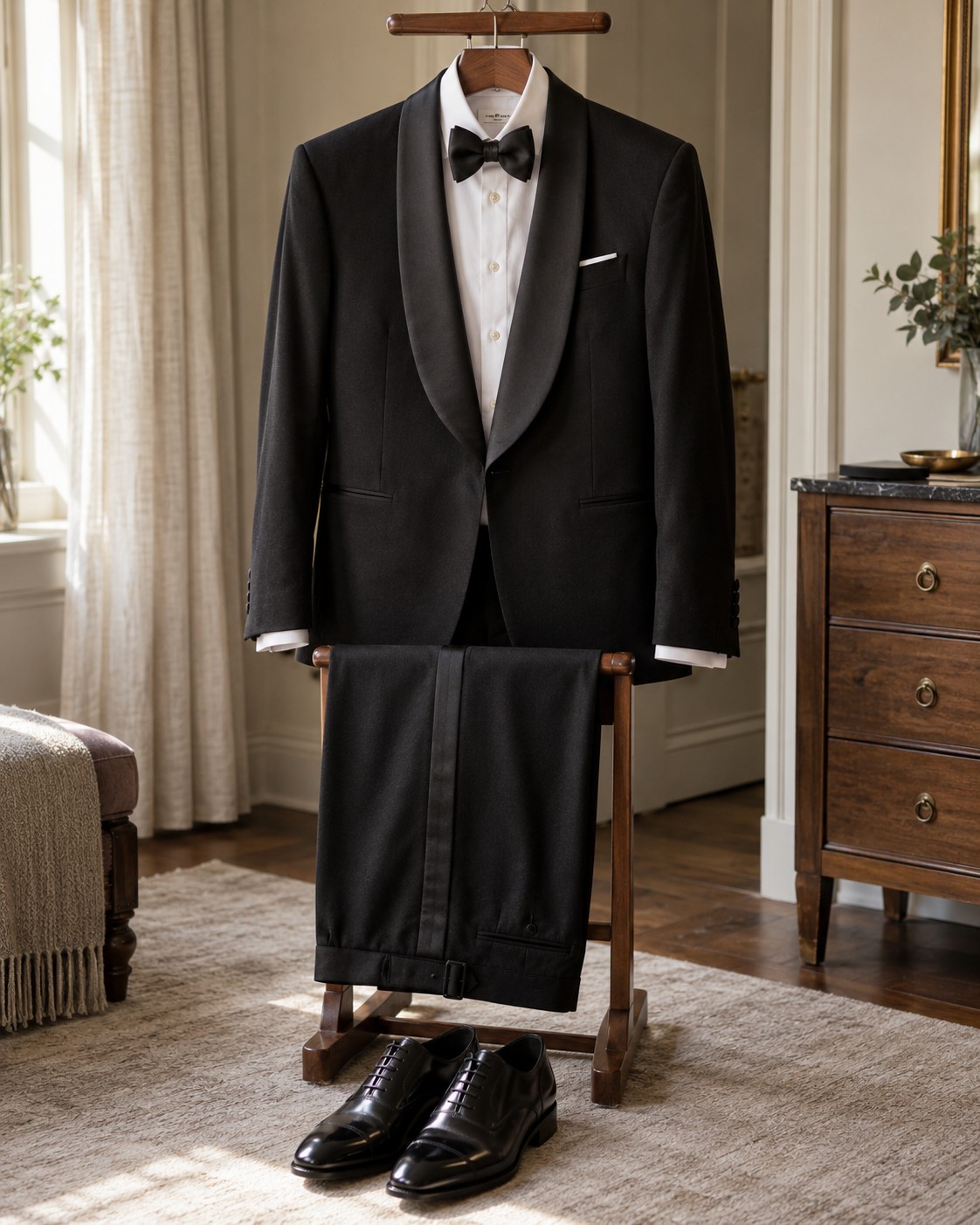
Choosing a tie around the shirt and jacket
Consider the collar opening, lapels, cloth and finished knot together rather than choosing a tie in isolation.
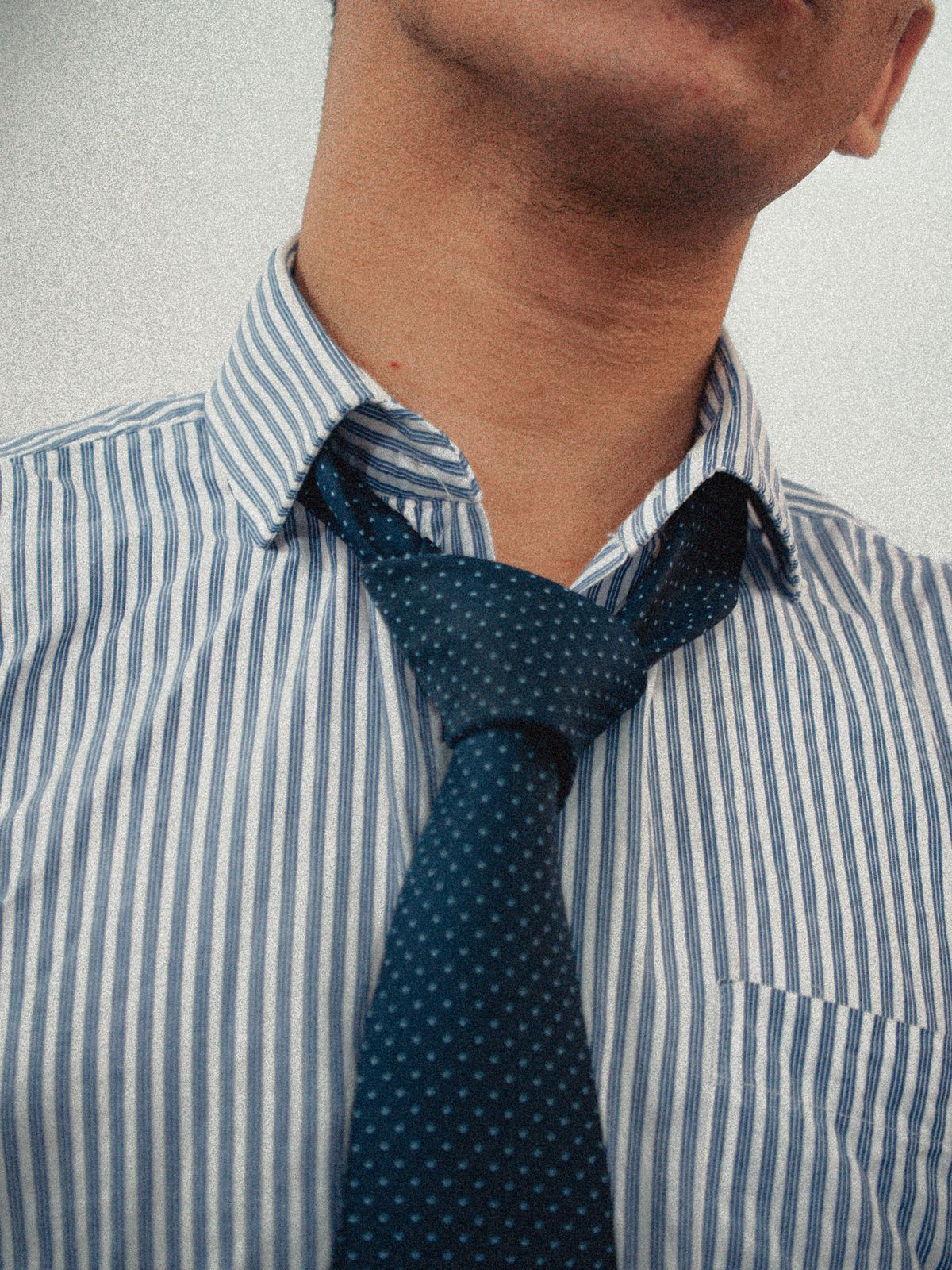
A tie sits at the meeting point of the shirt and jacket, so its appearance depends on both. A width that looks balanced with one lapel and collar can feel different with another. Start by putting on the actual shirt and jacket you intend to wear.
Assess the finished knot
Tie the tie rather than holding it against your chest. The fabric's thickness affects the size of the knot and the length left below it. A bulky cloth can create a large knot even with a relatively simple tying method.
The knot should sit comfortably in the collar opening without forcing the collar points out of place. If the combination looks crowded, try a smaller knot or another tie rather than immediately tightening everything harder.
Use scale as a relationship
Compare the tie's width with the jacket lapels and the overall outfit. Exact matching is unnecessary, but extreme differences create a more noticeable effect. If you want a restrained result, choose proportions that feel related.
Check the tied length in a natural stance. The front should end in a place you like around the waistband area rather than becoming unexpectedly short or hanging far below it. Different body lengths and knots may require a different tie length, not a trick that leaves the back blade unmanageable.
Let one pattern lead
With a patterned shirt and jacket, a plain or subtly textured tie is a simple option. With plain clothing, a stripe or small motif can provide the interest. If combining patterns, vary their scale so they do not all compete at the same visual frequency.
Colour can connect to the jacket, shirt or another part of the outfit without matching exactly. A muted burgundy tie with a light-blue shirt and navy jacket is one possible combination, not a required formula.
Keep the setting in view
A knitted or matte textured tie can soften the visual effect in some tailored outfits. A smoother silk tie creates another impression. Neither should be assumed appropriate for every invitation; use the event's dress expectations first.
Try sitting and fastening the jacket before deciding. Make sure the tie lies reasonably flat and is not constantly caught by the shirt or waist. Avoid adding a tie bar merely to solve a fundamental length or fit issue.
A small selection of ties that work with your actual shirts is more useful than a large collection chosen individually. When buying, bring a photograph or the garments themselves if practical. The successful tie is the one that completes a real outfit, not the most striking item on the display.