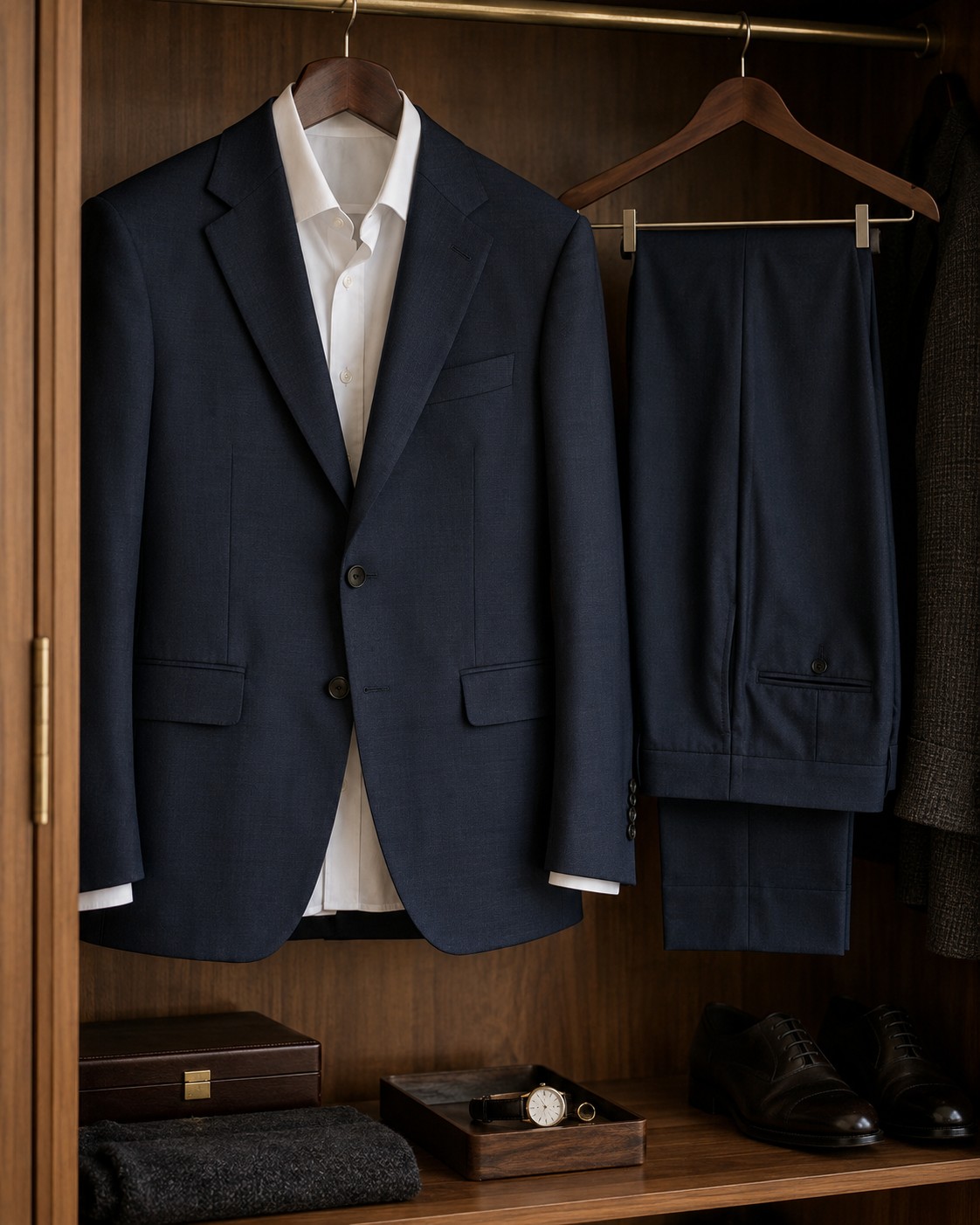
The parts of a black-tie outfit
Understand the core pieces, then arrange the fit and logistics before the event.
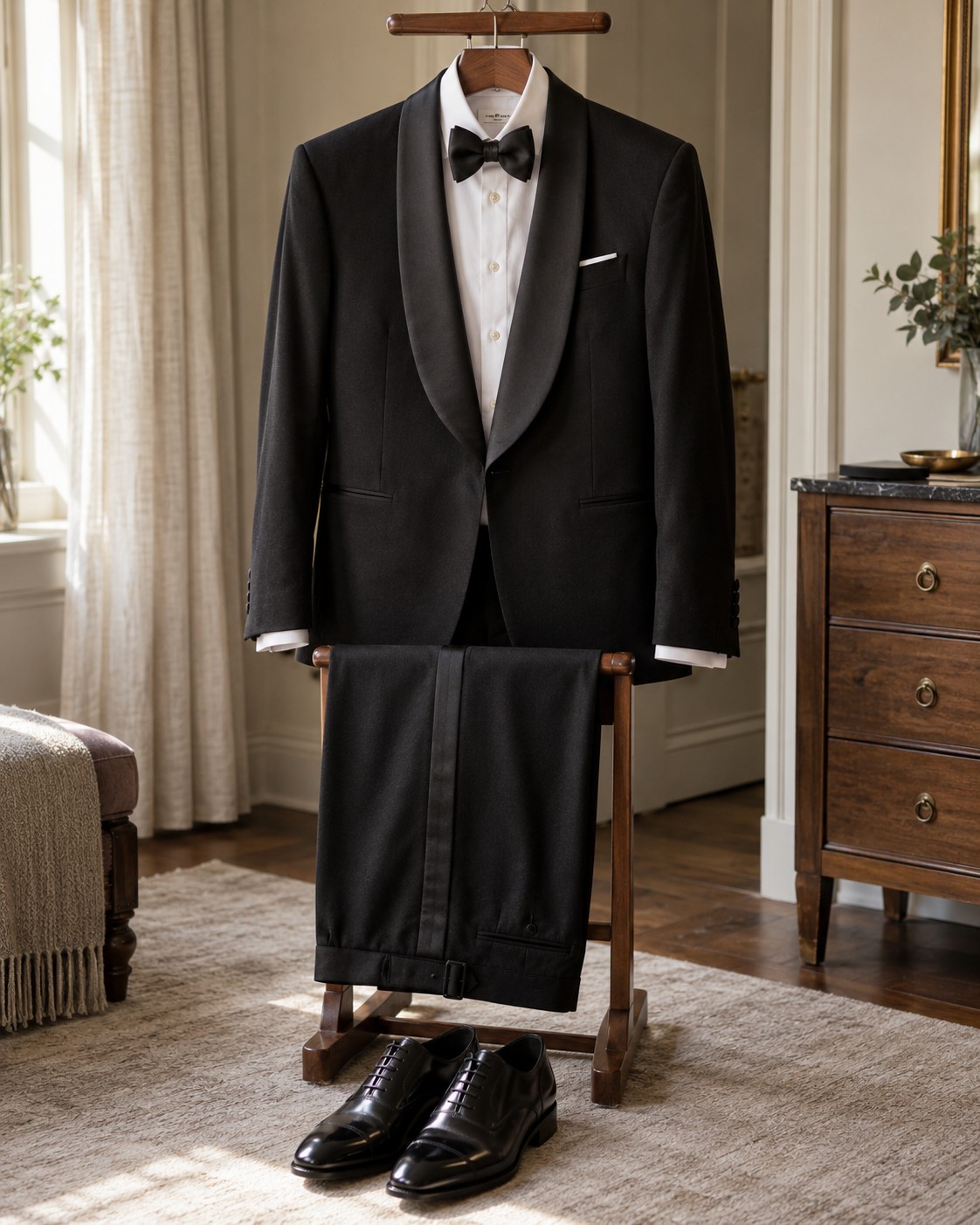
Black tie is not simply a black necktie worn with any dark suit. It is a conventional evening dress code with a recognisable set of pieces. When an invitation requests it, start by understanding the expected outfit before deciding whether to hire, borrow or buy.
Recognise the core combination
The conventional foundation is a dinner jacket with matching trousers, a formal white shirt, a black bow tie and black formal shoes. Depending on the shirt and outfit, studs, cufflinks and a waist covering may be involved. Emily Post's guide distinguishes this from black-tie optional, which also permits a dark suit with a suitable shirt and tie. Read the exact wording rather than treating those two invitations as identical.
If the host specifies a particular variation, follow that guidance. Cultural or ceremonial dress may also be appropriate where the event allows it. When uncertain, ask the organiser instead of improvising based on a photograph from an unrelated occasion.
Check what is actually included
A hire package may not contain every item you need. Confirm the shirt, bow tie, shoes and accessories rather than assuming they come with the jacket and trousers. Ask how the trousers fasten and whether you need braces or another arrangement. Do not discover a missing component while dressing for the event.
Try the complete outfit with the actual shoes. Trouser length, shirt cuffs and jacket sleeves should be assessed together. Sit down, raise your arms and walk. A close fit is not a virtue if it prevents ordinary movement. If alterations are possible, arrange them with enough time for a second fitting.
Practise the unfamiliar parts
If you choose a self-tie bow tie, learn and practise before the day. Use the actual tie and shirt, since neck size and collar shape affect the result. A pre-tied version may be a practical choice for some people; the important point is to have an arrangement you can manage without last-minute distress.
Check how cufflinks or studs work with your particular shirt. Keep small pieces together in a container when travelling. Do not force an accessory through a buttonhole that was not designed for it. If the shirt uses ordinary buttons, understand that before buying accessories you cannot use.
Plan beyond the fitting room
Choose outerwear that fits over the outfit and suits the weather. A dinner jacket is not a substitute for a winter coat. Think about transport and outdoor waiting, especially if the venue has a long approach or photographs outside. Comfortable movement matters even when the event is highly formal.
Footwear should be in suitable condition and familiar enough to wear for several hours. If hiring shoes, try them early and raise any fit concerns with the provider. A visually correct pair that causes pain will not become more manageable once the evening starts.
Pack the entire outfit as one checklist, including socks and small accessories. At the destination, hang garments as appropriate and follow care instructions for any creases. Leave enough time to dress without rushing. This is especially important if you are attending an event while travelling and cannot easily retrieve a forgotten item.
Resolve variations before shopping
Creative black tie may allow more personal detail while retaining an eveningwear foundation. It does not automatically mean that ordinary casual clothing is welcome. Ask how the host intends the phrase if their examples are unclear. The same applies to themed events: establish which elements are required and which are optional before spending money on a novelty item.
If the invitation says black-tie optional and you choose a dark suit, assemble that as a complete suit outfit rather than adding isolated dinner-suit accessories. A bow tie alone does not make ordinary tailoring into eveningwear. Use the option you can execute comfortably and appropriately, and do not feel obliged to buy a specialist outfit merely because another guest owns one.
After the event, follow the supplier's return or care instructions promptly. Check pockets before returning hired garments and keep borrowed accessories together. If you bought the outfit, store the small parts where you will find them next time. Being ready for a future invitation is more valuable than forgetting half the components after one successful evening.
Buying can make sense if you expect repeated use, while hiring or borrowing may suit a rare invitation. Compare the total cost and the fit you can achieve, not only the price of the jacket. The aim is to meet the occasion comfortably and confidently, not to accumulate specialist clothing for its own sake.