Using lighter colours in summer outfits
Introduce a lighter palette one garment at a time instead of replacing every dark piece you own.
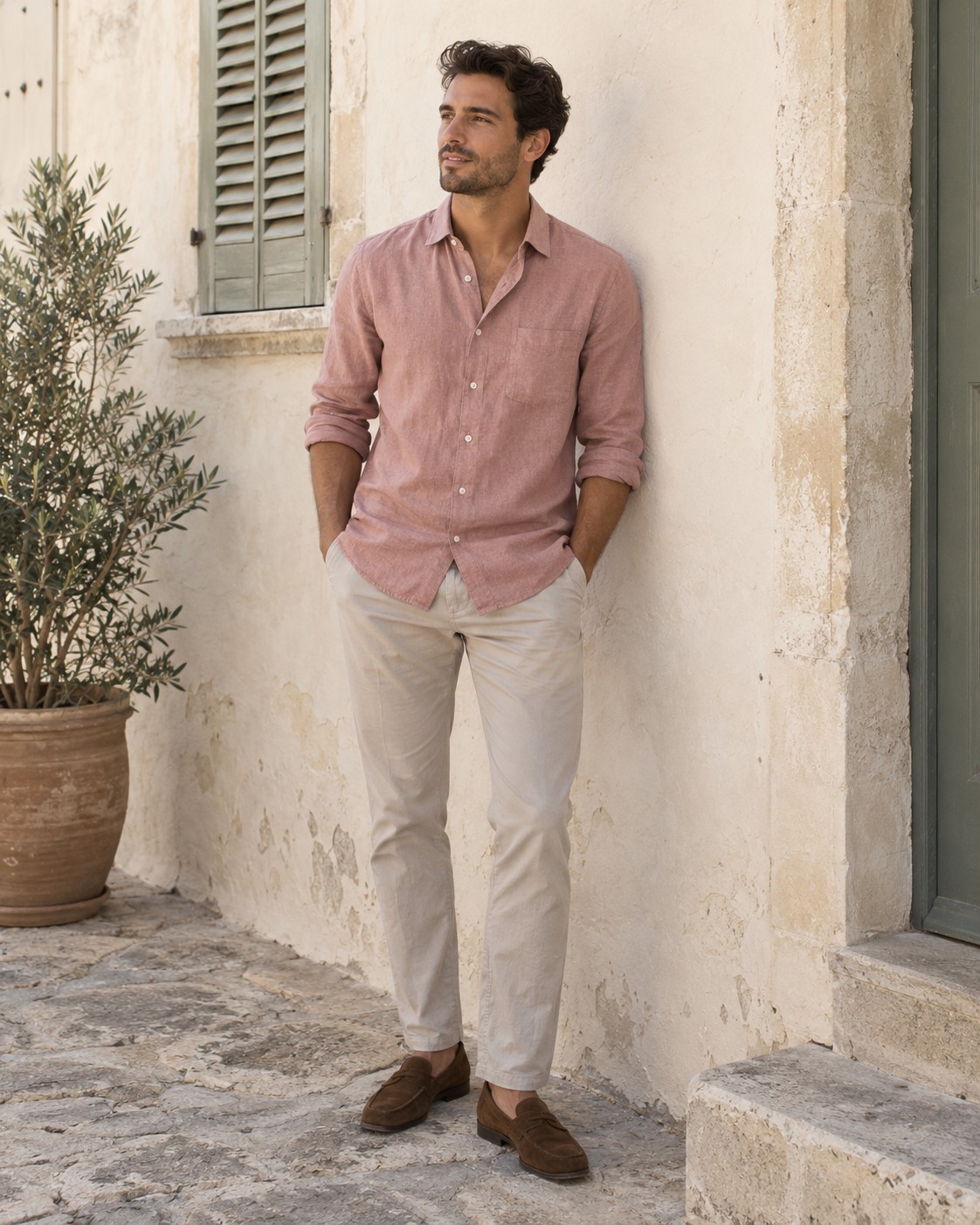
You do not need to abandon navy, charcoal or black when summer arrives. Lighter colours are an option for changing the mood of an outfit, not a seasonal uniform. The most useful starting point is to replace one dark piece while keeping the rest familiar. That makes it easier to judge what the new colour contributes.
Swap a dark T-shirt for ecru while leaving the jeans and shoes alone. The result may feel brighter without becoming a completely different look. Ecru, cream and stone also tend to create a softer contrast with brown footwear than a very bright white. Compare them in daylight; shop lighting can make similar pale shades look misleadingly alike.
Use an anchor colour
A navy shirt can hold together pale trousers and light trainers. Olive shorts can give a cream tee some definition. Keeping one deeper colour helps if an entirely pale outfit feels unfamiliar. It also means your existing shoes and bag can continue to work instead of triggering a chain of new purchases.
For more colour, choose a muted shade first: faded blue, dusty pink or a soft green. Wear it in a garment you already understand, such as an Oxford shirt or polo. Changing colour, silhouette and fabric all at once makes it harder to tell which part you actually like.
Check the whole outfit rather than judging the shirt next to your face in isolation. The same pink shirt can feel restrained with stone trousers and much sharper with black jeans. Neither effect is wrong. What matters is whether the contrast suits the occasion and feels comfortable to you.
Texture keeps pale outfits from looking flat
A cream tee with stone chinos does not have to match exactly. A visible difference in fabric, such as a slub knit against smooth cotton twill, can make the relationship look intentional. Conversely, two nearly identical whites in similar fabrics sometimes look like an unsuccessful match. Try a clearer difference before searching for a perfect colour pair.
Practical details still apply: pale cloth shows some marks readily, and thin fabrics may be more transparent. Choose garments you can care for and wear normally. If you spend the day worrying about where to sit, the colour is not serving you. Keep the darker pieces that suit your routine and use lighter shades where they add something you enjoy.