Getting dressed for a hot day
Fit, weave and the amount of clothing you wear matter alongside the fibre on the label.
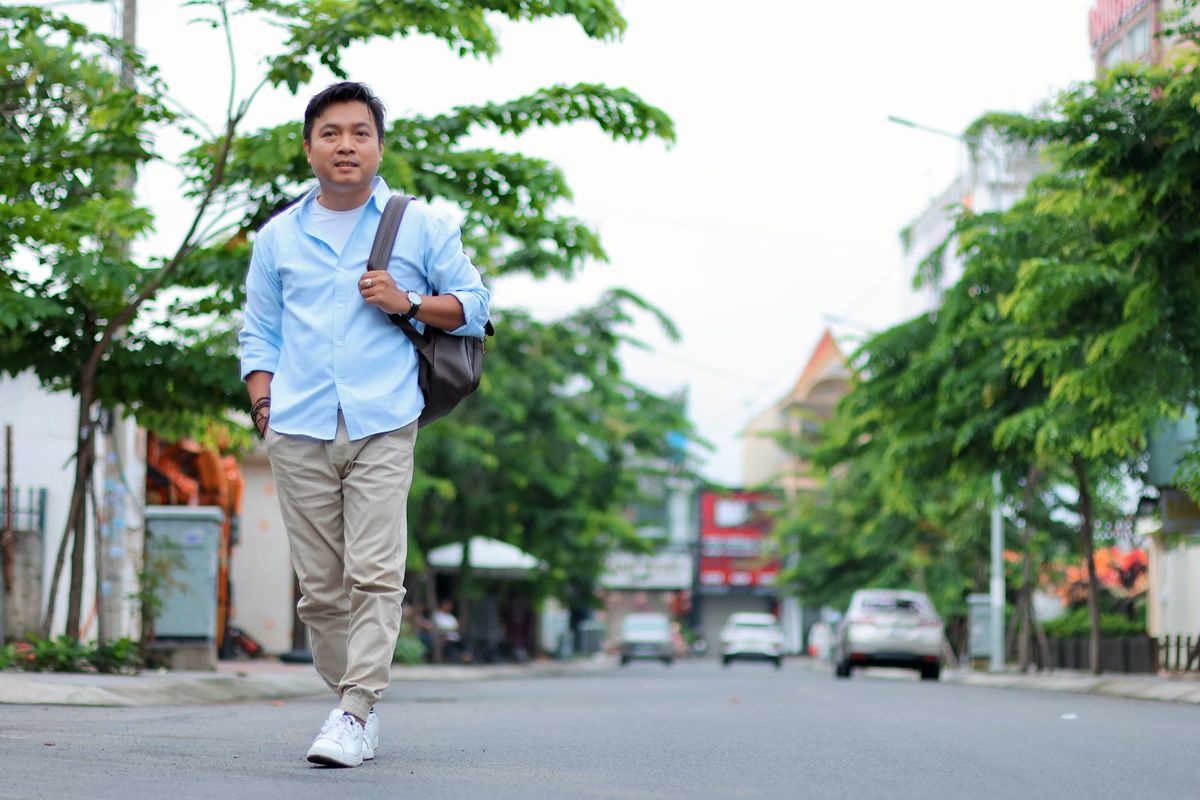
Getting dressed on a hot day does not require an entirely different personal style. It often means editing the clothes you already like: a little more room, less lining and fewer unnecessary layers. A cotton shirt, loose trousers and sandals can still feel considered without adding a jacket purely to complete the picture.
Feel the cloth rather than shopping by a single word
Linen is associated with warm weather, but a fabric name is not a guarantee of comfort. Weight, weave, lining and fit all influence how a garment behaves. A dense shirt can feel substantial even when made from a familiar summer fibre. Compare the actual material against something you already find comfortable.
Give the body some space. This does not have to mean a dramatically oversized outfit. A shirt that falls away from the chest and trousers that do not cling to the thighs may be sufficient. Sit down and bend your knees when trying them on. Stretch content can help movement, but it does not make a tight cut equivalent to a roomier one.
An open-neck shirt with sleeves worn as designed is a straightforward alternative to a heavy tee. If you prefer T-shirts, try a lighter one that remains opaque enough for your intended setting. Check pale fabric in daylight, including over the underwear you plan to wear.
Build one quiet combination
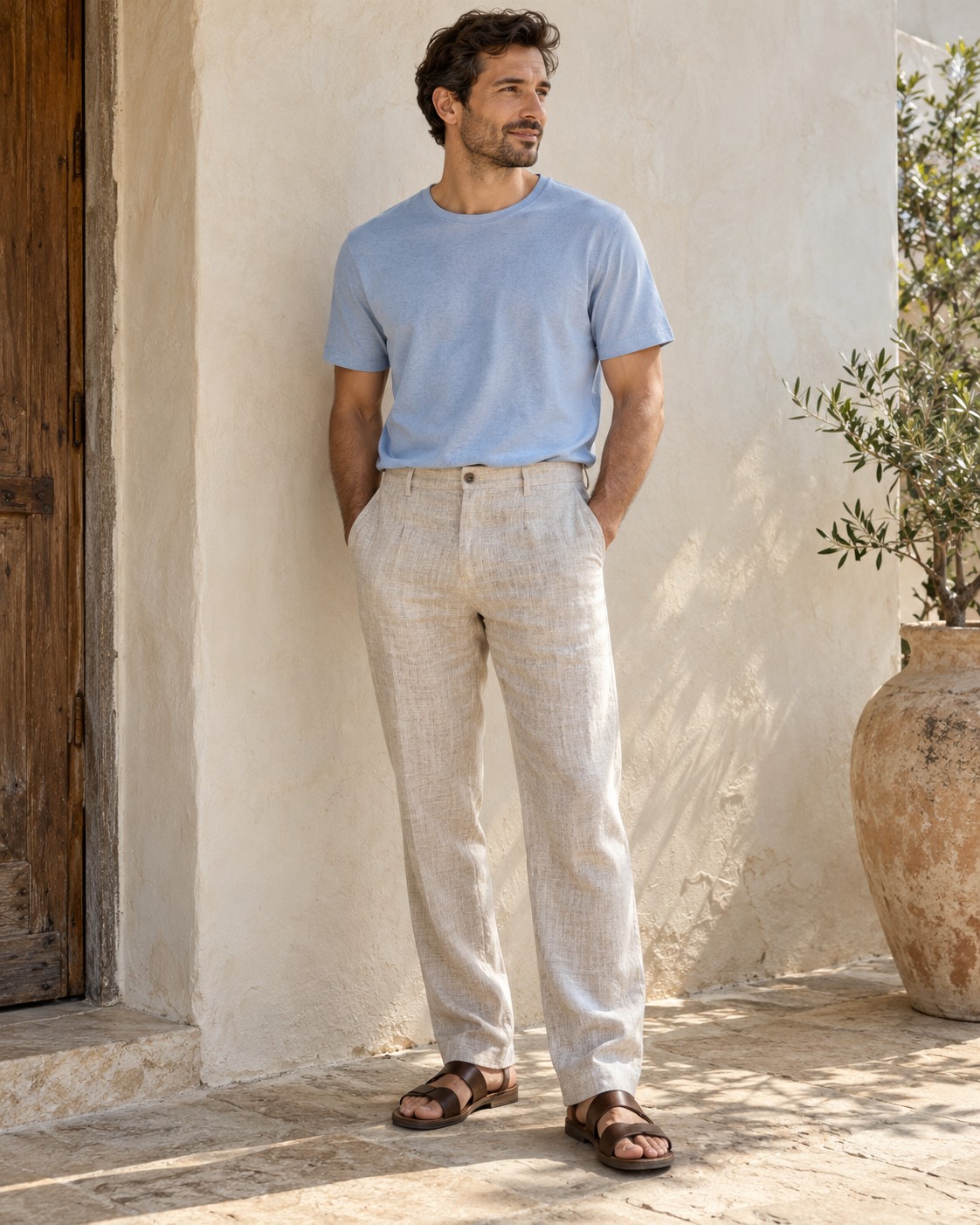
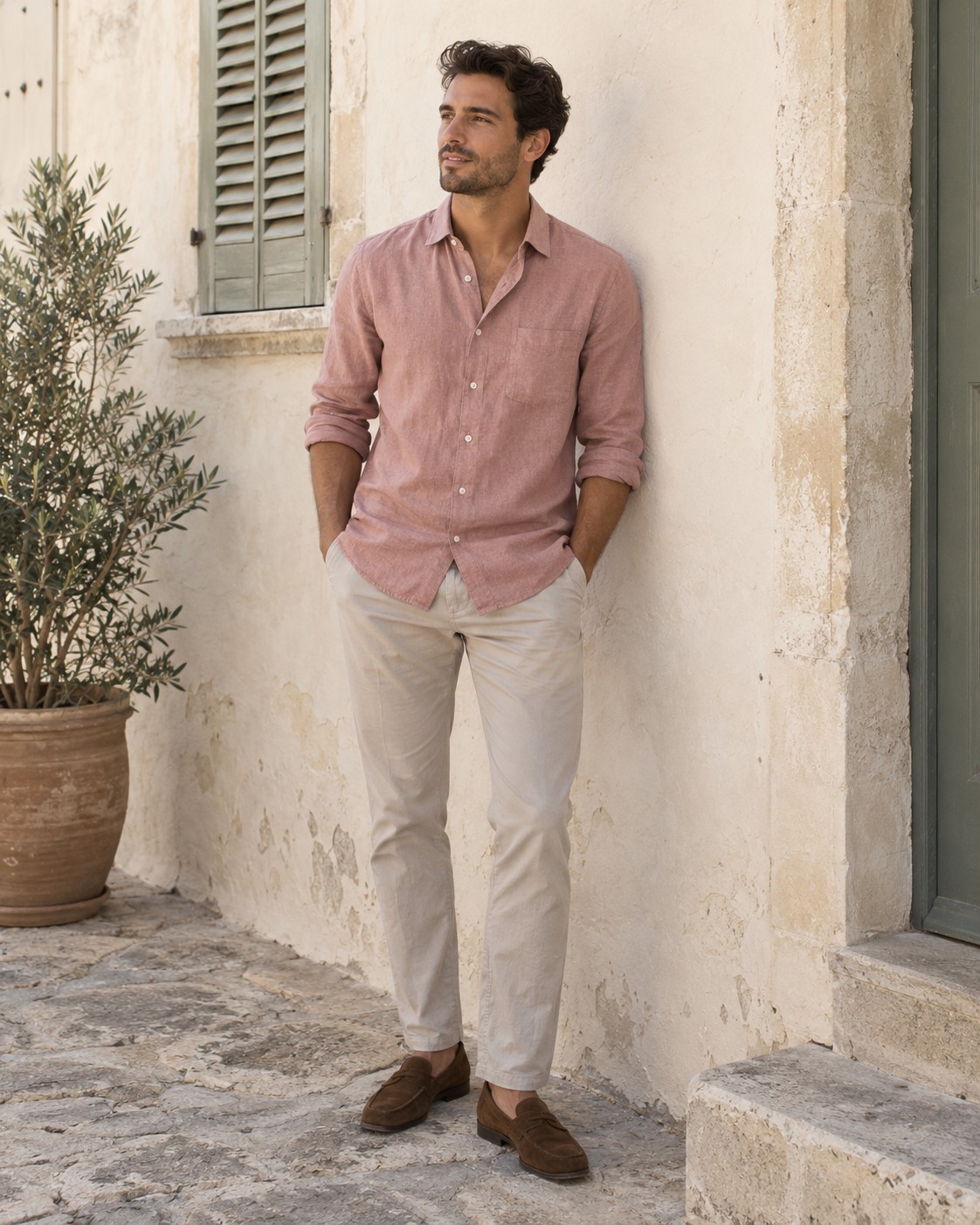
Stone trousers, a muted green shirt and brown sandals make a low-contrast outfit without requiring everything to be beige. Navy shorts with a cream tee are simpler still. Use a clean, comfortable shoe shape and let the fabric and proportion provide the interest. A belt, necklace, watch and overshirt are optional, not a checklist.
Think about where you are going. A town lunch, a beach afternoon and an office can have different expectations even in the same temperature. Bring a light layer only if you have a reason, such as a cool evening or indoor air conditioning. Choose one you can carry without turning a small day bag into luggage.
Clothing choices are only one part of dealing with hot weather. Do not treat an airy shirt or a light colour as a substitute for appropriate sun protection, shade and other precautions. For the outfit itself, the useful test is mundane: can you walk, sit and carry what you need comfortably without constantly adjusting your clothes?