What to do first when you stain clothing
Pause before rubbing or applying heat; the stain and the fabric both determine what happens next.
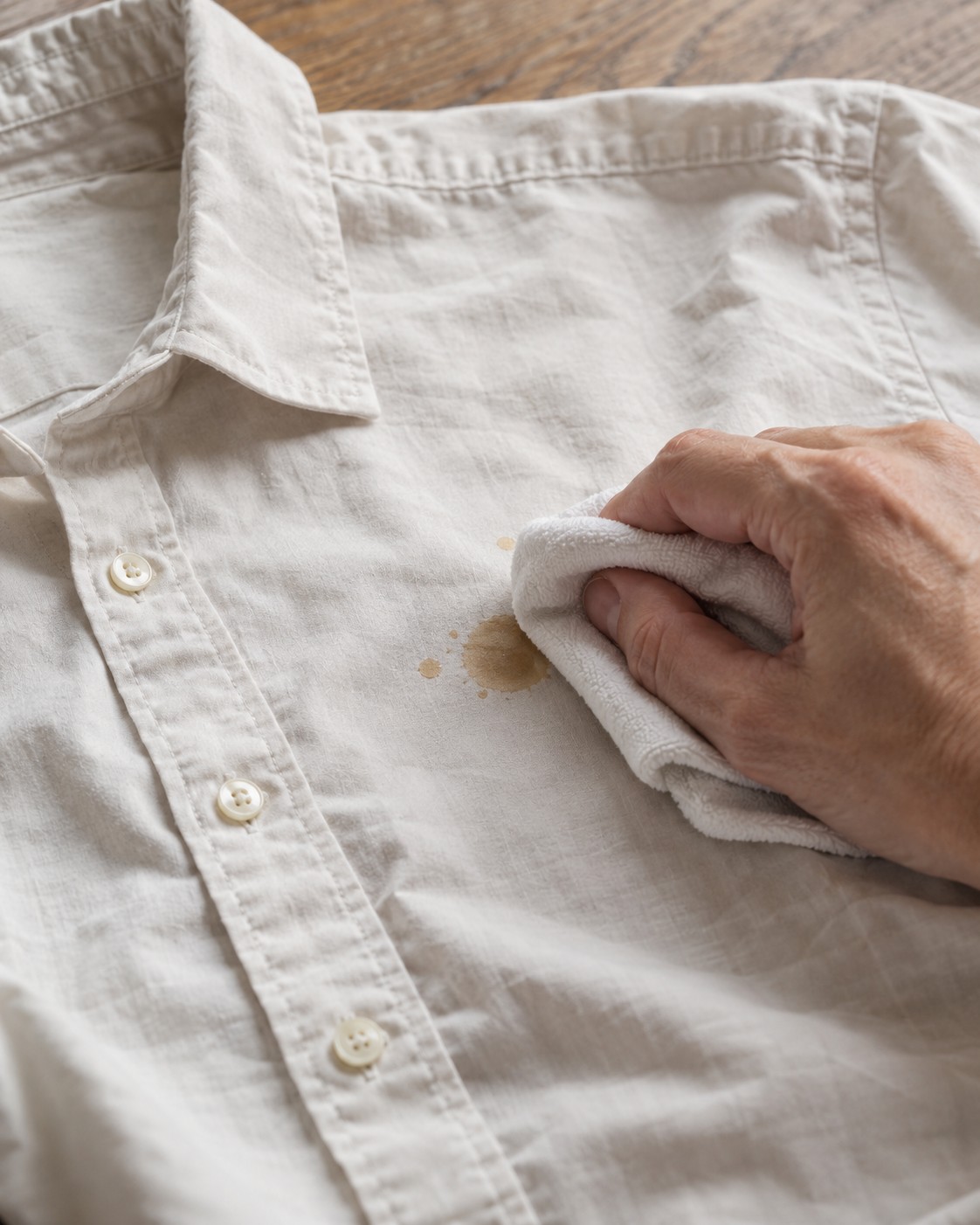
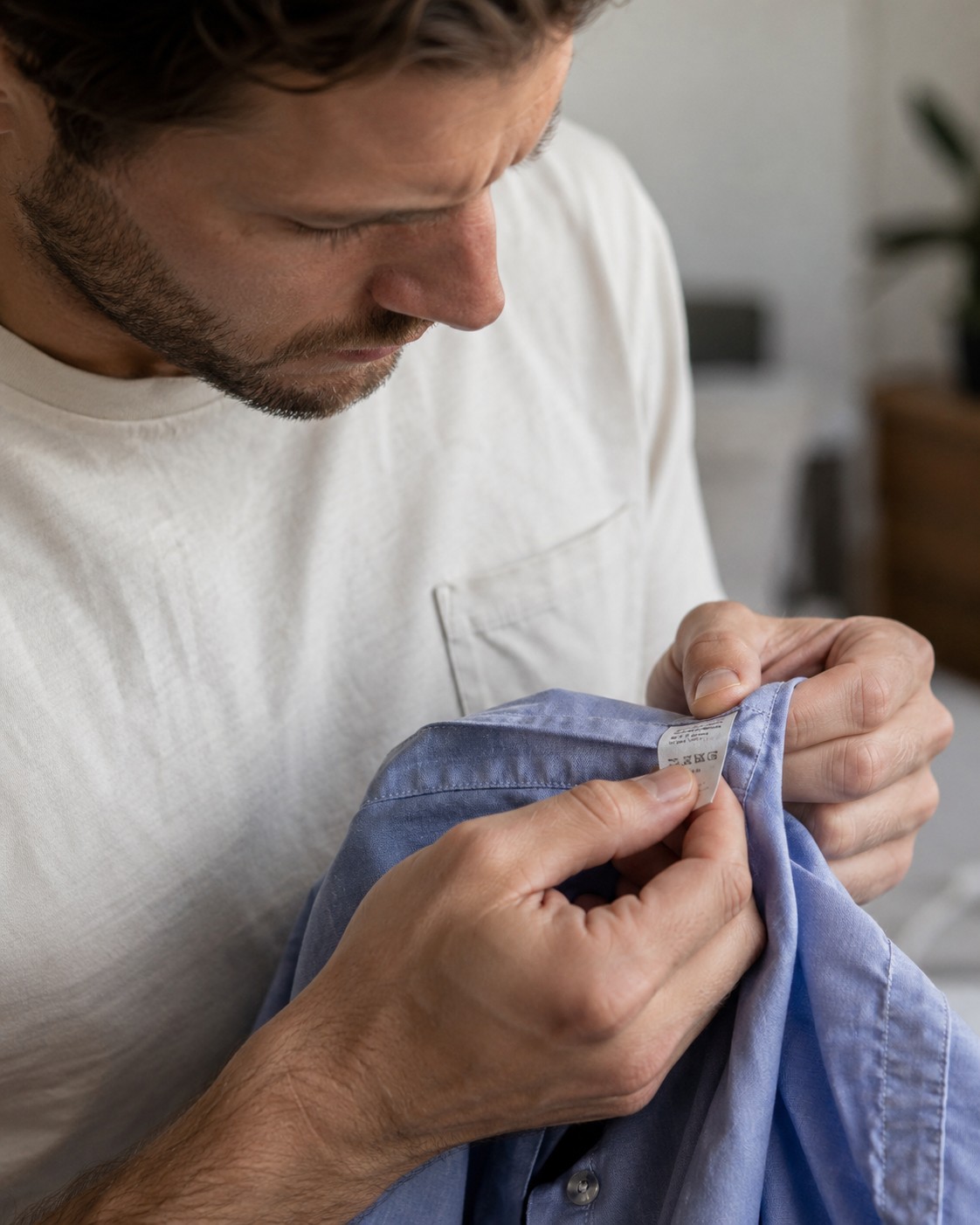
The first impulse after spilling something on clothing is often to rub it with whatever is nearby. That can spread the mark, push material deeper into the fabric or change the surface. A more useful first response is to stop, identify what spilled and check the garment's care instructions.
Remove the excess without enlarging the problem
If there is loose material on the surface, lift it carefully with a suitable clean edge rather than grinding it in. For liquid, gentle blotting with a clean absorbent cloth may help remove excess, but do not scrub. Use a fresh part of the cloth as needed so you are not putting the spill back onto the garment.
Consider the fabric and construction. Silk, wool, coated materials and garments marked for professional care may need specialist handling. A dark or brightly dyed garment can also react to a treatment differently from plain white cotton. When uncertain, stop after limiting the spill and ask a cleaner for advice.
Do not reach automatically for hot water. Heat can make some stains harder to remove, and the correct treatment depends on the substance. Also avoid ironing or tumble drying a marked garment until you have established whether the stain has been dealt with appropriately.
Use one suitable method, not a collection of tricks
Consult the garment maker and a stain-treatment product's instructions for the actual material and mark. Test any permitted product in an inconspicuous area before wider use. Never mix cleaning chemicals or layer several improvised remedies because the first did not work quickly.
Be realistic about an emergency setting. In a restaurant or on a train, you may not have the right supplies. Repeated experimentation in a washroom can cause more damage than waiting until you can handle the garment properly. Note what spilled and any treatment already attempted so a professional can make an informed decision later.
If the item is washable, follow its label and the appropriate treatment directions. Inspect it before drying. A wet surface can disguise a remaining mark, so be cautious about assuming success from a quick glance.
Know when to stop
Rubbing harder is not an escalation plan. If colour lifts, the texture changes or the mark spreads, discontinue the attempt. A valued jacket or shirt may be better served by professional cleaning than by another internet remedy.
Even careful treatment cannot guarantee complete removal. A residual mark may be repairable, coverable or simply acceptable for a less formal use. The first-response goal is to preserve options and avoid preventable damage, not to promise that every spill can be erased immediately.