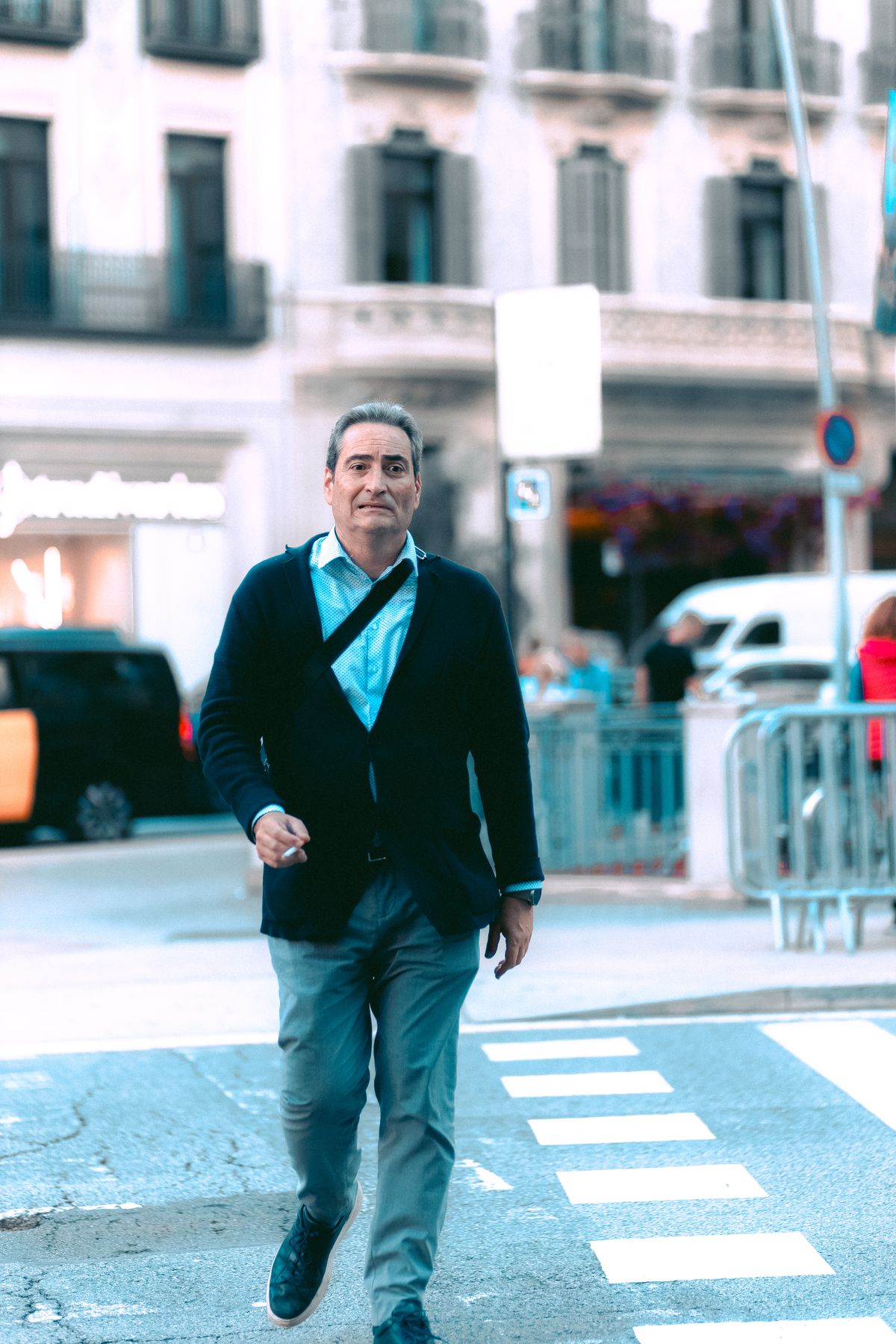
What smart casual can mean in practice
Use the venue and host's expectations to translate a flexible label into actual clothes.

Smart casual is a broad instruction, not a universally agreed list of garments. At one event it may allow dark jeans and a knit; at another it may mean trousers, a shirt and a jacket. The most useful first step is to collect context rather than search for a single outfit that claims to work everywhere.
Read the situation
Check the invitation, venue and time of day, then ask the host if the wording is still unclear. A direct question such as whether jeans or trainers are suitable is easier to answer than asking how smart to look. Published venue restrictions take precedence over styling suggestions.
Consider your role too. A guest at a relaxed gathering may have more flexibility than a speaker, host or employee representing an organisation. Do not assume that what an off-duty friend wears to the same building is appropriate for your event.
Choose a coherent level of dress
One starting outfit is chinos, an Oxford shirt and loafers or plain lace-ups. Another is wool trousers with a fine crew-neck knit and a soft jacket. Both combine some definition with relaxed elements. In settings that explicitly accept jeans, dark denim with a shirt or knit can work, but denim remains denim even when its colour is dark.
Think about the whole outfit rather than trying to balance a fixed number of smart and casual items. A formal suit jacket over a gym tee does not automatically produce smart casual. Fabric, fit, footwear and condition need to relate to each other. A soft textured jacket generally connects more easily to casual trousers than a shiny formal one.
Make room for personal preference
You can use colour, a subtle pattern or a textured knit without making the outfit loud. If you prefer very simple clothes, a plain shirt and comfortable trousers do not need decorative additions. A tie is not automatically necessary, and removing one from a formal outfit is not the only way to dress down.
Try the outfit seated and without the outer layer. You may spend most of the event with a jacket off. Check that the shirt or knit beneath it works independently and that the trousers remain comfortable through a meal or presentation.
When uncertainty remains and there is no one to ask, choose a combination with an adjustable layer: a jacket you can remove, for example. This gives some flexibility without requiring a spare wardrobe. It does not excuse ignoring a clear dress code.
The aim is to arrive appropriately dressed and then stop managing the outfit. Smart casual should not become a puzzle about arbitrary rules. Use the specific setting to narrow the options, and choose the version that fits both the expectations and your normal way of dressing.