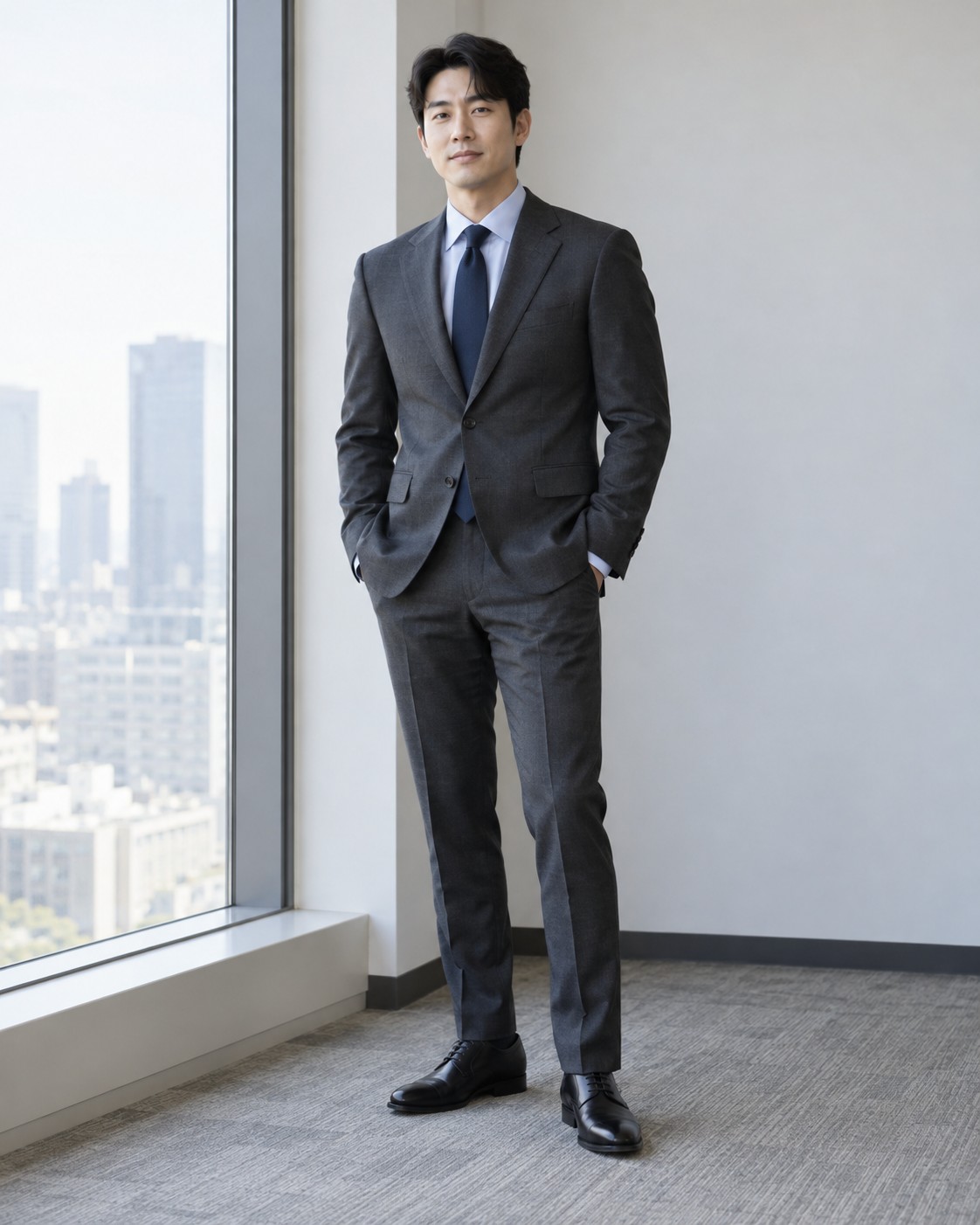
Business casual without a suit
Build a workplace outfit from separate pieces that share a similar level of formality.
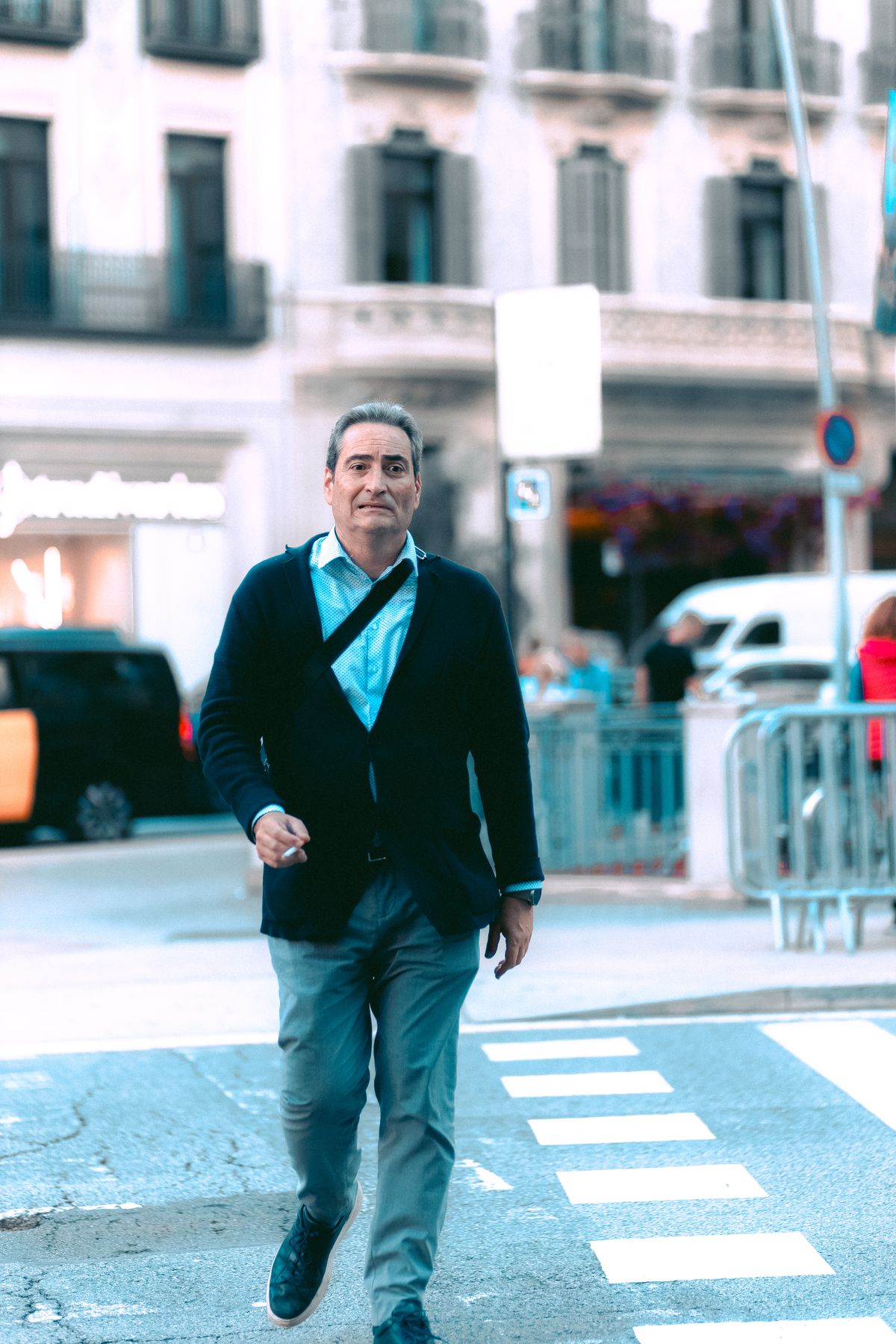
Business casual usually removes some elements of traditional suiting, but it does not mean that every casual garment becomes workwear. The employer's expectations remain the deciding factor. Establish whether your workplace accepts polos, jeans or trainers before using them as the foundation of an outfit.
Start with the trousers
Chinos or separate wool trousers can provide a useful base. Choose a cut that remains comfortable during a full seated day and a fabric that suits the season. A visible crease can make the trousers feel more tailored, while a softer cotton surface is usually more relaxed. Neither choice needs to be extremely slim.
Use a shirt, fine knit or accepted polo above them. A pale blue shirt with navy trousers is straightforward, but grey trousers with a dark green knit can be equally coherent in an appropriate office. You are aiming for compatible pieces, not an imitation suit made from almost-matching colours.
Add a jacket only when it helps
A blazer can be useful for meetings or a cooler room. It should have enough space over the intended shirt or knit and should look like a separate jacket rather than the lost half of a formal suit. Texture, softer construction and a visible colour difference from the trousers can help establish that separation.
If the workplace does not require a jacket, a cardigan or neat crew-neck jumper may be more useful. Check the shirt beneath it: a bulky collar and long tails can become awkward under fine knitwear. Tuck a long shirt where appropriate and ensure that the jumper does not pull tightly over the buttons.
Do not leave footwear as an afterthought
Loafers and plain lace-up shoes can bridge several outfits. Trainers may be acceptable in some offices, but the permission comes from the workplace, not from how expensive or clean the pair is. Choose footwear that also suits the commute, or plan a change if conditions require it.
A belt should support the trousers comfortably. Matching the exact leather shade of the shoes is less important in many business-casual combinations than keeping both pieces appropriate in weight and condition. A large decorative buckle may feel out of place with otherwise restrained clothes, but it is not necessary to eliminate every personal detail.
Build a few repeatable combinations rather than a separate outfit for every day. Swap shirts and knits across compatible trousers, and keep one slightly smarter option for days that need it. Business casual works best when it responds to the work you actually do, rather than becoming an endless search for the perfect middle point between a suit and leisurewear.