Using a size chart instead of guessing
First identify what is being measured, then compare it with a body or garment measured the same way.
A size chart is only useful when you know what its numbers describe. Some charts give body measurements intended to fit a size. Others list the finished garment. A chest measurement of the body and a chest measurement of a shirt are not supposed to be identical, because the garment normally includes room for movement and its intended shape.
Read the heading before the numbers
Look for wording such as body measurements, garment measurements or to fit. Then read the measuring instructions. If the distinction is unclear, ask the retailer. Guessing can turn an apparently precise calculation into a wrong-size order.
Check the unit too. Centimetres and inches are easy to confuse when a page switches markets. Do not rely on a size letter carrying the same meaning across brands, or even across different product ranges from one brand.
Choose a useful reference garment
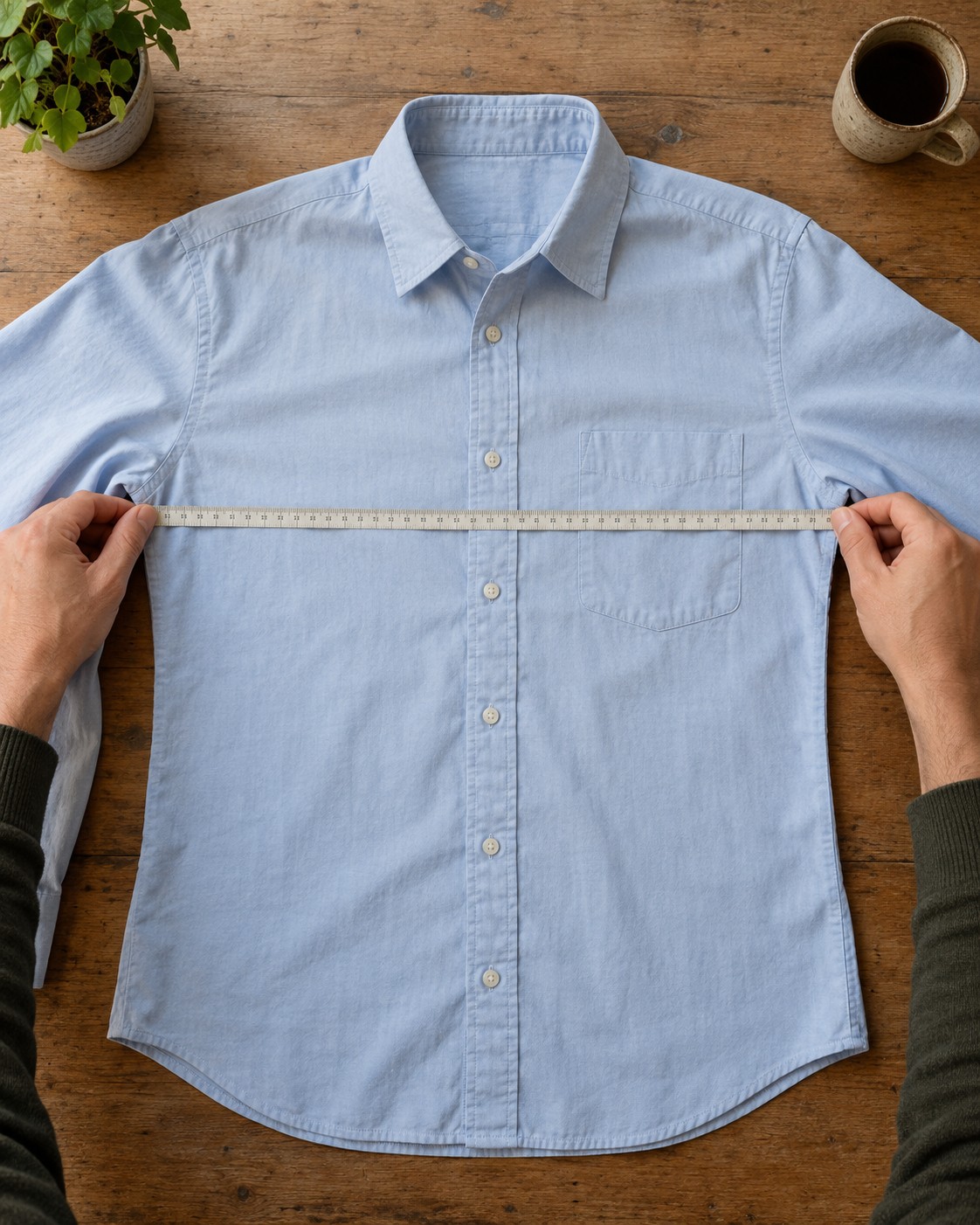
If the chart provides finished measurements, use a similar garment you already like. Lay it flat without stretching and follow the same measuring points. A relaxed tee is not a useful reference for a close formal shirt simply because both have sleeves.
Measure more than the easiest dimension. For a shirt, chest, length, shoulder and sleeve can reveal different problems. For trousers, waist, rise, thigh and inseam may all matter. You do not need every possible measurement, but include the areas where fit commonly fails for you.
Some flat widths represent half a circumference and may need doubling for a particular comparison. Only do that when the chart's method calls for it. Curved waistbands, stretch garments and different seam paths can complicate seemingly simple conversions.
Use body measurements without manipulating them
If the chart is based on the body, use a flexible tape and follow the stated position. Stand normally and avoid pulling the tape so tightly that it changes the measurement. It can help to ask someone else to measure hard-to-reach areas.
Do not subtract inches because you prefer a slim appearance. The retailer's pattern and fit description should account for its intended ease. If you want a different silhouette, compare the available cuts rather than altering the input until the chart points to a smaller size.
Interpret the pattern of differences
Suppose a shirt's chest looks suitable but its sleeves are much longer than your reference. Sizing down may shorten them slightly while making the chest wrong. A short-length option, different cut or another brand could solve the actual problem more directly.
Likewise, a trouser waist match does not prove the rise and thighs will work. If the retailer provides only one dimension, acknowledge the uncertainty instead of pretending the chart answers everything.
Work through one comparison
Suppose your comfortable shirt measures 56 centimetres across the chest when laid flat, using the retailer's stated method. A candidate listed at 52 centimetres is not merely four centimetres different around the whole body; if both figures are half-chest widths, the circumference difference is roughly twice that. That can be meaningful, but only if both measurements genuinely use the same points and the fabrics are comparable.
Now suppose the candidate is listed as fitting a 104-centimetre body chest instead. That is a different kind of information. You cannot compare it directly with the reference shirt's flat width without knowing the garment's intended ease. Return to the guide or ask the seller for clarification.
A short note beside your saved measurements helps: where the tape began and ended, whether the garment was fastened, and whether it was relaxed rather than stretched. Without that method, an old number can become less useful than it appears.
Leave room for fabric and method
Stretch, finishing and garment shape influence how measurements feel when worn. Small measurement differences can also come from how the item was laid out. Use the chart to narrow the choice, then use the return policy and a careful try-on to resolve what numbers cannot show.
When the garment arrives, keep labels attached while checking movement, seated comfort and the intended outfit. Do not wash or alter it before deciding whether to keep it. If it fits well, save the model, size and relevant measurements as a reference for next time.
A chart reduces guessing; it does not replace judgement. The most useful habit is comparing like with like and recognising when a different cut is needed. That is more dependable than deciding you are permanently one size everywhere.