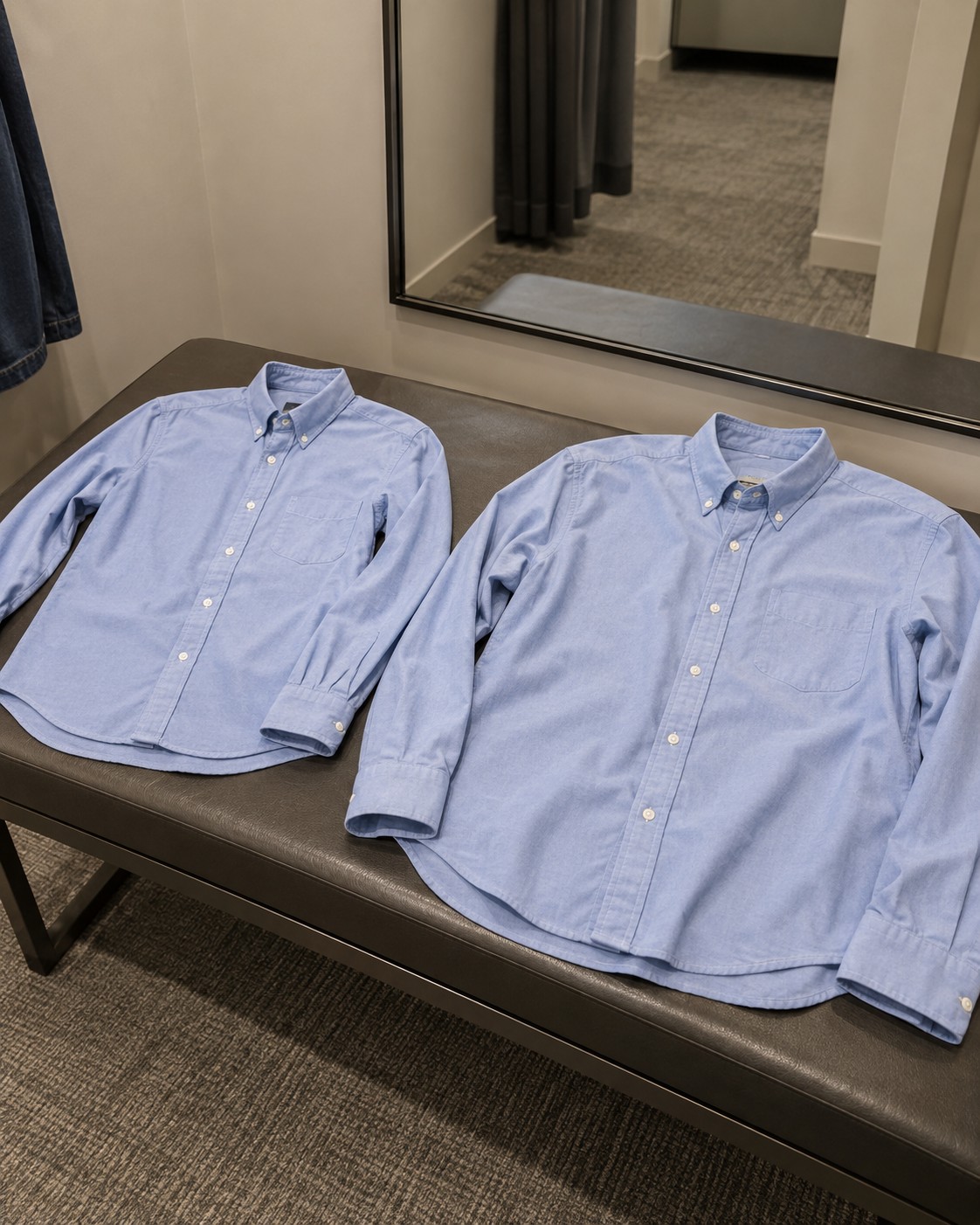
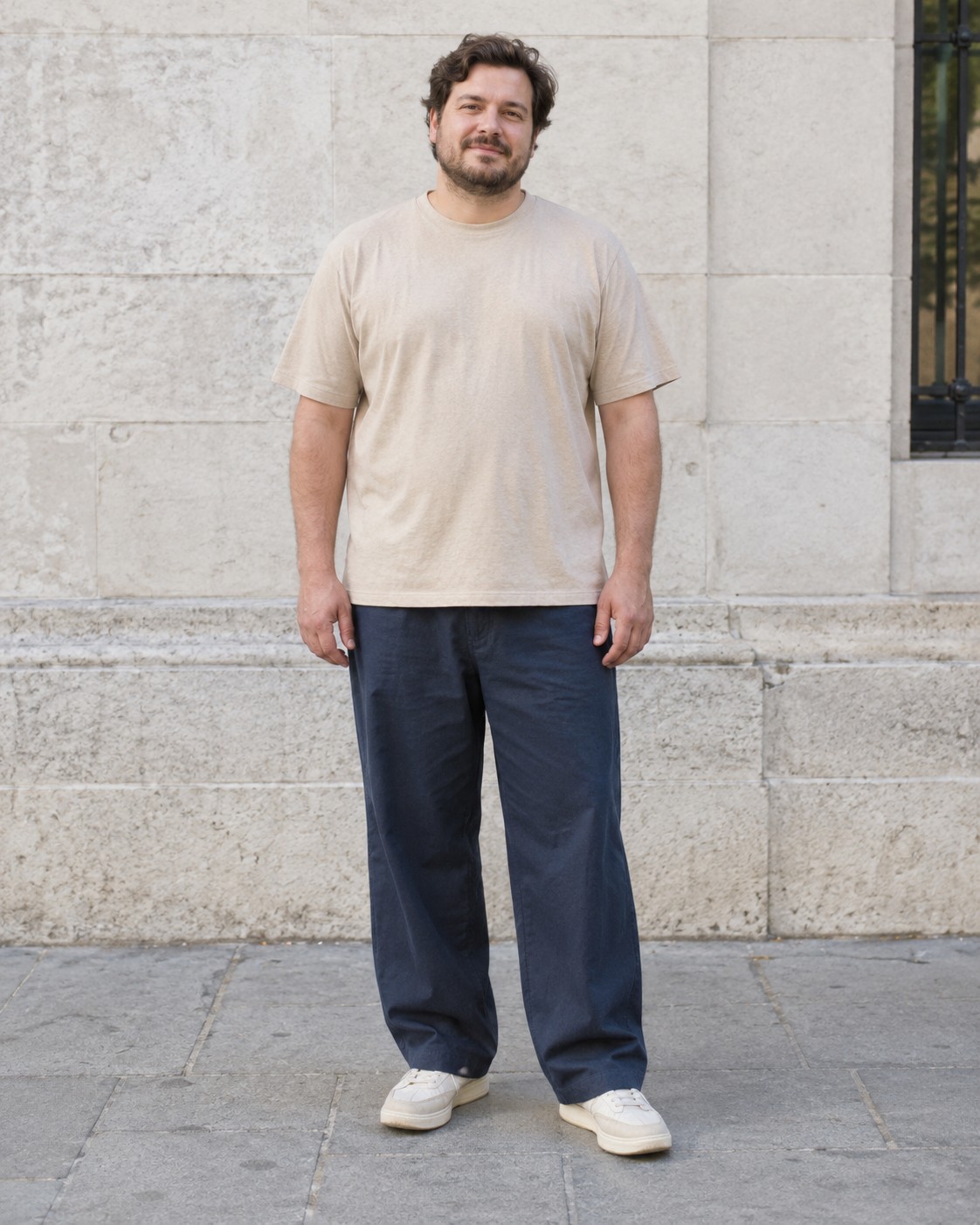
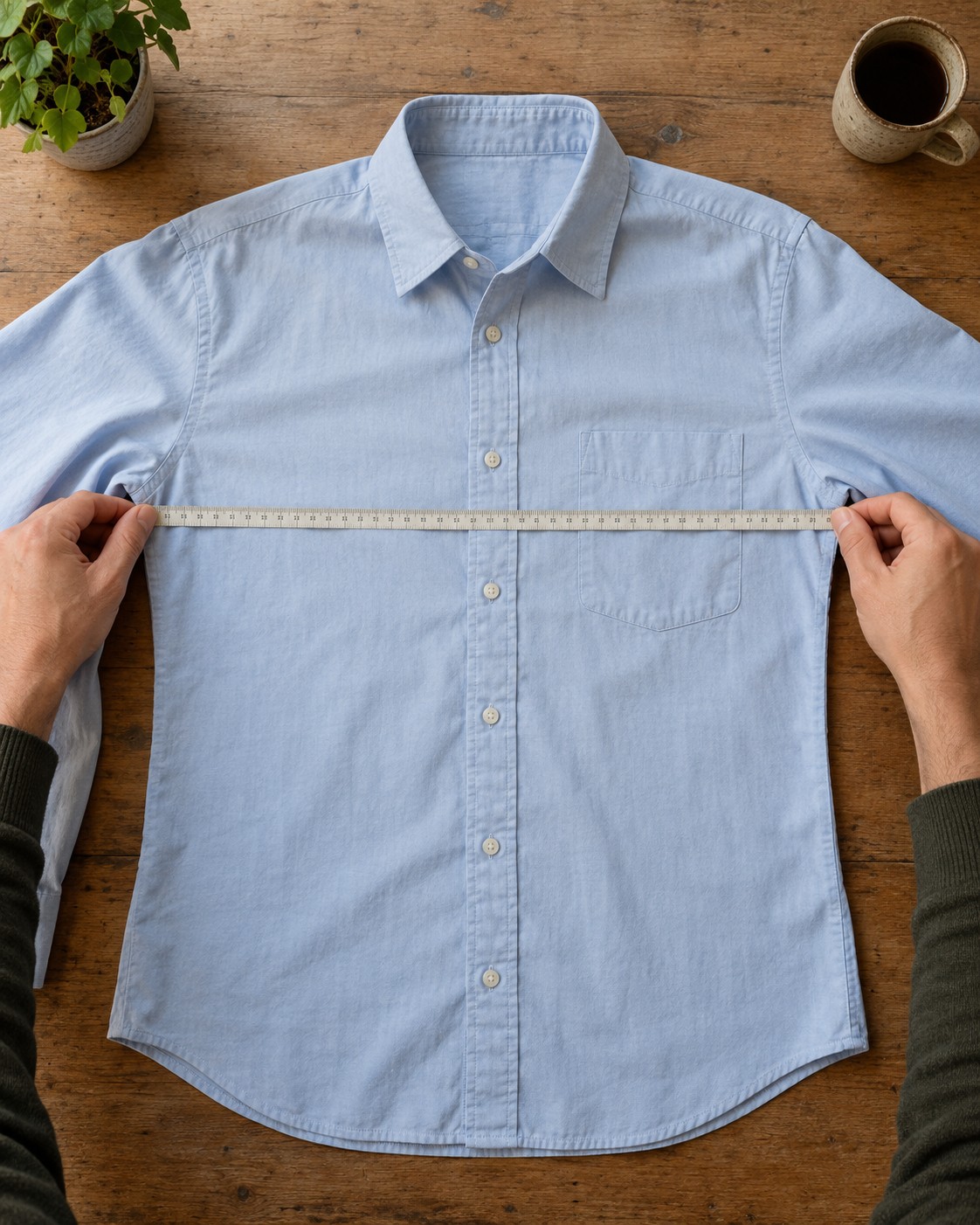
Using photographs to assess an outfit
A consistent camera setup can reveal the back and side view, but it should support how the clothes feel rather than overrule it.
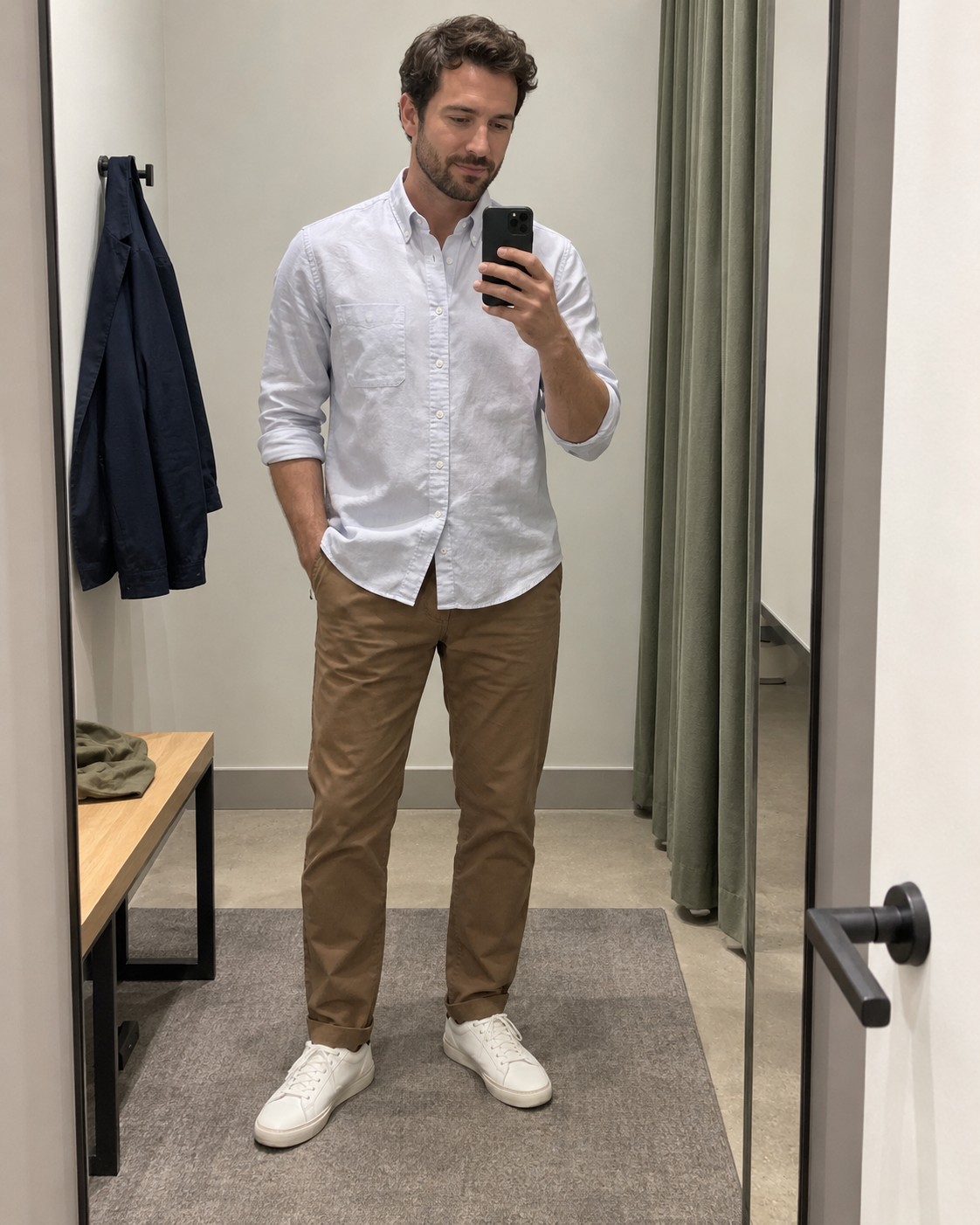
A photograph can show parts of an outfit that are awkward to see in a mirror, especially the back and side. It can also mislead when the camera is too close, tilted sharply or using a wide perspective. Use photographs as a repeatable comparison tool, not as an unquestionable verdict on your proportions.
Make the setup ordinary
Place the camera far enough away to include the whole outfit without an extreme wide-angle view. Keep it level and avoid aiming steeply down or up. Use similar lighting and camera position when comparing two sizes or combinations.
Stand naturally with your weight balanced. Do not pull the shoulders back, hold your breath or arrange the clothes into a pose you cannot maintain. If you always need to tug a hem before the picture, that is useful information about the garment.
Take more than a front view
A front photograph helps with colour balance, length and the overall outline. A side view reveals how a shirt or jacket hangs over the waist and seat. A back view can show collar gaps, uneven hems or areas of pulling that are hard to notice alone.
Take each view with the same shoes and underlayers. Changing several things between pictures makes it difficult to know what caused the difference. For trousers, set the waistband at the normal position every time.
Ask one question at a time
Decide what you are checking: whether the coat covers a jacket, whether a trouser hem catches on the shoe, or whether a shirt length works untucked. A focused question is easier to answer than an anxious search for every possible imperfection.
Look at the image at a normal size before zooming in. Most people see your outfit from a distance, not as a close-up of a seam. Small folds can be ordinary fabric behaviour, especially in soft or textured materials.
Build a fair comparison
For two trouser lengths, photograph the first, change only the trousers or pinned hem, and take the second from the same position. Keep the waistband height and shoes consistent. Compare the images side by side at the same scale. If one image is cropped more tightly or taken from a lower angle, apparent differences may come from the camera rather than the clothes.
For colour, use lighting that stays reasonably stable and avoid judging subtle shades from a heavily filtered image. A photograph can help with broad contrast, but screens and camera processing may alter colours. Check close combinations in person before buying an accessory solely to match what appears on the screen.
Share only what is needed
If sending fit photos to a retailer or tailor, use their expected channel and include only the relevant garment views. You can crop out your face or identifying background details when they are not needed. Check mirrors, documents and other visible objects before sharing. The purpose is clothing advice, not an unnecessary record of your home.
Keep a brief note with the images: which size is shown, what layer is underneath and where movement feels restricted. That context helps distinguish a visual preference from a physical fit problem. If an adviser recommends a change based on a single crease, ask how the proposed adjustment relates to the rest of the garment. Photos are useful evidence, but a hands-on fitting may still be needed for complex tailoring.
Return to movement
After the photos, sit, walk and reach. A garment that looks smooth in a still image may be restrictive, while a comfortable outfit may show harmless creases. If a particular issue appears only in one frame, check whether it was caused by the moment rather than the fit.
When asking a tailor or retailer for advice, share the relevant views and explain how the garment feels. Mention the intended style and any movement problem. A photo without context can encourage confident but inaccurate diagnoses.
Save a few successful outfits as references if useful, then stop inspecting. The point is to make dressing easier. If photographs lead to endless minor adjustments without improving comfort or the overall result, put the camera away and wear the clothes for a normal day.