Choosing shorts you can wear beyond the beach
Focus on pockets, movement and the hem opening instead of treating inseam length as the only decision.
Shorts for everyday use need to work when you sit at a café, walk through town and carry the things you normally keep in your pockets. A pair that looks good beside a swimming pool may not handle those jobs well. Begin with the activity, then choose the length and shape you enjoy.
Separate swimming from daily dressing
Swim shorts can be worn away from water, but their lining, pockets and drying requirements may make them less convenient as an all-day garment. If the plan involves no swimming, ordinary cotton or another suitable casual fabric may be a simpler choice. If you need one pair for both, check the construction rather than relying on a photograph styled with a shirt.
Put a phone and keys in the pockets during the fitting if practical. Do the pockets hang open or create a heavy lump at the side? Large cargo pockets can be useful, but filling them changes the silhouette and how the shorts move. Decide whether that storage is genuinely needed.
Try the seated view
Shorts move up the thigh when you sit. Check that the resulting coverage feels comfortable to you and that the hem does not grip. A narrow opening may feel restrictive even when the waistband is correct. A wider opening creates a different shape and can offer more movement.
Inseam measurements are helpful for comparing similar designs, but rise also affects where the hem lands. Two pairs with the same inseam can look different on the same person. Try them at their intended waist position rather than pulling one lower to obtain a particular knee length.
Build two ordinary combinations
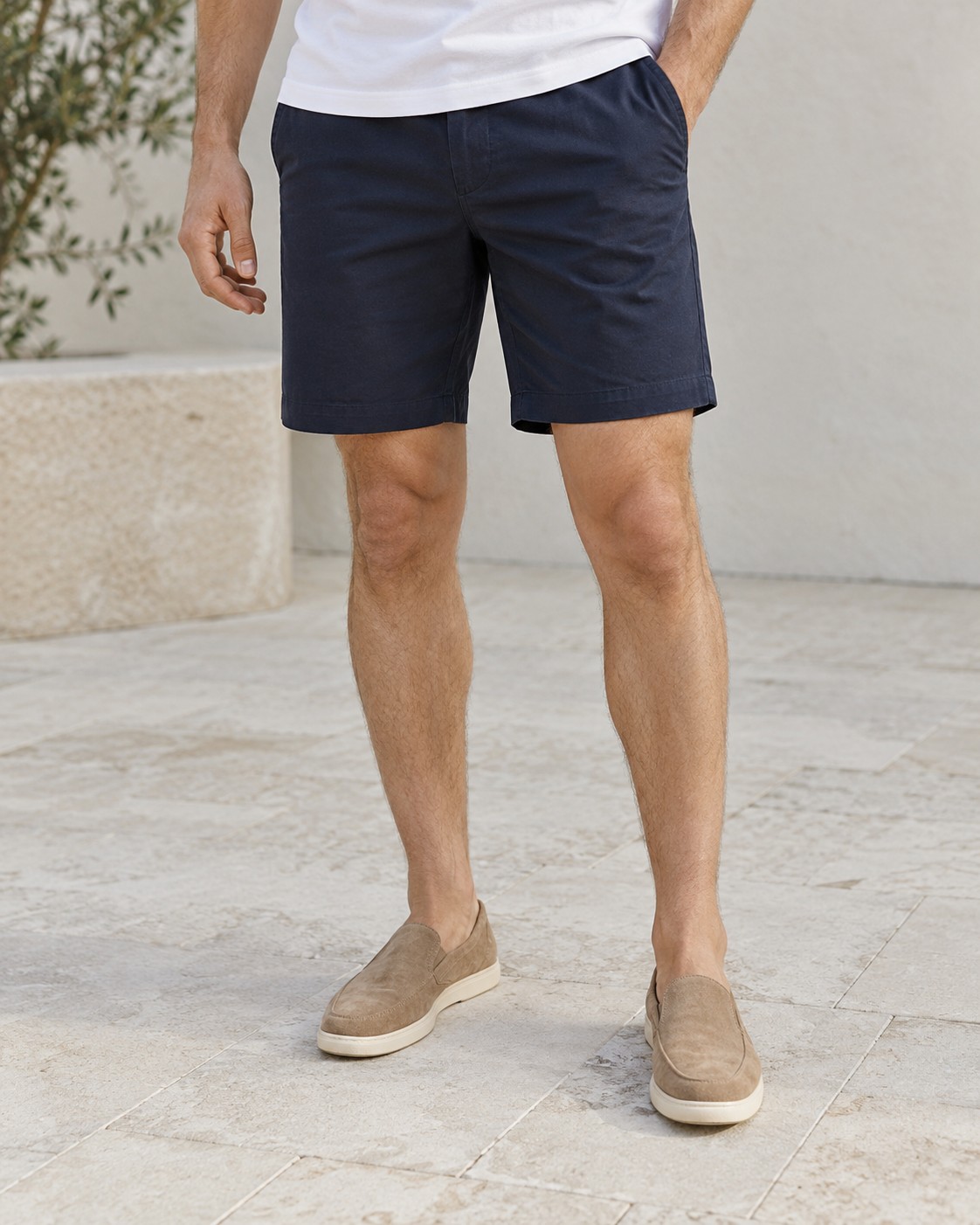
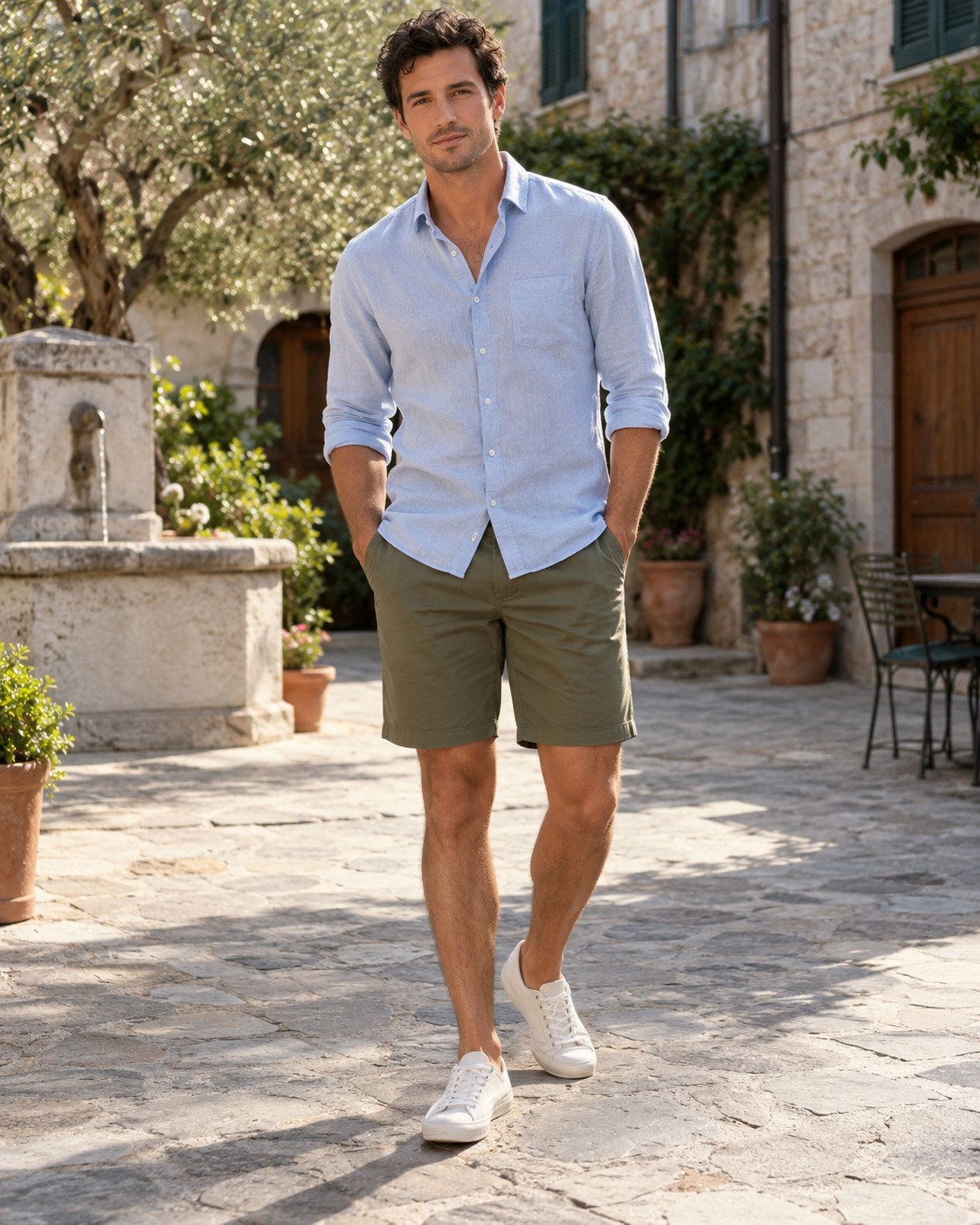
For a quiet town outfit, try plain navy shorts with a light tee and simple trainers. A linen shirt with olive shorts and suitable sandals creates a different option without becoming formal. Check the overall volume: a loose shirt and roomy shorts can work together, but you should like the full outline rather than each garment only in isolation.
Some workplaces, restaurants and events do not accept shorts. The fact that a pair is tailored does not override those expectations. Choose them for the settings where they make sense, and keep an alternative available when the dress code is uncertain.
Before buying, inspect the care label and the waistband fastening. Everyday shorts should be easy to move in and straightforward to maintain. There is no single correct length for everyone; comfort, context and the proportions you prefer are more useful guides.