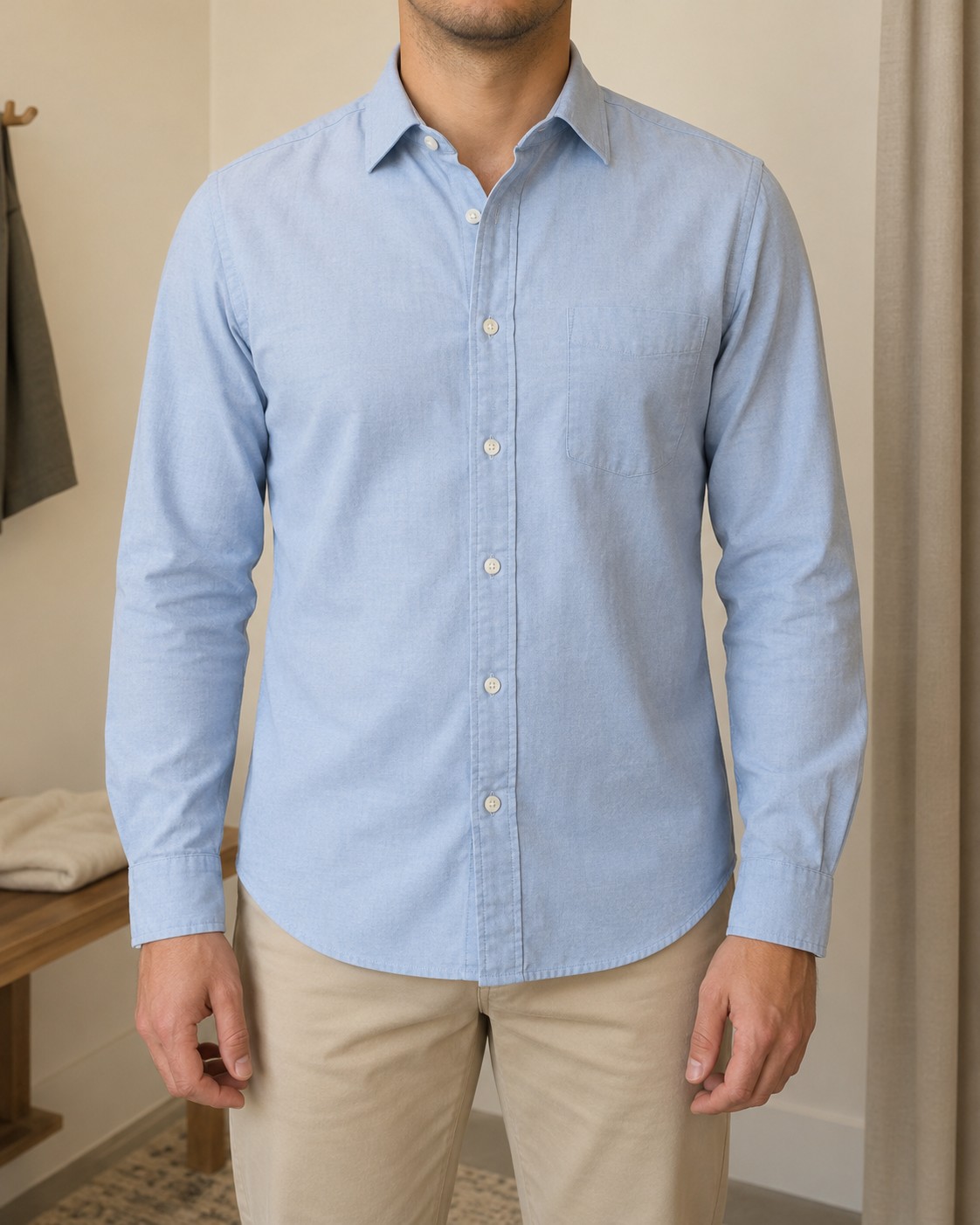
Reading the shoulder fit of a jacket
Width, slope and construction work together, so a single seam position cannot explain every fit problem.
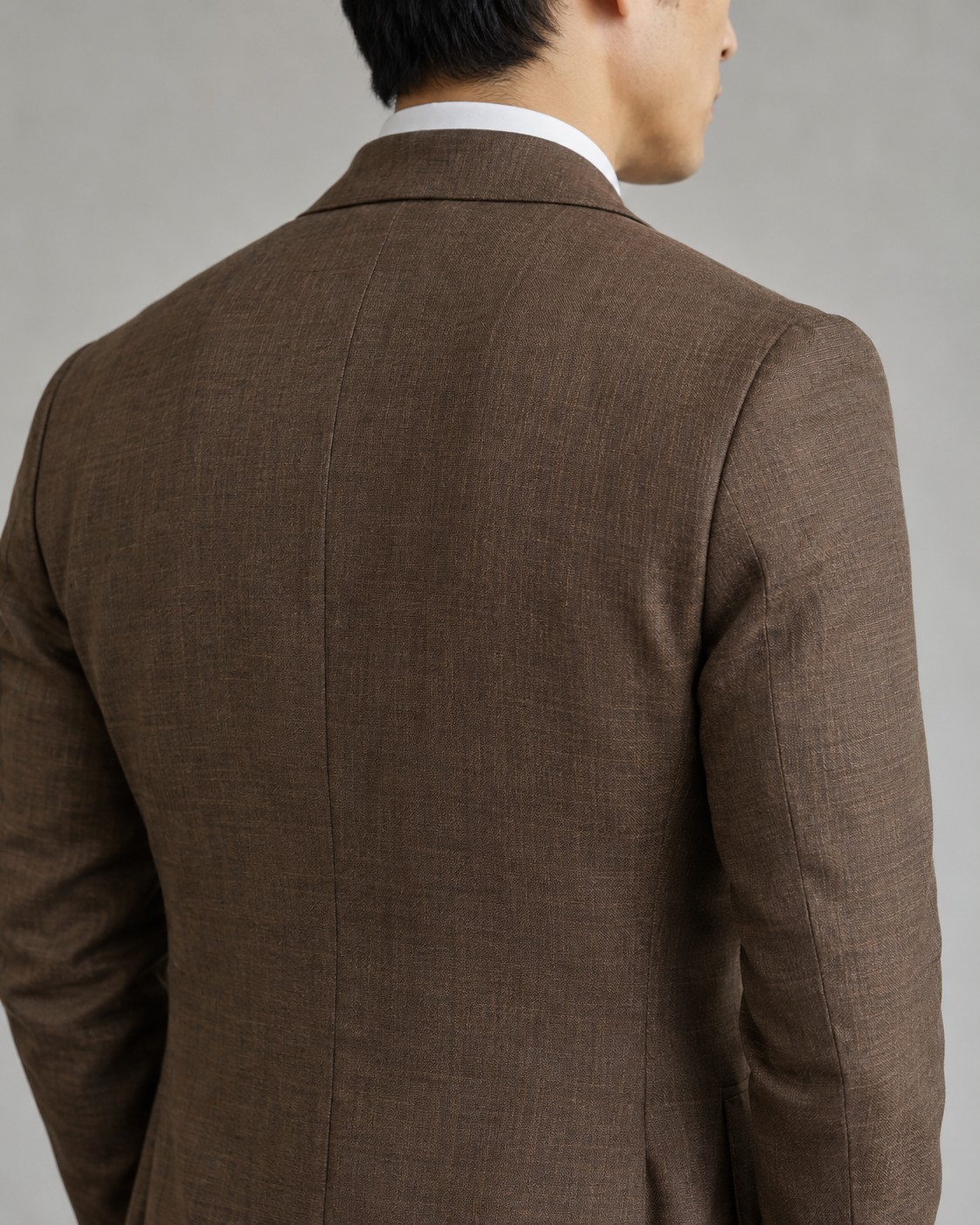
The shoulders strongly influence how a tailored jacket hangs, but they are not easy to assess from one rule about where a seam should end. Shoulder width, slope, padding and sleeve construction interact. A soft jacket and a structured one can look different while both fitting as intended.
Begin with a relaxed stance
Wear the shirt or light layer you expect to use underneath. Let your arms hang naturally and avoid pulling your shoulders back into a posture you will not maintain. Look at the jacket from the front and back, preferably with help or a photograph taken from a sensible distance.
The fabric should sit reasonably smoothly around the neck and shoulder area without obvious strain. A pronounced hollow or bump near the sleeve head can be a sign that the shape is not working, but it is not a diagnosis on its own. The sleeve, upper arm and chest may also be involved.
Width is not the same as slope
Shoulder width concerns the distance across the jacket. Slope concerns the angle from the neck towards the shoulder edge. A jacket can be wide enough and still sit awkwardly because its angle differs from your own. Simply sizing up may therefore add unwanted width without solving the original issue.
Look at the collar as part of the same assessment. Does it sit near the shirt collar, or does it pull away when your arms are resting? Are there persistent folds below the back of the neck? These observations are useful to show a fitter, but several causes can produce similar symptoms.
Allow for the intended construction
A soft shoulder may reveal more of your natural outline. A padded shoulder may extend or shape it deliberately. Neither needs to imitate the other. Decide whether you like the intended silhouette before asking whether every visible difference is a fault.
Move your arms forward as if reaching a desk, then let them rest. A tailored jacket will move with you and may not offer the unrestricted range of a sports top. It should still permit the ordinary activities you need without severe pulling or constant resetting.
Do not buy an alteration project casually
Shoulder work can be structurally involved. Before buying a jacket that obviously needs it, ask a qualified tailor to assess the actual garment and quote for the proposed change. Construction, cloth and the extent of the problem affect what is sensible.
If another size or cut sits better from the start, that may be the more straightforward route. Sleeves and waist shaping are not irrelevant, but they should not distract you from a poor foundation at the top of the jacket.
When seeking advice, provide front, side and back views plus a description of how the jacket feels. A close-up of one seam cannot show the whole relationship. The goal is a jacket whose shape suits your body and intended style, not perfect conformity to a diagram made for a different garment.