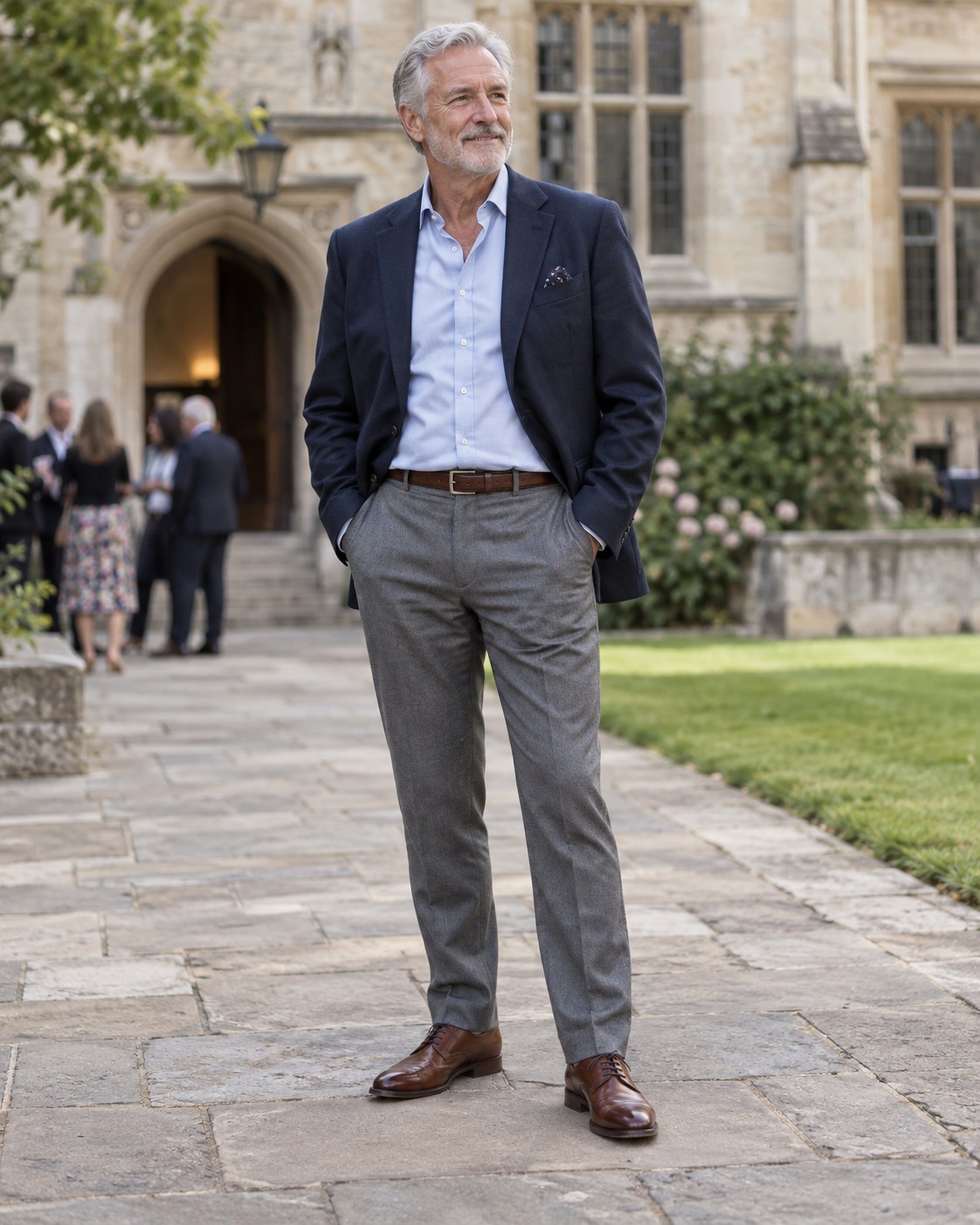
Choosing understated clothes for a funeral
Follow the family's wishes and use suitable clothes you already have wherever possible.
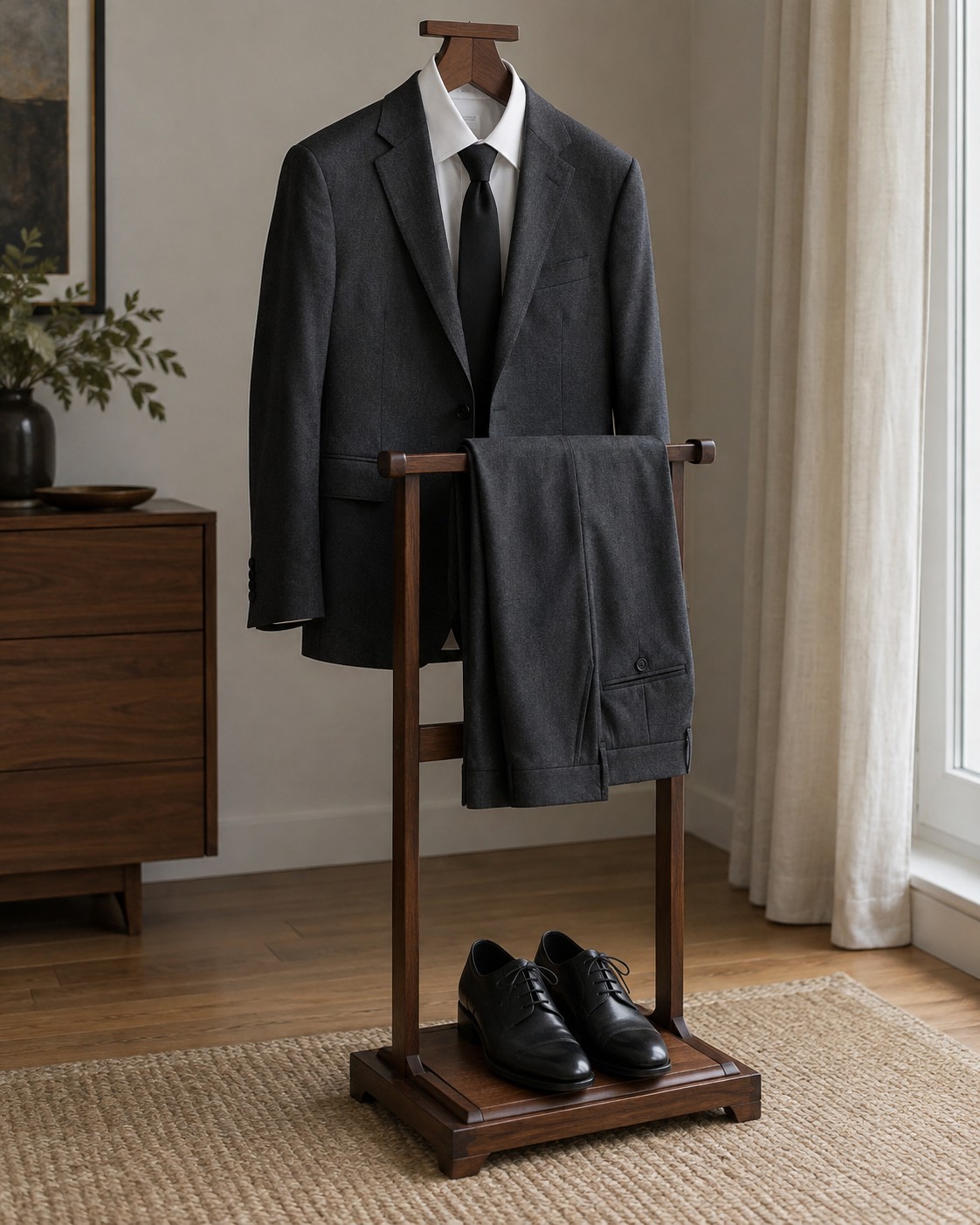
Start with any guidance from the family or funeral organiser. Some funerals request dark formal clothing; others ask for colour, a particular theme or cultural dress. The family's wishes matter more than a general rule from a style website. If you are unsure, contact the organiser or funeral director discreetly.
Co-op Funeralcare's guidance notes that dark clothing is conventional in many UK funerals but not universal, and that attendance matters more than purchasing a prescribed outfit. You do not need to turn an already difficult occasion into a rushed shopping exercise if suitable clothes are available in your wardrobe.
Choose a quiet, workable combination
Where dark formal clothing is appropriate, a navy, charcoal or black suit with a plain shirt and restrained tie can be suitable. If you do not own a suit, consider dark trousers with a shirt, knit or appropriate jacket, taking the organiser's expectations into account. Avoid assuming that an exact shade is more important than comfort, cleanliness and the family's request.
Keep accessories unobtrusive unless the family has asked for something specific. There is no need for decorative additions intended to make the outfit more interesting. Check that the clothes fit now, particularly if they have been stored since another formal occasion.
Prepare for the service and the journey
You may spend time standing outside or walking over grass and uneven ground. Choose footwear you can manage safely and comfortably. If the weather is cold or wet, bring appropriate outerwear rather than relying on the suit jacket. A coat that fits over the complete outfit is more useful than one that only closes over a thin shirt.
Try the outfit seated. A tight collar or waistband can become distracting during a service. If you have clothing, footwear or accessibility needs, prioritise them and seek guidance where necessary. Respect is not measured by enduring avoidable physical discomfort.
Prepare the clothes the day before if possible. Place the shoes, socks and outerwear together so you are not searching for small items while leaving. Keep pockets and any bag manageable, with what you need for the day rather than unnecessary bulk.
Religious and cultural customs differ, including expectations around head coverings and footwear. Ask rather than guessing if the service is unfamiliar to you. Once the family's instructions and your practical needs are covered, the clothing has done its job. The purpose is to attend and support others, not to achieve a perfect formal outfit.