Checking stored clothes for moth damage
Look for evidence, isolate affected items and address the storage space rather than relying on scent alone.
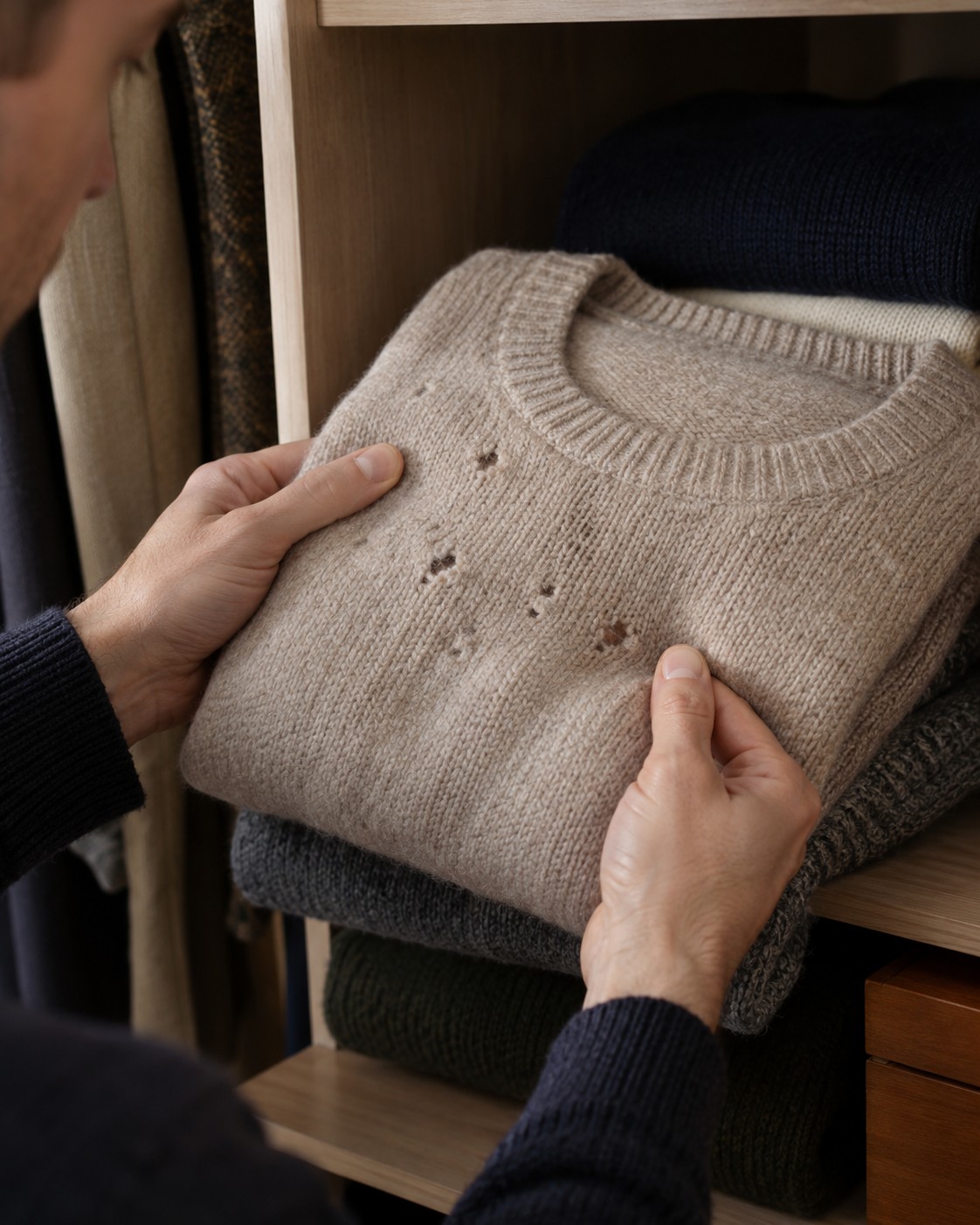
A small hole in a jumper is worth inspecting, but it does not automatically identify the cause. Snags, abrasion and insects can all damage fabric. Look for a pattern of evidence before deciding what to do, and avoid treating every moth flying near a window as proof of a wardrobe infestation.
Examine quiet areas
Take clothing out where you can see it clearly. Check folds, seams, cuffs and areas that have remained undisturbed. Look at nearby stored textiles and the wardrobe itself, not only the first damaged garment. English Heritage's clothes-moth guidance is a useful source for recognising the insects and understanding prevention.
If you find suspicious activity, separate affected items from the rest while you seek appropriate advice. Keep a record of where the damage appeared and, if possible, a clear photograph of the evidence. This is more useful for identification than immediately discarding everything or spraying the whole room.
Do not assume that a cedar block or scented sachet eliminates an established problem. Fragrance and effective treatment are different things. Products and traps have specific uses and limits; read their directions and seek pest-management advice when the issue is persistent or unclear.
Clean the space as well as the clothes
Remove dust, lint and debris from accessible shelves, corners and floor edges. Deal with vacuum contents appropriately so you do not simply move the problem. Inspect containers and garment covers before returning clothing to them.
Clean garments according to their care instructions. A treatment suitable for a washable tee may damage a tailored wool jacket. Do not improvise high heat, freezing schedules or pesticides based on a method intended for a different textile. Valuable, delicate or heavily affected items may require professional advice.
Allow everything to dry fully before storage. Keep clean clothing in suitable containers or covers and inspect it periodically, especially if it will remain unused for months. Storage that is easy to open and check is preferable to an inaccessible pile you will not see until next winter.
Repair after the cause is addressed
A small hole may be repairable, but mending alone does not resolve an active storage problem. Discuss the fabric and desired finish with a repairer once the garment has been appropriately treated. Some repairs will remain visible, which may be acceptable for a favourite piece.
Make a short follow-up check part of the next wardrobe change. Look for fresh evidence and review whether the storage conditions have improved. The useful routine is observation, appropriate cleaning and a response to what you actually find, not a blanket promise that one product makes a wardrobe permanently moth-proof.