Choosing hangers for different garments
Match the support to the garment's weight and shape instead of using the same hanger for everything.
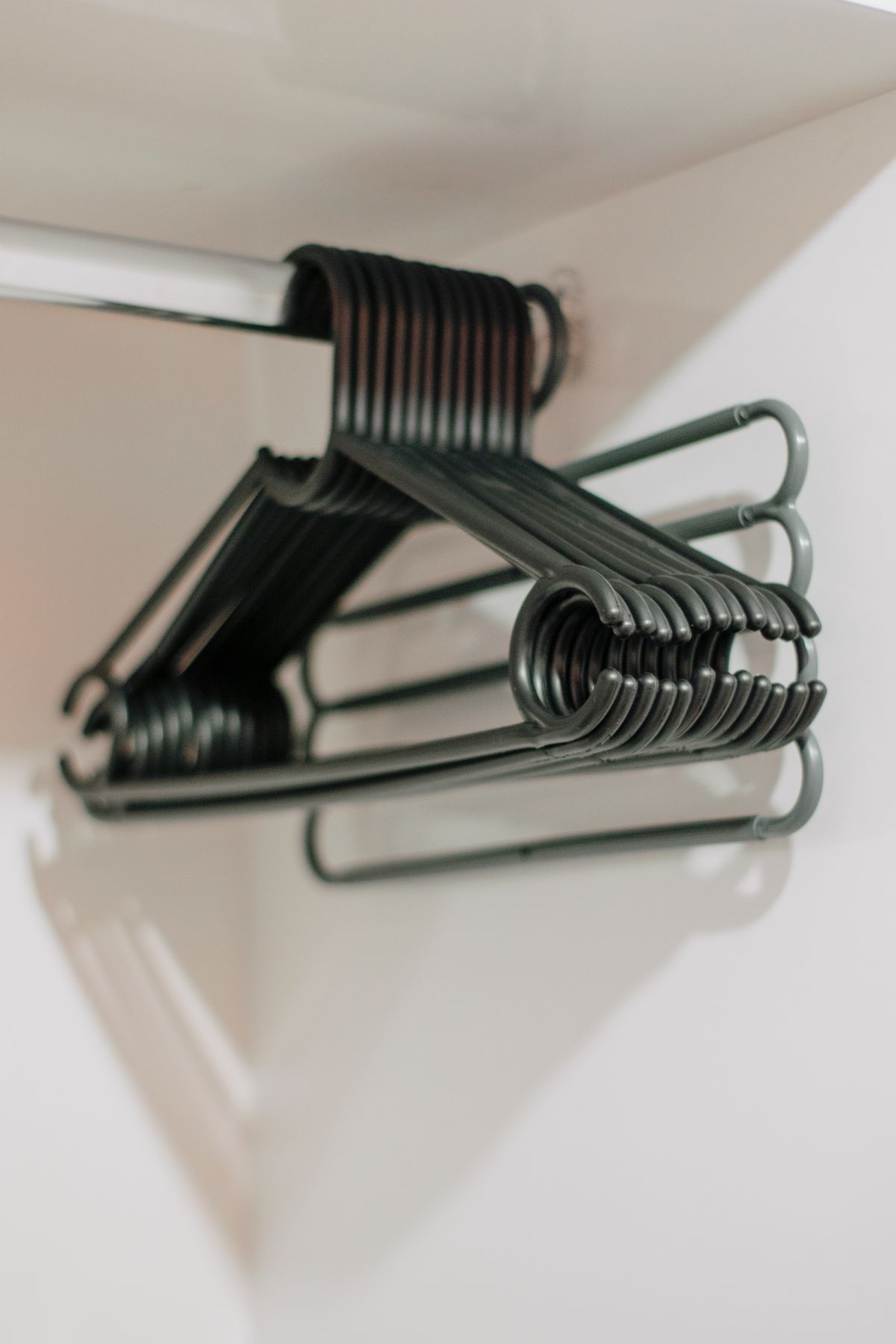
A hanger is a small object that can change how clothing looks when you next take it out. Too narrow, and it may concentrate weight in the wrong place; too wide, and it can push into sleeves. Start with the garment rather than buying a matching set purely for the appearance of the wardrobe.
Support tailored shoulders
Jackets and coats benefit from a shape that supports their shoulders without forcing them outward. Compare the hanger width with the garment and look at how the fabric settles. A heavy coat suspended from a thin wire hanger may not receive the support its construction needs.
Leave enough room around tailored pieces. Even a suitable hanger cannot protect a jacket that is compressed between several heavy coats. If the wardrobe rail is crowded, reduce what hangs there or move out-of-season clothing to appropriate storage.
Check that the hook and surface are smooth. Rough edges can catch lining or lightweight fabric. A hanger that twists awkwardly or slips from the rail is worth replacing before it drops a clean garment onto the floor.
Shirts and trousers need different handling
For shirts, choose a size that follows the shoulder width reasonably well and fasten a button if that helps the shirt stay in place. Do not force the hanger through a small closed neck opening; open the shirt and insert it without stretching the collar.
Trousers can be folded over a suitable bar or hung with appropriate clips, depending on the fabric and intended crease. Check whether clips leave marks and whether the bar is wide enough to avoid a sharp unintended fold. Use the garment's construction as the guide, especially for delicate or structured trousers.
Make the system easy to use. If putting trousers away requires carefully dismantling an overcrowded multi-tier hanger, they may end up on a chair instead. A slightly less dense arrangement can be more useful than maximum storage capacity.
Some clothes belong on a shelf
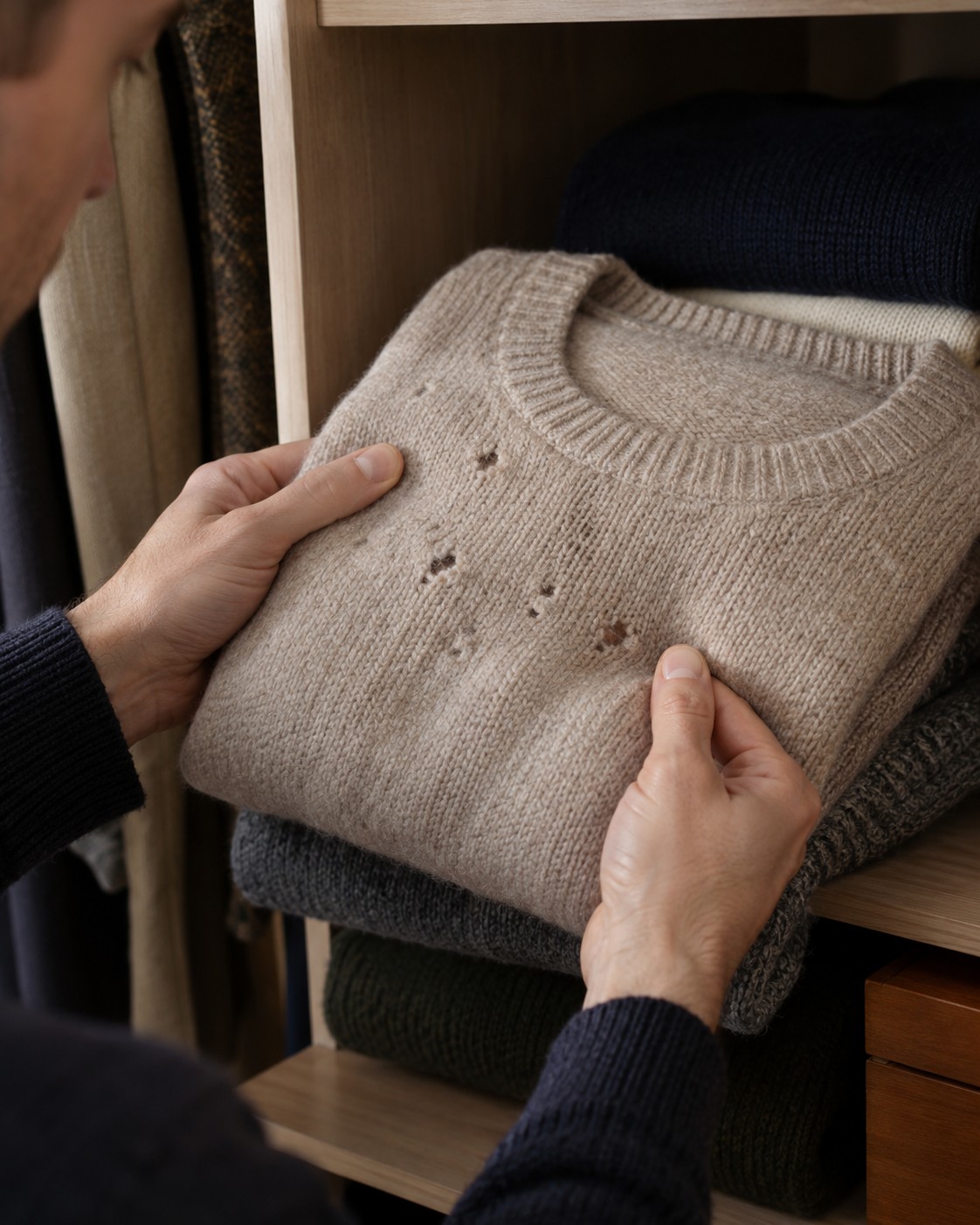
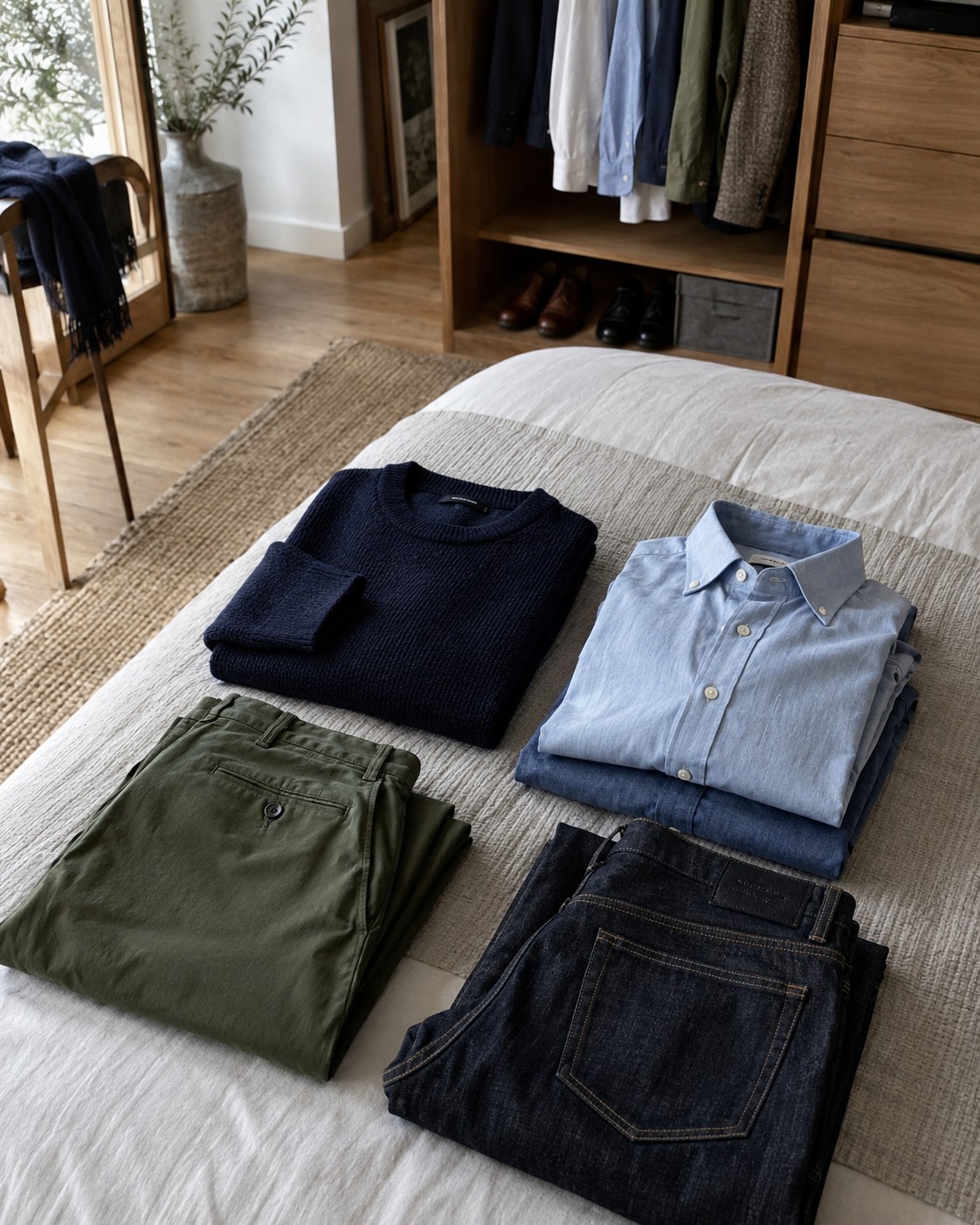
Heavy or easily stretched knitwear is often better folded, subject to its care guidance. Hanging a jumper under its own weight for a long period can change its shape. Fold it without sharp pressure points and avoid a stack so tall that retrieving the bottom item disrupts everything.
Inspect clothing after storage. Shoulder bumps, sliding straps or persistent creases are feedback about the support, not necessarily faults in the garment. Change the hanger or storage method before assuming that every problem needs ironing. A wardrobe should return clothes in a usable state, not create a new care task each morning.