Building winter layers that fit together
Build warmth around your day and leave room for the air and movement between garments.
A winter outfit is a system, not a competition to wear the thickest possible jumper. The useful amount of clothing depends on your route, activity, indoor heating and personal comfort. A heavy knit under a tight coat can be less pleasant than a lighter combination that closes easily and lets you move.
Work from the inside out
Choose the first layer for how it feels against your skin and how you will use it. A tee may be enough for a short town journey. A purpose-made base layer may suit a colder or more active day. Its neckline and sleeve length should disappear comfortably under the clothes above, unless you intend them to be visible.
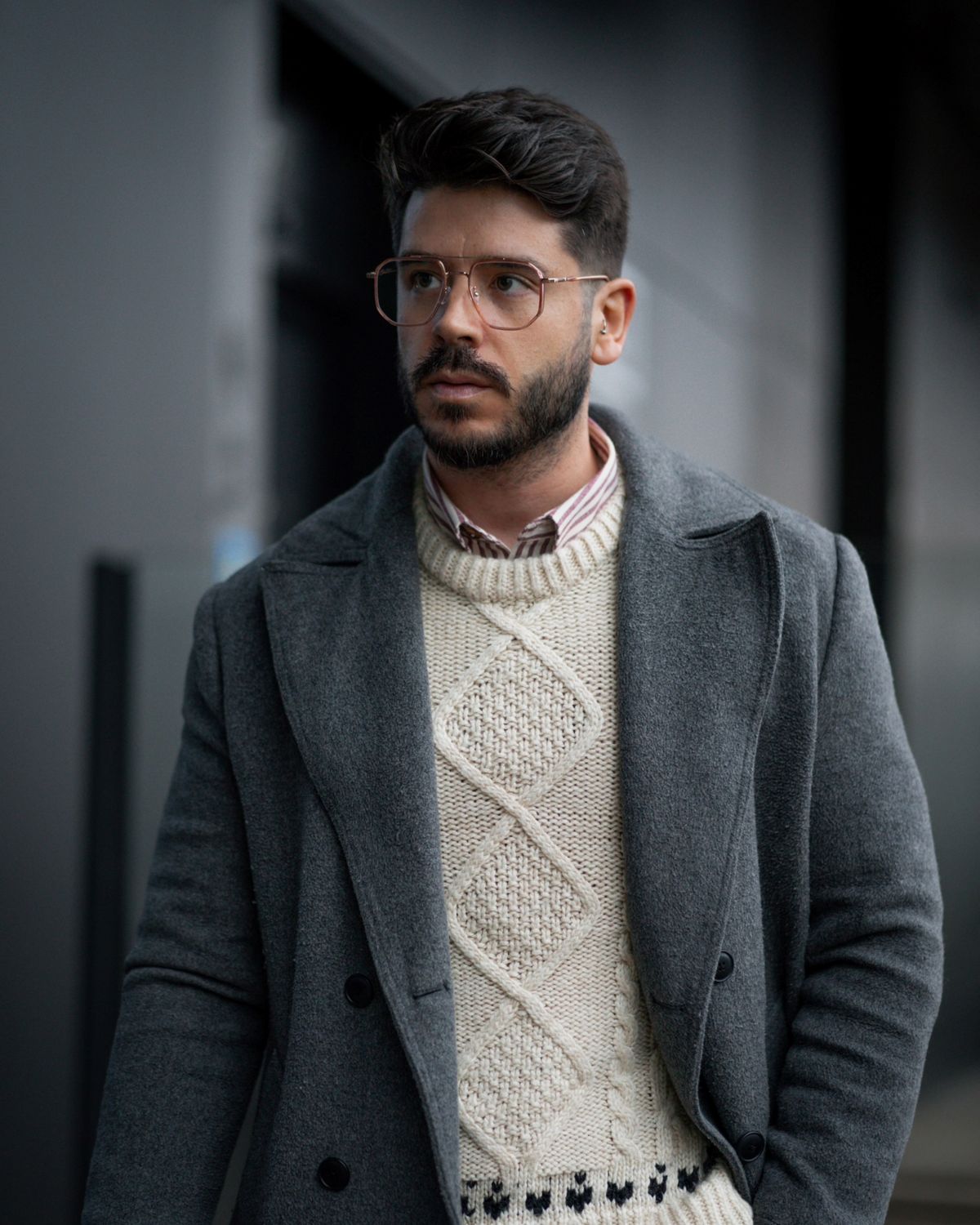
The middle layer is where you can adjust much of the outfit's character. A fine crew-neck under a wool coat looks different from a fleece beneath a casual shell. Both can make sense in the right setting. Avoid adding a formal coat simply to disguise an outfit built for an activity; the pieces should still work together when the outer layer is removed.
Try the coat closed. Check the upper back, armpits and elbows, then sit down. Compression around several layers is a sign to reconsider the combination or coat cut. Going up a size can introduce new problems at the shoulders and sleeves, so compare a more suitable shape as well.
Plan the warm room version
If your journey ends in a heated office, the indoor outfit matters as much as the outdoor one. A removable cardigan may be easier to adjust than a heavy pullover. Keep the shirt or tee beneath presentable on its own, and choose somewhere sensible to put the removed layer.
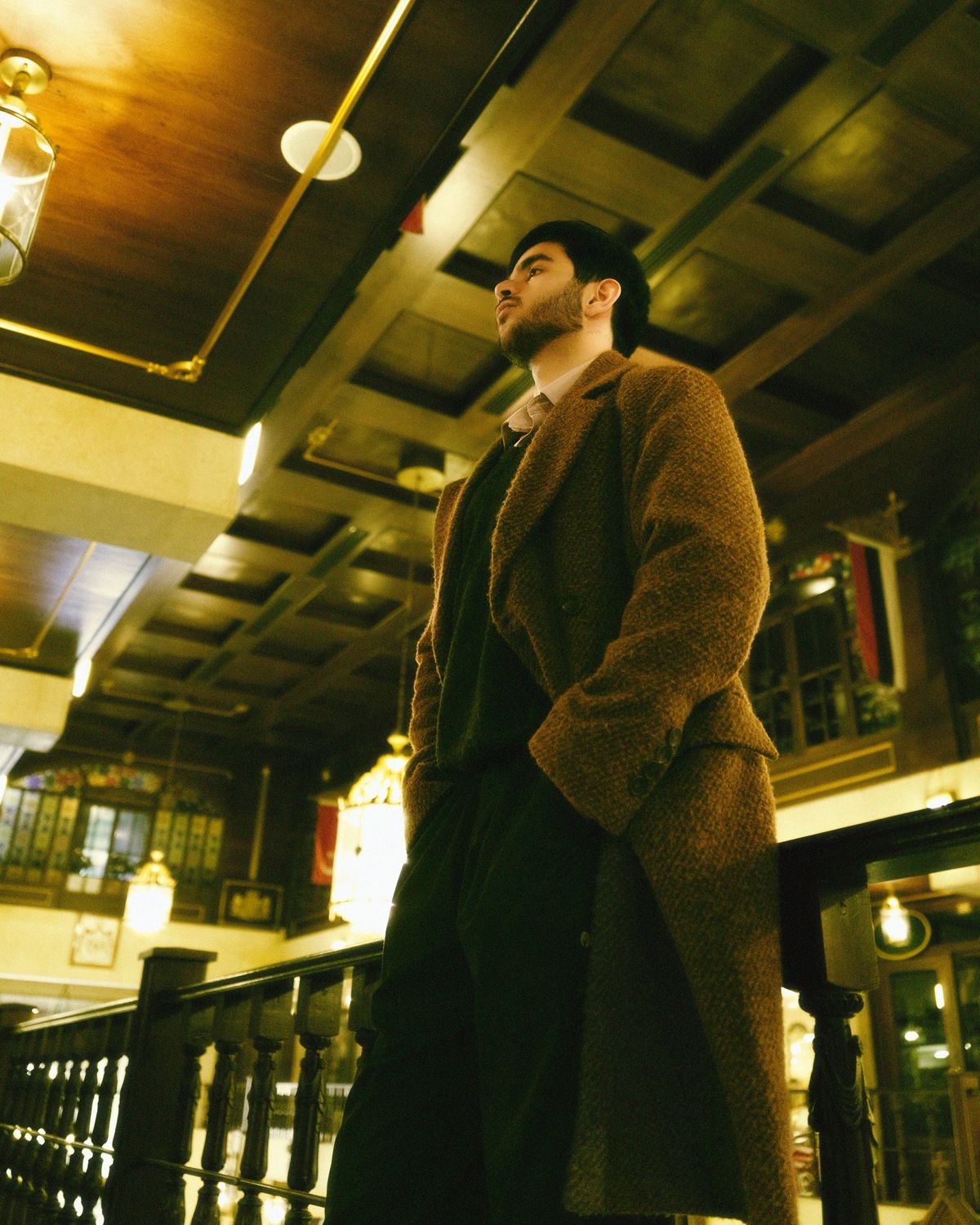
One town combination is a light tee, a midweight charcoal knit, dark jeans and a roomy camel or navy coat. Brown or black boots can work depending on the rest of your wardrobe. For a more dressed setting, replace the jeans with wool trousers and check that the coat covers the jacket beneath.
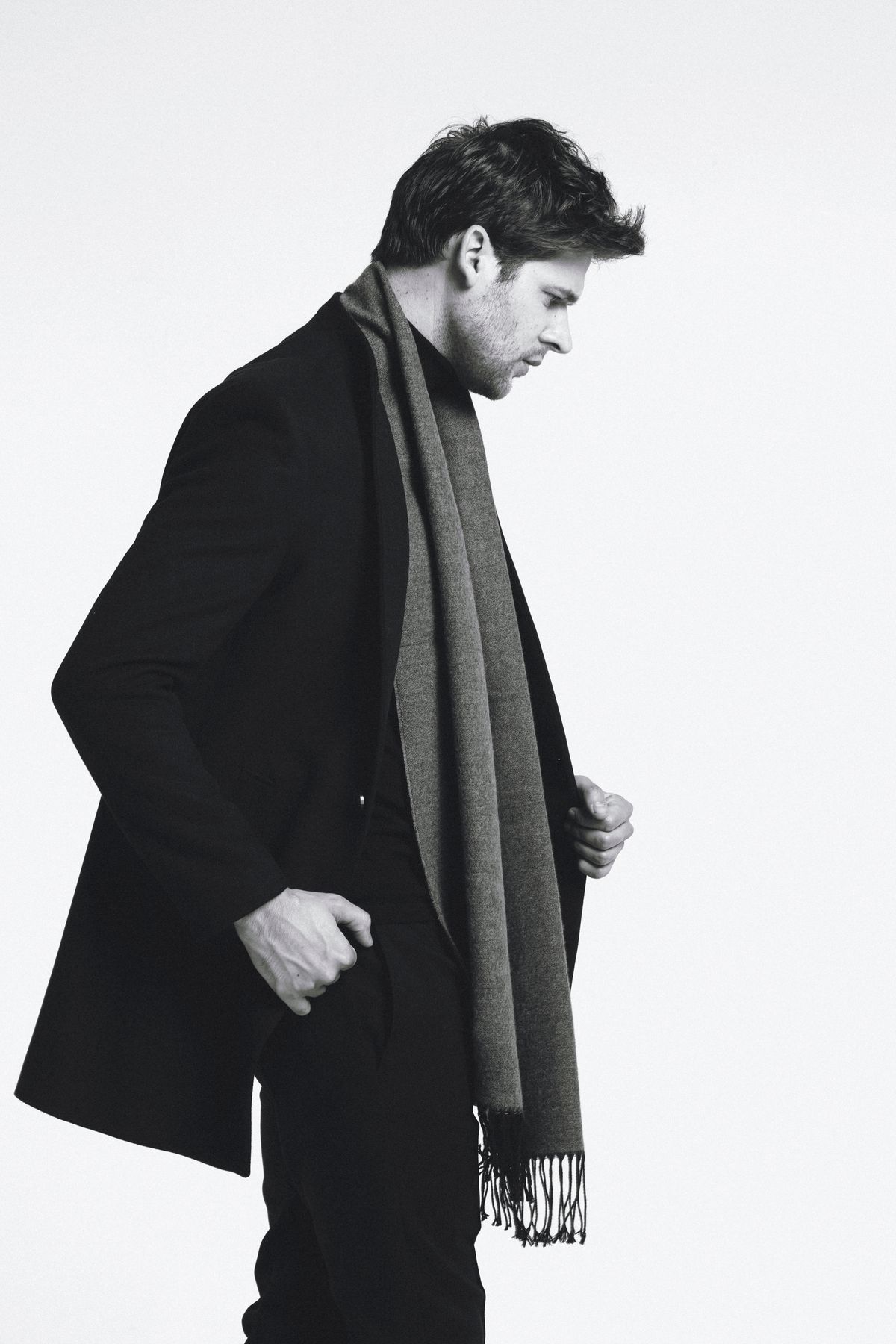
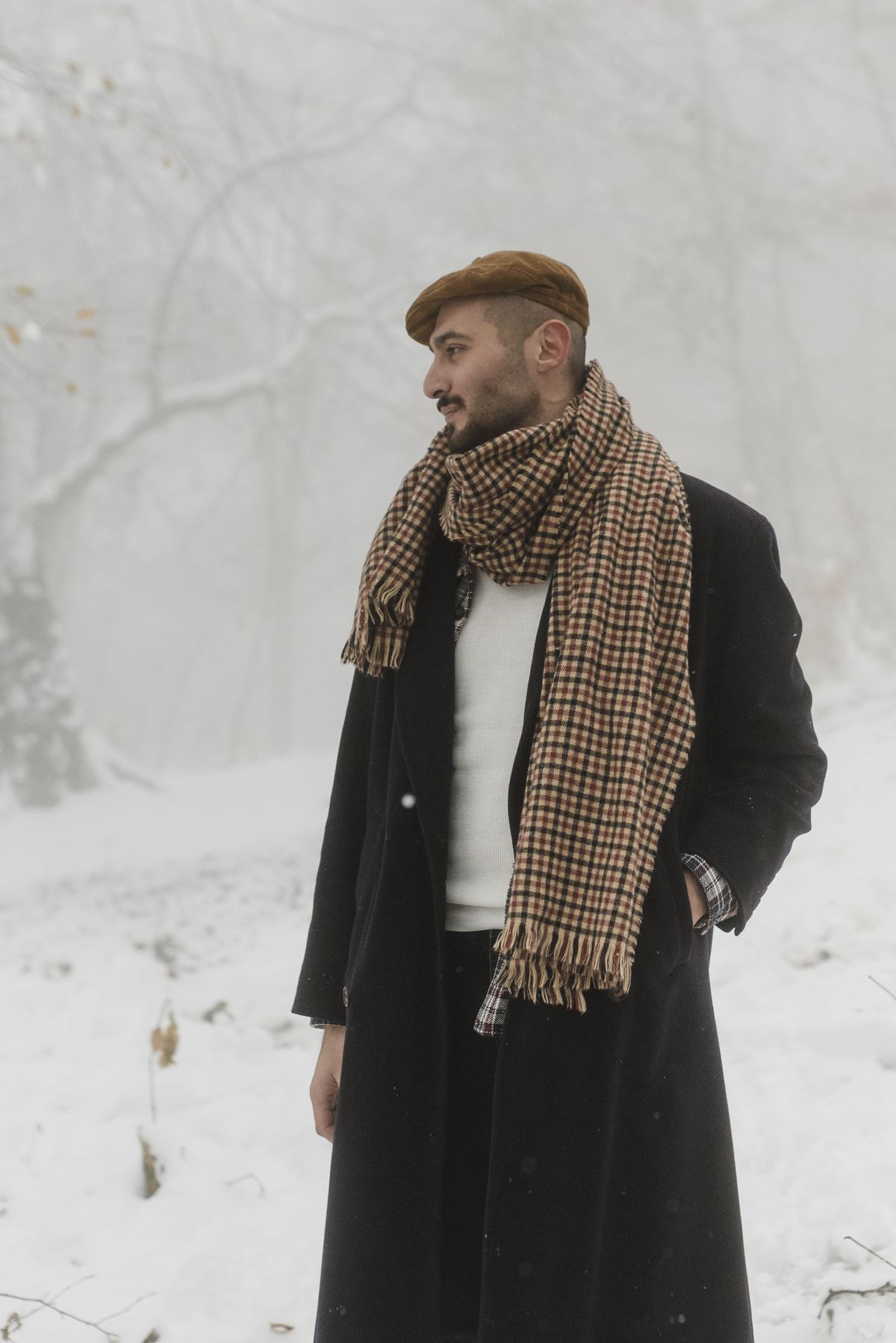
Do not neglect the smaller exposed areas. A scarf, gloves and a hat can change comfort without adding another thick torso layer. Choose them around their actual function first. Gloves you cannot operate your normal bag fastening in, or a scarf that constantly comes loose, may need a different design rather than more elaborate styling.
Two days that need different systems
For a short walk followed by a whole day indoors, put the extra warmth in the coat and removable accessories. The shirt or fine knit beneath should suit the room. In this version, a very heavy jumper can become the inconvenient item because there is no comfortable way to remove it without changing the outfit.
For a slow afternoon spent mostly outdoors, you may prefer more warmth in the middle layer and a coat that comfortably accommodates it. Check the trousers too: a warm torso does not make a lightweight summer trouser appropriate for every cold outing. Choose the combination for the length and nature of the exposure, with specialist advice where conditions call for it.
The difference is not that one outfit is more stylish. Each puts bulk where it will be useful. This is why copying a winter photograph without knowing the wearer's day can produce an impractical wardrobe. Work from your own route, then use colour and texture to make the necessary pieces look coherent.
Use weather information, not a fixed outfit formula
Wind and rain can make the same temperature feel different. Check the forecast and use outerwear intended for the conditions. Ordinary fashion advice is not a substitute for specialist clothing guidance for severe weather or outdoor activities.
For everyday dressing, test the complete outfit during a short familiar journey before relying on it for a long day away. Notice which layer you remove, where you feel restricted and what becomes awkward to carry. Those observations are more useful than adding another garment because winter outfits are supposed to have a certain number of pieces.