Choosing a watch size by how it wears
Case diameter is only one dimension; the strap, lug span and thickness all affect the experience on your wrist.
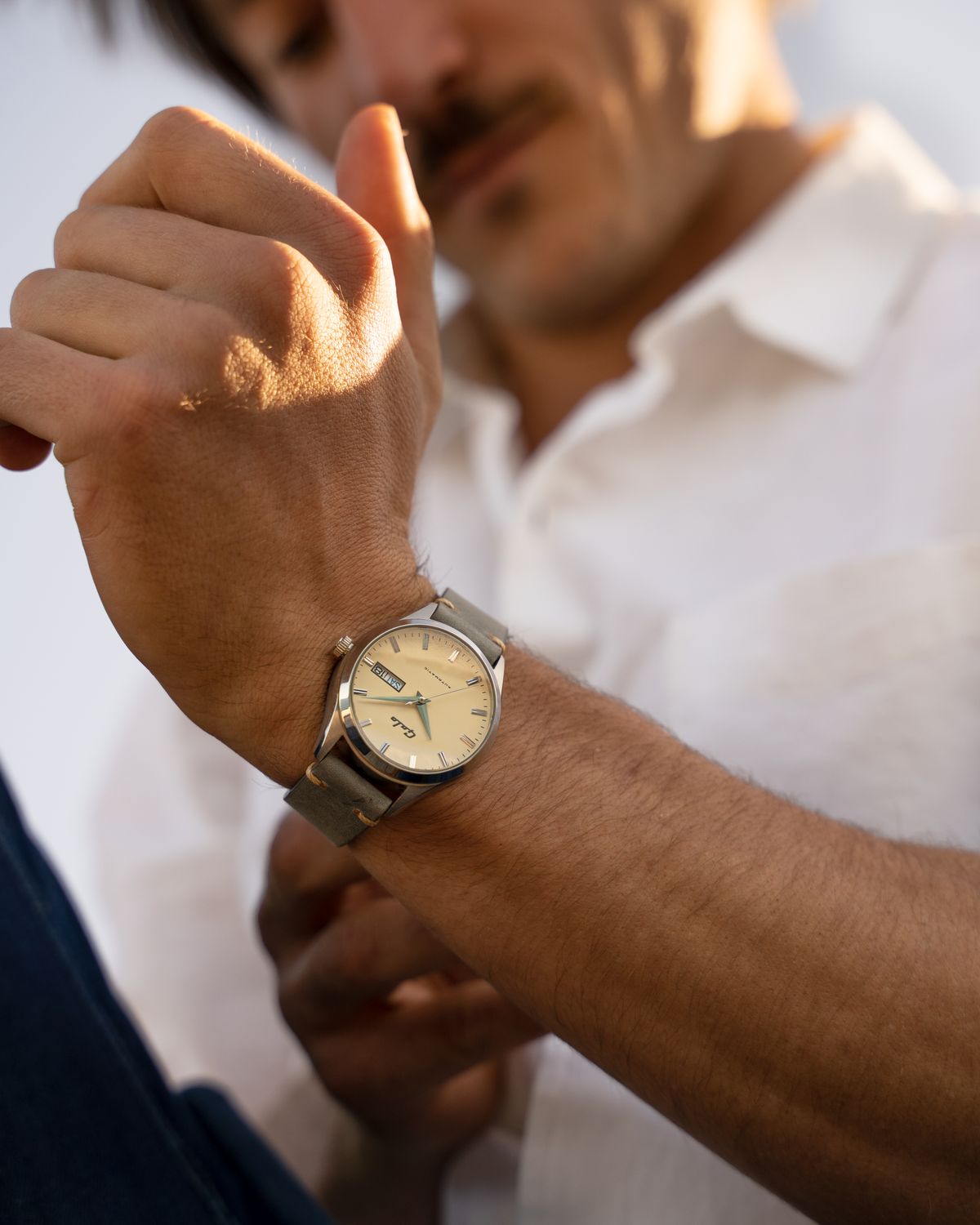
A watch's case diameter is easy to compare online, which makes it tempting to treat that number as the whole fit decision. It is not. The distance between the lugs, the shape of the case, its thickness and the way the strap or bracelet leaves the watch all affect how it sits.
Try it on your wrist, not beside it
Fasten the watch comfortably and let your arm hang naturally. Look in a mirror or from a normal viewing distance, not only in a close-up phone photograph. A camera held close to the wrist can make the watch appear disproportionately large.
Notice whether the case sits securely or rocks around. The lugs should relate comfortably to the available wrist surface, but there is no single diameter formula that works for every wrist shape and watch design. Two watches with the same diameter can wear quite differently.
Check the thickness with a cuff
If you plan to wear the watch with shirts, try the actual cuff over it. A thick case may catch where a slimmer one slips under. That can be acceptable for a casual outfit, but it is worth knowing before choosing a watch mainly for work or dressier occasions.
The crown and case edges should not press uncomfortably when you bend your hand. Move your wrist as you would while typing or carrying something. A watch that looks balanced but irritates during routine movement is not the right fit for that use.
Give the band equal attention
A bracelet that is too loose can let the watch slide and rotate. One that is too tight can become uncomfortable. Ask the retailer about adjustment options and follow the model's instructions rather than attempting unfamiliar link removal with improvised tools.
For a strap, check that the available holes provide a comfortable position and that the remaining tail is manageable. A different strap may change the feel, but confirm compatibility and attachment requirements before assuming any strap can be fitted safely.
Consider the clasp position as well. It should sit comfortably beneath the wrist rather than forcing the watch off-centre. Fine adjustment options can be useful, but they vary by design.
Make online comparisons more useful
If you cannot try the watch in person, compare its measurements with one you have worn, including thickness and lug-to-lug distance where supplied. Product photographs on another person's wrist are only approximate references because wrist shape, camera distance and strap adjustment differ.
Check the return conditions before ordering and avoid removing protective packaging or altering a bracelet beyond what the seller permits during evaluation. If the watch is a gift, an adjustable or exchangeable option may be more useful than guessing from a photograph of the recipient.
Keep a note of what bothers you about a reference watch. Is it the case hitting your hand, the clasp pressing on the desk, or simply more visual presence than you want? Those are different problems. A smaller diameter may help only one of them, while a different case profile or band arrangement could solve another.
Choose visual presence deliberately
A larger dial may be easier for you to read or simply suit your taste. A smaller watch may feel less intrusive beneath clothing. Neither choice is inherently more masculine, mature or correct. The relevant questions are comfort, readability and whether you like it as part of your usual outfits.
Try the watch with both a casual top and a shirt if it needs to serve both roles. A highly reflective bracelet or prominent case can draw more attention than the diameter suggests. A quieter finish may read smaller visually without changing the measurement.
Finally, separate fit from performance claims. Water resistance, service requirements and intended activities depend on the specific model, not how robust it looks. Read the instructions for those questions. A successful size choice is the one you can wear comfortably through your actual day, not one that satisfies an online chart while the watch remains in a drawer.