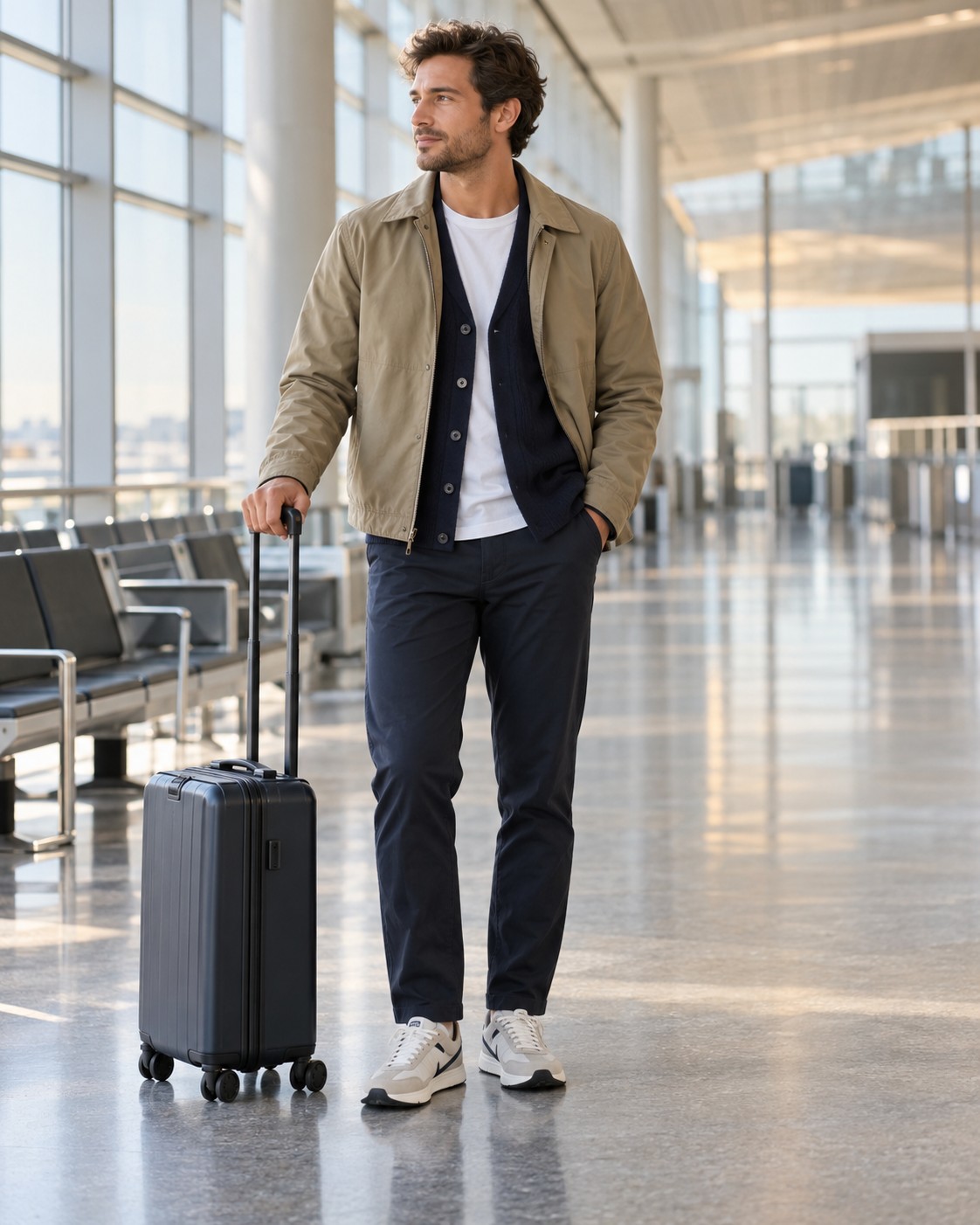
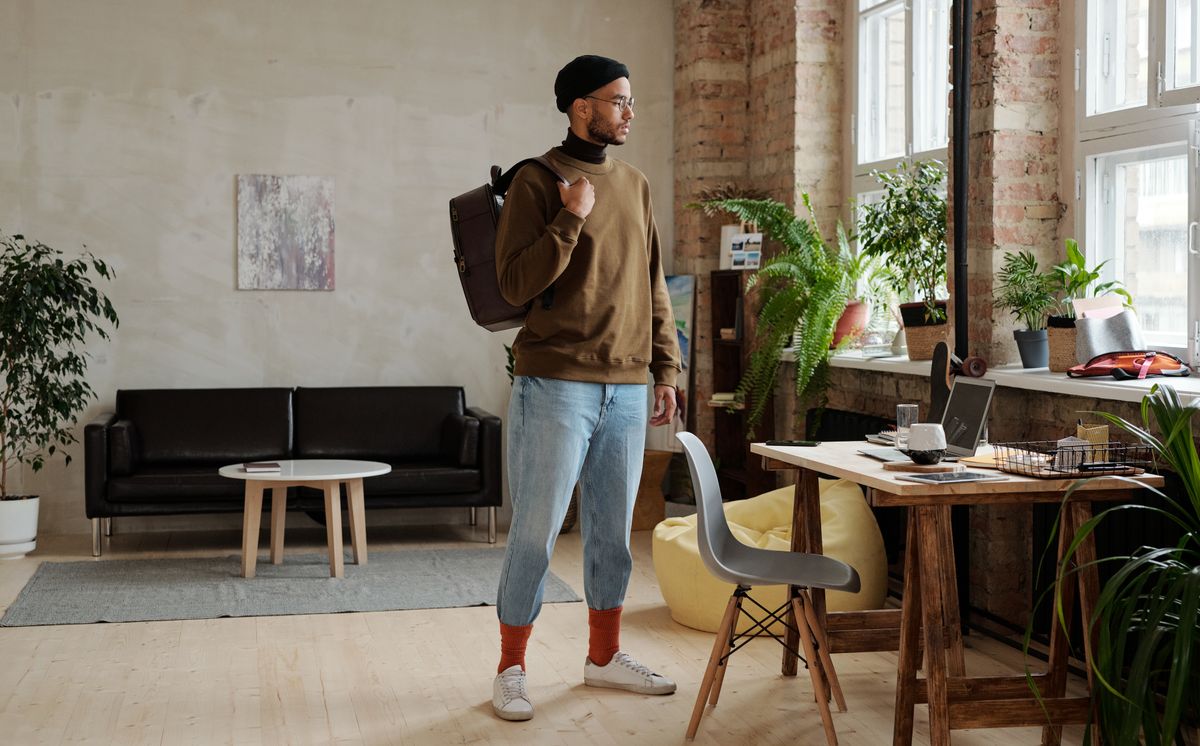
An outfit for a long travel day
Comfort, access and a usable change of temperature matter more than an airport look.
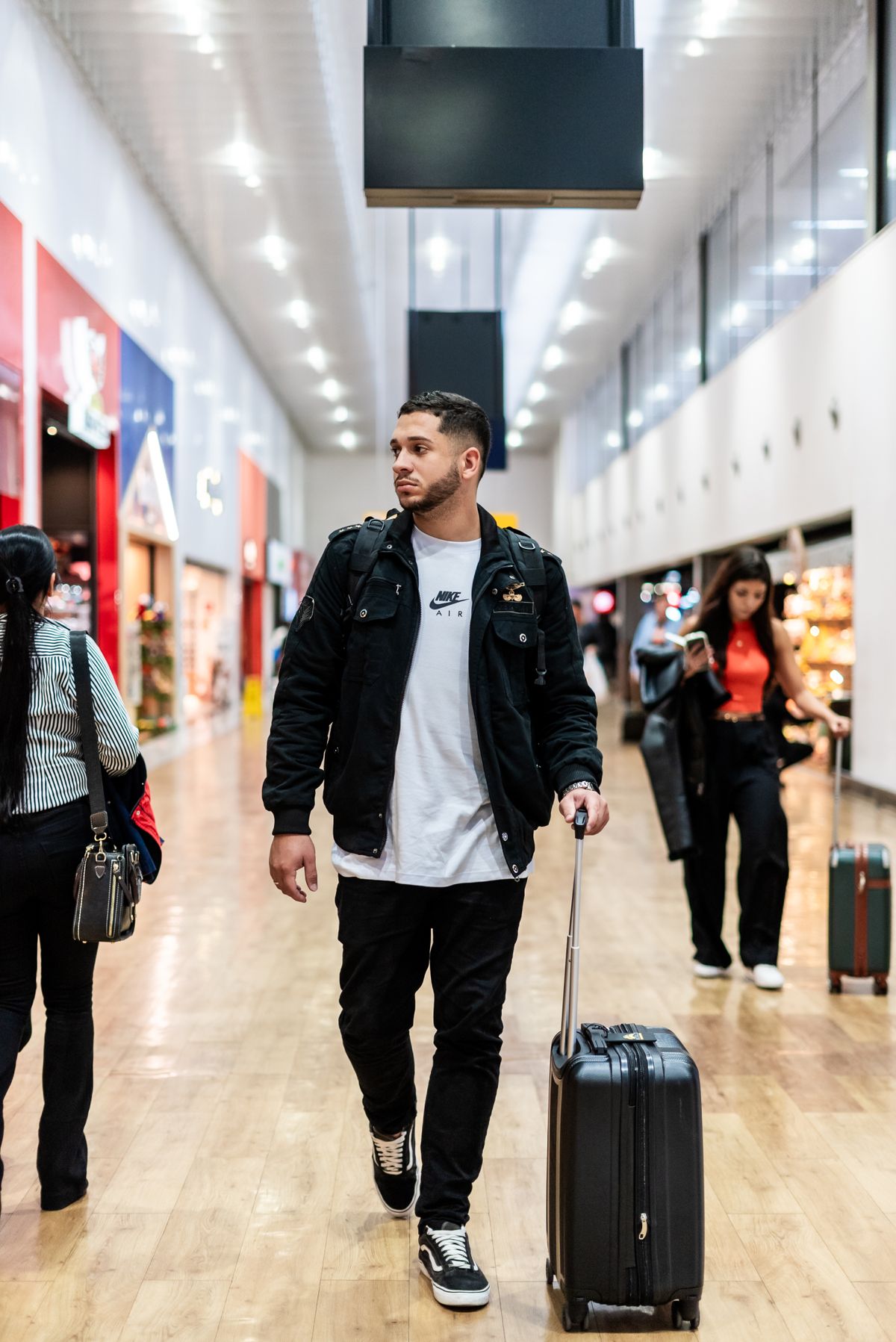
Dress for the actual hours of a journey: travelling to the station, sitting down, lifting a bag, waiting, and arriving somewhere with potentially different weather. The outfit should remain comfortable throughout those changes. It does not need to resemble either office tailoring or sleepwear.
Test the seated fit
Trousers are usually the deciding piece. Try them seated for more than a moment, with your phone and wallet where you expect to carry them. A waistband that feels acceptable standing can press uncomfortably after an hour. Room through the seat and thighs often matters more than a stretch percentage on a label. An elastic or adjustable waist may help, but only if the particular cut works for you.
Choose a top that does not require constant arranging. A tee with an overshirt, a soft polo, or a lightweight jumper can all serve. Avoid putting every travel document in different clothing pockets if you expect to remove layers; a designated secure bag compartment can be easier to manage. Follow the carrier's and airport's actual instructions rather than relying on clothing advice for security procedures.
Make the layers independent
A light jacket or cardigan gives you a temperature adjustment without forcing you to change the main outfit. Consider how it packs away and whether it creases in a way you mind. Wear a base layer you are happy to be seen in alone. A coat that is necessary at departure may be inconvenient at arrival, so leave room in your luggage or plan how you will carry it.
One workable combination is charcoal casual trousers, a mid-blue tee and an olive overshirt, with shoes you have already worn for a full day. The colours are restrained, while each garment can be used again during the trip. If your destination requires smarter clothing immediately, swap the tee for a casual shirt and choose trousers appropriate to that setting. Do not assume a jacket alone will transform very casual bottoms.
Pack the small recovery options
A spare top and suitable essentials in your accessible luggage can be useful if a drink spills or your main bag is delayed. Choose items that work with what you are wearing, rather than an unrelated emergency outfit. Keep care requirements realistic: a travel tee that demands delicate treatment may not suit your plans.
Footwear should accommodate the journey's walking and standing, not just match the bag. Check the socks and fastening as well. If a meeting or event truly needs different shoes, carrying them can be a better answer than enduring a long journey in an unsuitable pair. Travel clothes succeed when they reduce small irritations and leave you ready for the day that follows.