Choosing a jacket between seasons
Choose the gap in your wardrobe before choosing the jacket that is meant to fill it.
The phrase transitional jacket can describe almost anything lighter than a winter coat. That makes it a weak shopping brief. A more useful question is what your current clothes fail to do: cover a light knit, handle a short shower, look appropriate at work or pack into a bag when the afternoon warms up.
Give it one main job
If you need something for dry weekends, a denim jacket, bomber or overshirt may be enough. If the gap is a rainy commute, examine outerwear designed for rain. If you need to cover a blazer, check length and volume over that blazer rather than buying a short casual jacket and hoping it will accommodate everything.
A light jacket should not automatically be tight. Try it with the thickest reasonable layer you expect to use. Move your arms, close the front and check the collar. A style that looks good open over a tee may pull badly when fastened over a jumper.
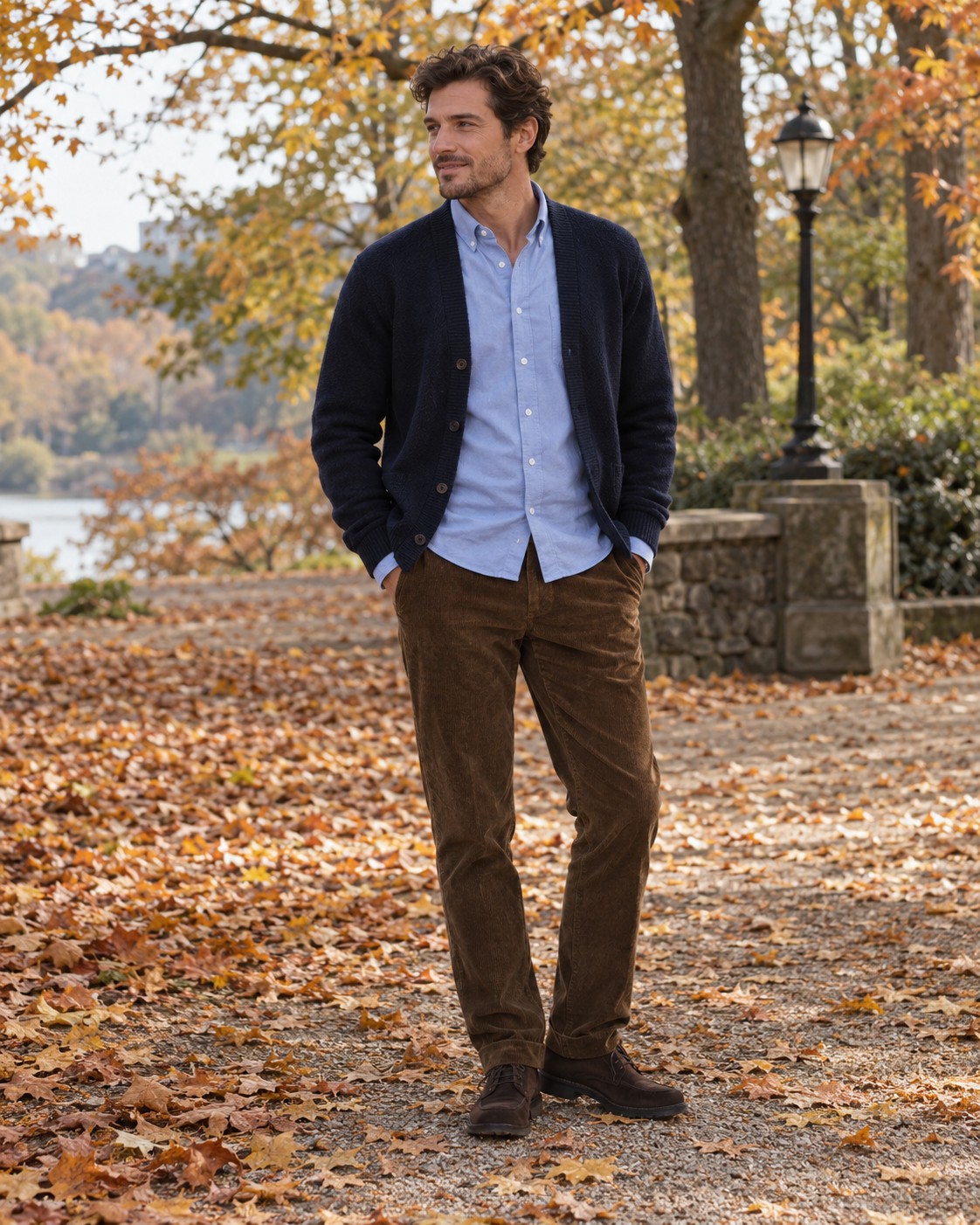
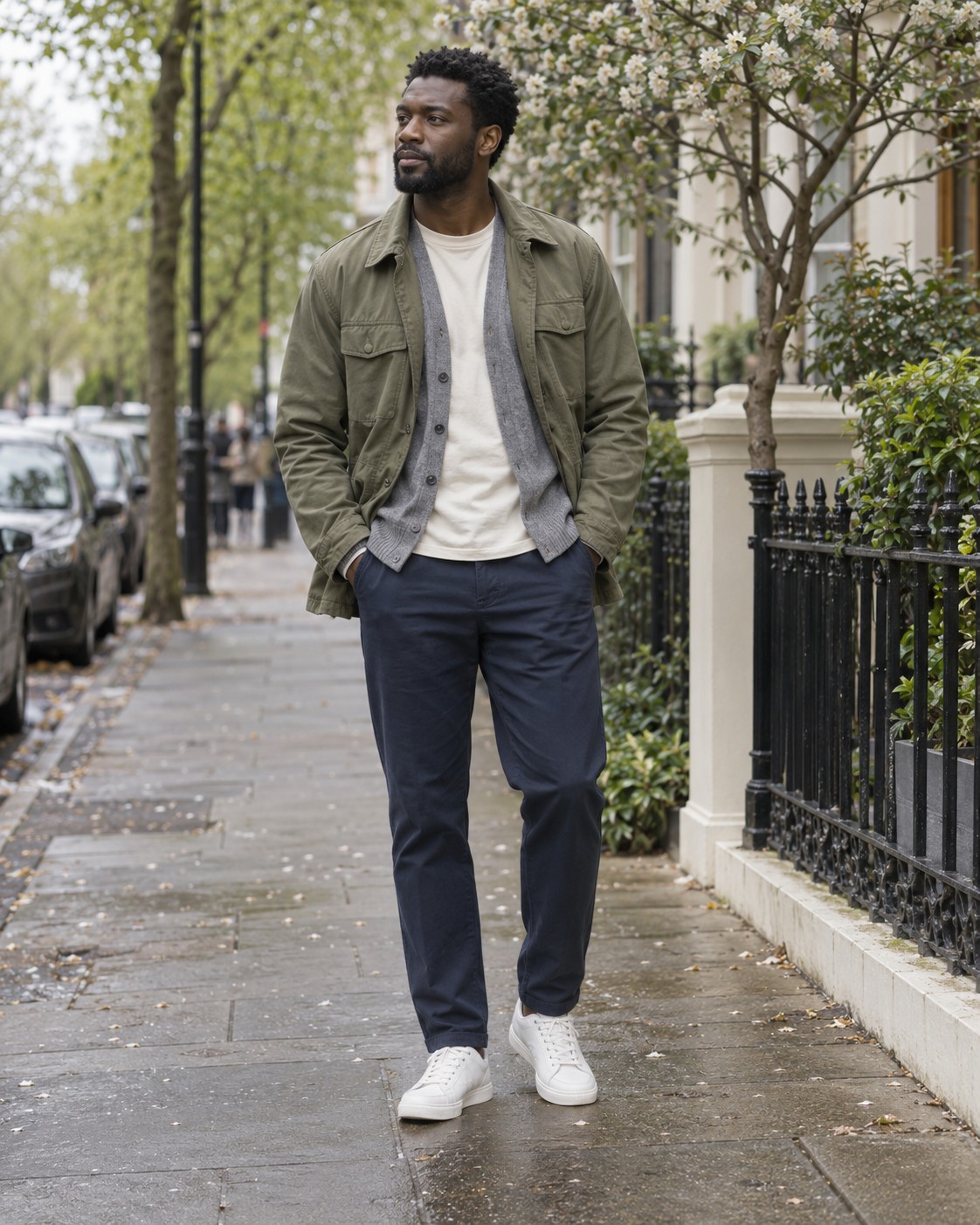
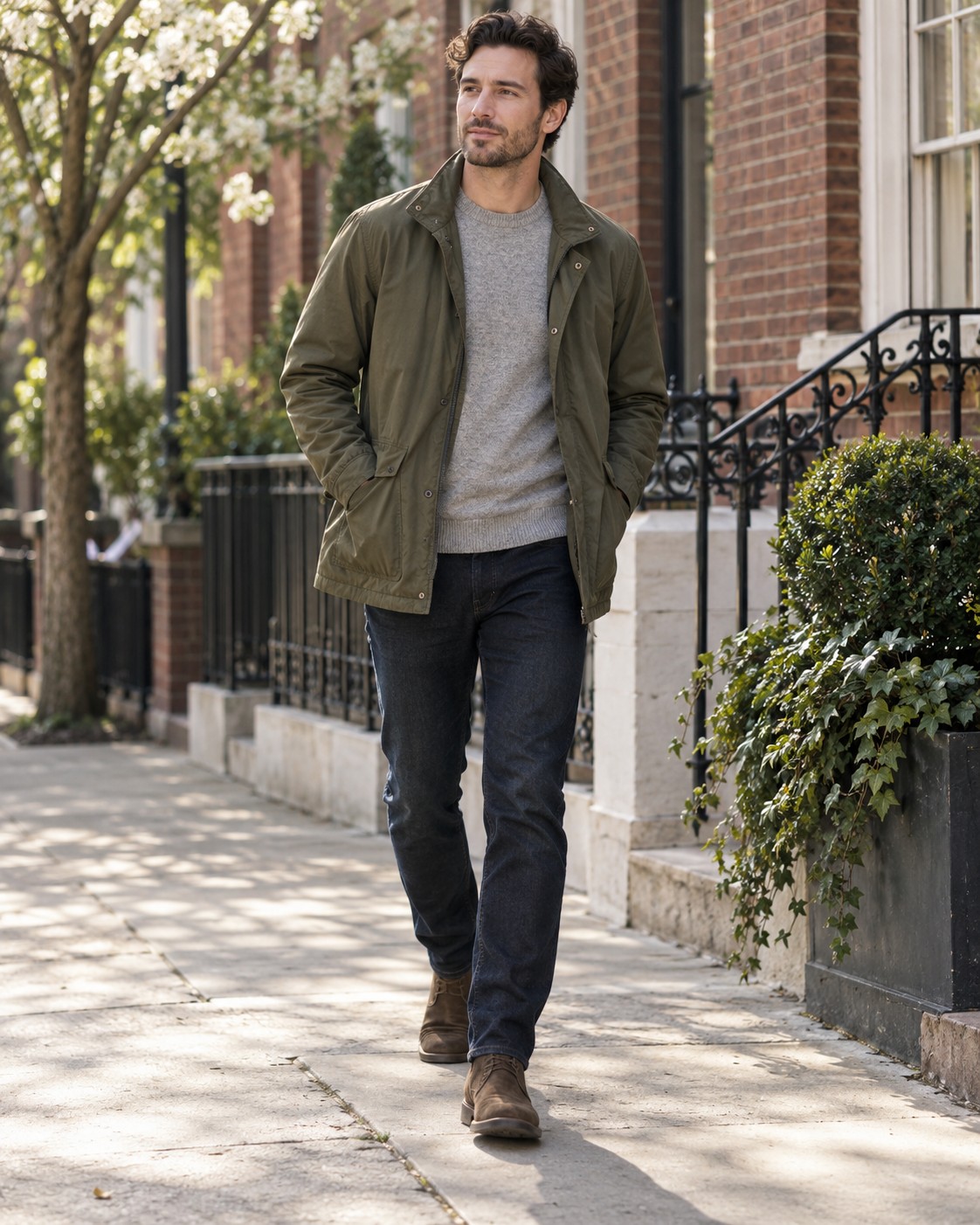
For a first versatile colour, look at your trousers. An olive jacket contrasts with both navy chinos and dark denim. Navy outerwear can work with grey, stone or brown trousers. If most of your trousers are already navy, decide whether you like a tonal outfit or would rather introduce a clearer difference.
Read the details as part of the outfit
A ribbed bomber hem produces a different line from a straight field-jacket hem. Large flap pockets make a jacket more visibly casual. A smooth fabric and concealed fastening can feel quieter. These details often influence how easily the jacket works with your wardrobe more than a broad label such as smart casual.
Consider the things you carry. If you use the pockets for keys, phone and wallet, try that load before judging the shape. A beautifully flat jacket can sag when every pocket is full. A bag may be a better answer than choosing a heavier jacket purely for storage.
Also ask what happens when you take it off. A compact garment suits changeable days when it spends time in a tote; a structured jacket may need to be carried carefully. Neither is universally better, but the difference matters in daily use.
Before buying, make three actual outfits with clothes you own. If the jacket requires new trousers, shoes and a shirt to make sense, it may not be filling the gap you identified. Keep the brief specific and let the jacket earn its place through the days it will cover.