Checking the fit of a T-shirt
A useful fit check separates the intended silhouette from fabric that simply pulls or gets in the way.
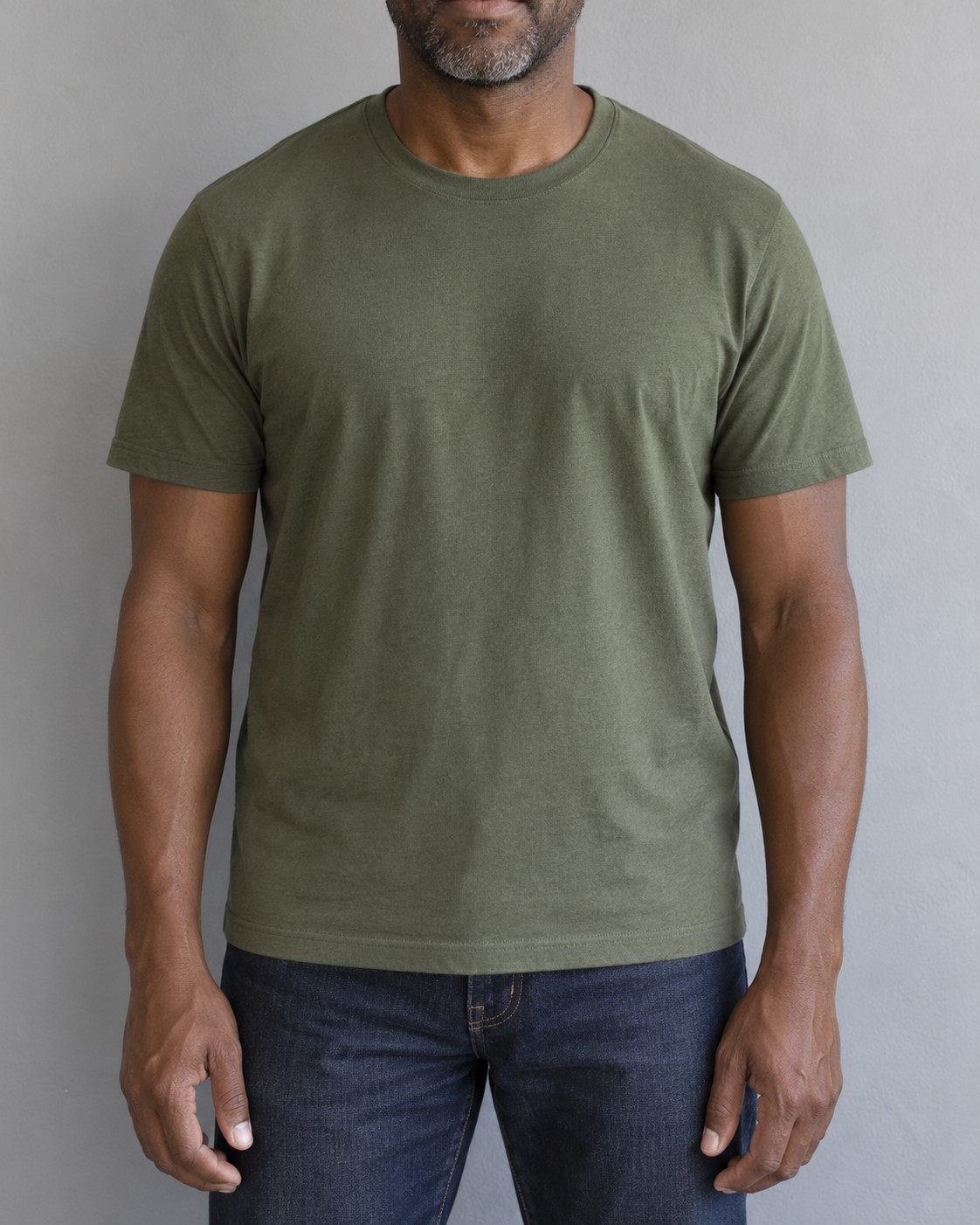
A T-shirt does not have to follow one universal outline. Close, straight and deliberately roomy versions can all work. The first step is to recognise what the design is trying to do, then check whether it allows the movement and proportions you want. A dropped shoulder on an oversized tee is not the same thing as a standard tee bought accidentally too large.
Start at the neck and shoulders
The neckline should sit comfortably without pressing or requiring constant adjustment. Check it after pulling the shirt on, not only while it is neatly arranged. If the neck twists or the shoulder seams pull towards the back, see whether the garment is hanging naturally.
On a conventional set-in sleeve, the seam often sits near the shoulder edge. On a dropped-shoulder design, it sits lower by intention. Judge that in the context of the whole shirt rather than applying the same seam position to every style.
Move before deciding on the torso
Reach forward and lift your arms, then let them rest. Some movement in the hem is normal. Persistent riding up, strain across the chest or tightness under the arms suggests that the cut is not giving you enough room. Stretch jersey can still be too tight.
For a straighter fit, look at how the shirt falls over the waistband. It does not need to trace every contour, but it should not catch in an awkward ledge unless that is the effect you want. Try it with the trousers you plan to wear, because waist height and pocket contents change the result.
Sleeve length and opening are separate decisions. A short sleeve can be roomy, and a longer one can be close. Bend the elbow and check that a ribbed or narrow opening does not dig into the arm.
Assess the length from the side
A front-only mirror view can hide a long back hem or an uneven hang. Check whether the tee covers the waistband during normal movement and whether you like how much of the trouser it conceals. There is no compulsory measurement for everyone.
If the length is right but the upper body is wrong, try another cut rather than immediately sizing up or down. A different pattern may solve the problem without creating a new one.
Read the care label and any shrinkage guidance before choosing a very close fit. Do not buy a shirt that only works if it never changes at all, or deliberately buy the wrong size hoping a hot wash will tailor it. A comfortable starting fit is the most reliable basis for everyday wear.