Choosing a raincoat around your normal clothes
Weather protection and everyday fit need to work together; a good-looking shell is not enough on its own.
A raincoat should cover the clothes you actually wear on wet days. That sounds obvious, but it is easy to try one over a thin shop outfit and discover later that a work jacket, jumper or backpack changes the fit. Start with your usual journey and layers, not with the most dramatic storm photograph in the catalogue.
Describe the journey first
A short walk from a station requires different decisions from an hour outdoors. Think about how long you are exposed, whether you carry an umbrella and where the coat will go when you arrive. If it needs to fit into a bag, packed size matters. If it stays on for most of the day, pocket access and comfort while moving matter more.
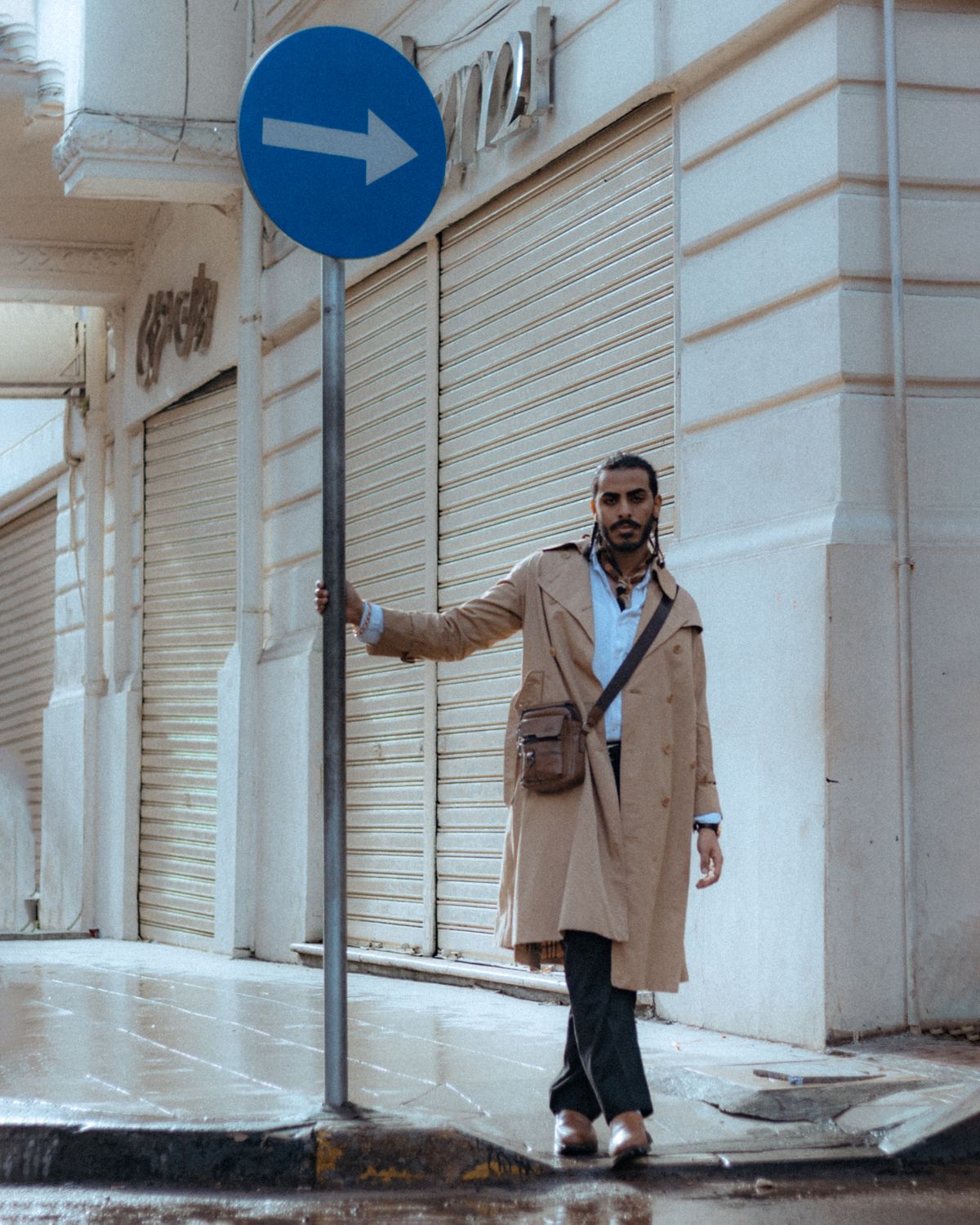
Check the stated weather specification. Water-resistant and waterproof descriptions are not interchangeable, and a smooth surface or technical appearance does not establish either. Read the manufacturer's explanation of the fabric, seams and intended use. Avoid assuming a fashionable trench or field-style coat offers the same protection as a specified rain shell.
Try it as part of a complete outfit
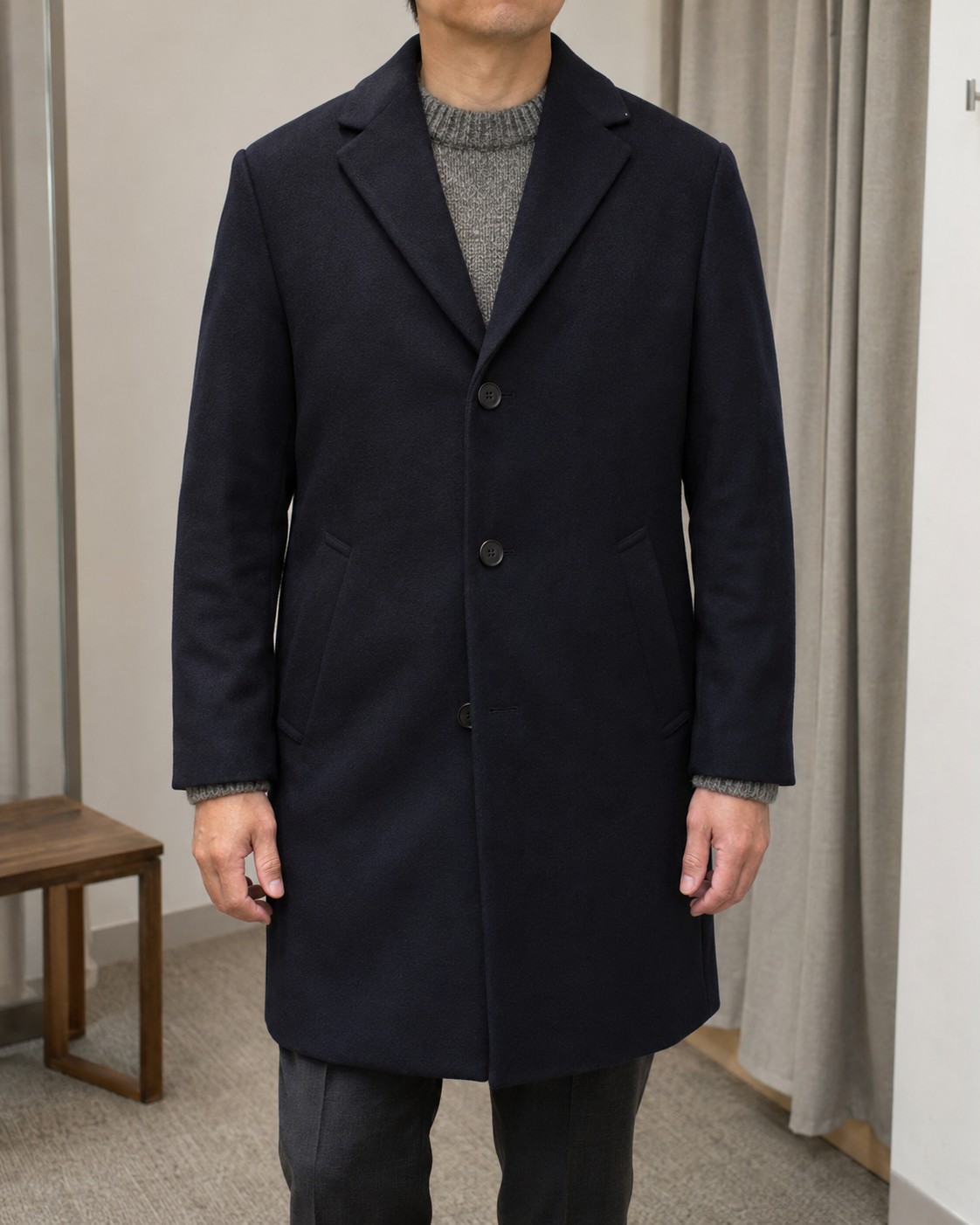
Wear the thickest layer you normally need beneath it. Fasten the coat and reach forward. Check the upper arms, shoulders and hips, then sit down. A larger size may add room, but it also changes sleeve length, hood position and overall length; another cut may be a better answer.
If you wear a blazer, see whether its hem remains covered. A short rain jacket can leave the bottom of a tailored jacket exposed. A longer coat offers more coverage, but consider stairs, cycling and sitting before choosing the length solely for appearance.
Give the hood a real trial
Put the hood up and turn your head. Can you look to the side without the opening blocking your view? Do the adjustments keep it in place without excessive pressure? Try any cap or glasses you normally wear. A hood that photographs neatly when down may be much less convenient in use.
Check pockets while the coat is fastened. Can you reach travel cards or keys without opening the whole front? Are the closures appropriate for what you carry? Do not assume every pocket on a waterproof garment is itself waterproof storage; use the product guidance and protect vulnerable electronics separately.
Compare two plausible designs
Suppose you wear a blazer to work and spend fifteen minutes walking from the station. A longer coat that covers the blazer and has accessible pockets may be more useful than a very short technical shell, even if the shell packs smaller. You would still need to check the longer coat's actual rain specification rather than assuming coverage alone means protection.
For a day of errands with a backpack and no tailored layer, a shorter shell might be easier to carry and move in. Try the backpack straps over it and see whether they interfere with the hood or pockets. These examples are different priorities, not a ranking of fashion coats against outdoor clothing.
Ask how the garment should be dried and maintained after repeated wet use. If the required care is inconvenient for your home or schedule, account for that before buying. Weather protection is part of a garment's ongoing use, not just a feature listed on the day of purchase.
Plan for arriving wet
At work or at home, the coat needs somewhere to dry. Follow its care instructions, including any guidance on cleaning or maintaining the finish. Repeatedly packing it away damp is not a substitute for that routine.
For colour, choose something that works with your existing trousers and shoes rather than trying to match every outfit exactly. Navy, olive, grey and darker neutral shades can each work, but visibility and personal preference may lead you elsewhere. The useful raincoat is one you will take with you when the forecast is uncertain, not one that looks ideal but is too awkward to carry or layer.