Packing a small wardrobe for a week away
Build a week of outfits around the itinerary, laundry access and two compatible colour families.
Packing a small wardrobe for a week away starts with the itinerary, not a universal list of essentials. A city break with one dinner reservation needs different clothes from a coastal trip with long walks. Write down the activities that genuinely require distinct clothing, then separate them from the ordinary days that can share pieces.
Choose the shoes early
Footwear takes up space and determines which trousers work. Start with a comfortable pair for the longest expected walking day. Add another only if it solves a real difference in activity, weather or dress code. A third pair carried for an imaginary invitation often contributes less than a spare clean top.
Wear each planned trouser with the chosen shoes before packing. Check hems and comfort while seated. This avoids arriving with a pair that only works with footwear left at home. If the trip includes a formal occasion, account for that outfit explicitly instead of expecting casual holiday clothes to stretch indefinitely.
Build combinations, not isolated favourites
Lay out two or three bottoms and choose tops that work with more than one. Navy and stone trousers, for example, can share a white tee, blue shirt and muted green polo. The colours do not have to be neutral, but some overlap makes the wardrobe easier to rearrange when a garment needs washing.
Bring enough underwear and socks for your actual laundry plan. Access to a washing machine changes the calculation; the vague possibility of rinsing something in a sink is not the same as having time and space for it to dry. Check whether the fabrics you pack suit that method before relying on it.
An outer layer should match the forecast and the destination's likely conditions. If you expect rain, a decorative light jacket is not an equivalent substitute. If evenings are merely cooler, a fine knit may be enough. Do not add a heavy coat simply because it works with one outfit photograph.
Test the bag before the night before
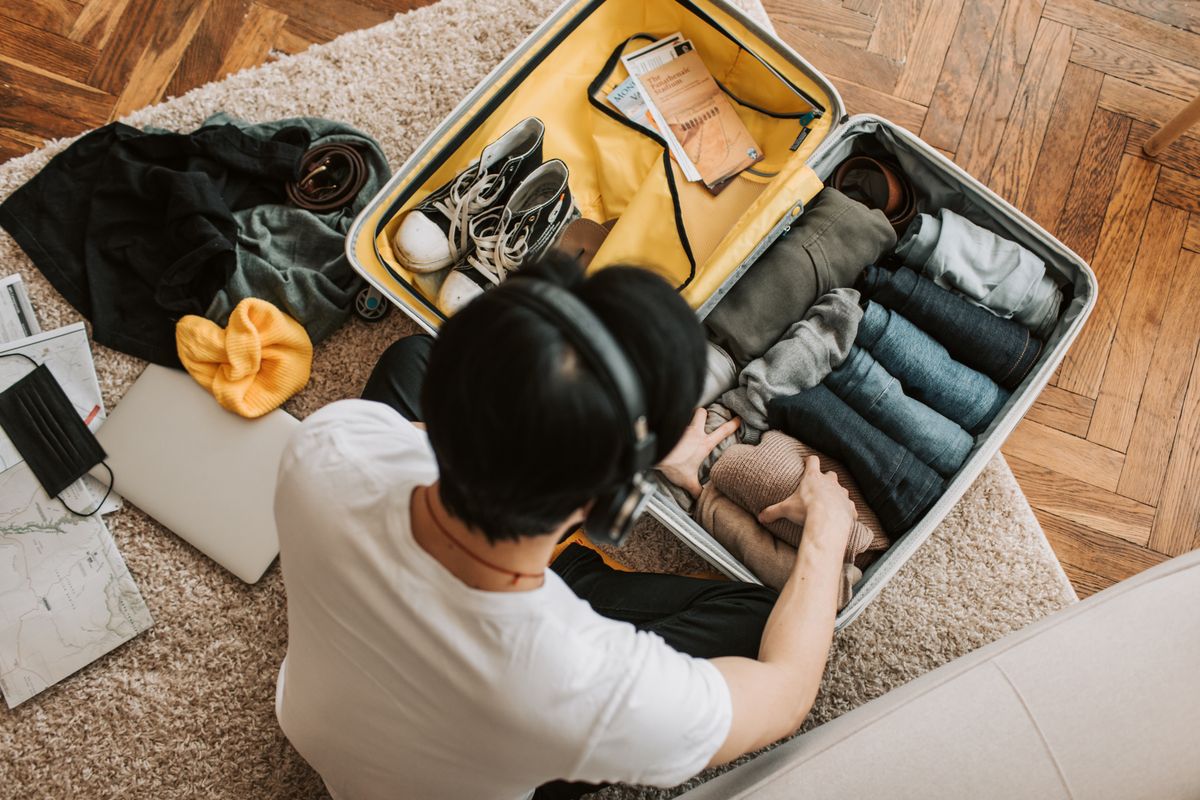
Place shoes in protective bags and keep soles away from clean clothing. Fold structured pieces carefully and use soft items to prevent sharp pressure points where helpful. Packing cubes can organise a bag, but they do not create extra allowance or prevent every crease.
Check the transport provider's current baggage rules directly. Measure the loaded bag if necessary, including external pockets and handles. Do not base the final decision on what a similar bag was allowed on a previous journey.
Keep one complete outfit accessible if your route includes separate or checked luggage. Carry documents and essentials according to the rules for your journey. The clothing plan should support the trip, not compete with the things you cannot easily replace.
A week with one dressier evening
Imagine a trip with museum visits, ordinary cafés, one dinner reservation and a day on the coast. The walking shoes must handle most days. A pair of loafers earns a place only if it genuinely helps with the dinner and is comfortable enough for the journey to it. The coastal day may need swimwear, but it does not require every other outfit to become beach clothing.
Choose a trouser for walking and another suitable for dinner, then test both with the same light jacket. A blue shirt could work with either, while a tee and polo provide different daytime options. Keep the dinner shirt clean until its planned use rather than wearing every favourite during the first two days. If laundry is available halfway through, schedule it before you run out of clean essentials, allowing for actual drying time.
Now change the example: the dinner is cancelled and the forecast turns wet. Can the clothes still cover the week? This is a useful resilience check, not an invitation to pack for every imaginable event. One appropriate rain layer and a compatible spare top may cover the likely changes. An additional formal jacket, several backup shoes and a second large bag usually indicate that the itinerary needs clarifying rather than that the wardrobe is incomplete.
Make a final cut by asking when
For every questionable item, name the day or situation in which you expect to wear it. If another packed piece already covers that situation, remove the duplicate unless there is a specific reason to keep it. Conversely, do not chase a tiny bag at the expense of hygiene, appropriate weather protection or a required dress code.
A small holiday wardrobe succeeds when the clothes can be repeated and combined without effort. Photograph the combinations if that helps you remember them, then stop adding just-in-case garments. Leave a little space so repacking at the end of the trip is not harder than getting dressed during it.