Packing outfits for a work conference
Plan across travel, sessions and evening events before deciding how many clothes to take.
A conference packing list should begin with the programme, not the suitcase. Sessions, presentations, networking meals and an evening reception may have different expectations. Add the travel days and local weather, and you have the real set of clothing problems to solve.
Separate requirements from possibilities
Read the event information for explicit dress codes and ask if an important function is unclear. If you are speaking, hosting or representing an organisation, check whether your role changes the expected level of dress. Do not pack a formal outfit merely because a reception exists, or leave one behind because most sessions seem casual.
Make a simple day-by-day list. Note the main outfit, any required change and the outer layer. A breakfast meeting followed by sessions may use one combination; a formal dinner may require another. This reveals where garments can repeat and where they genuinely cannot.
Build around compatible separates
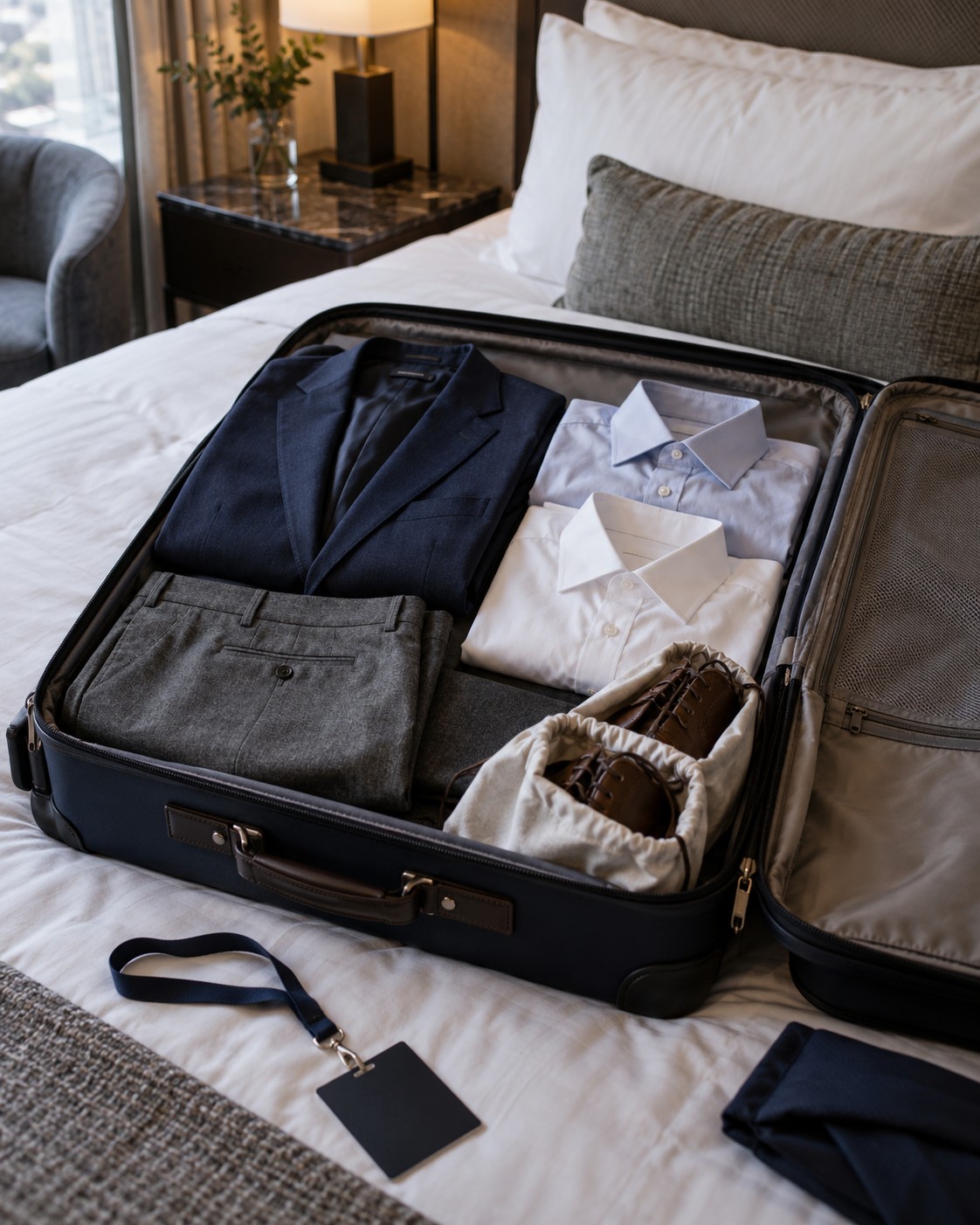
For a business-casual event, two compatible trousers, several appropriate tops and a jacket or knit may cover multiple days. The exact quantity depends on length, laundry access and your needs. Navy and grey trousers with light shirts can provide options without requiring every piece to be identical. A coloured knit can add variation if it works with both pairs.
If a suit is required, pack it as a complete outfit with the shirt, shoes, socks and any tie it needs. Do not discover on the evening of the event that the belt or footwear only works with your casual clothes. Try the whole combination before leaving, especially if the suit has not been worn recently.
Plan for long hours on your feet
Conference days often involve more walking and standing than an ordinary office day. Use shoes you know you can wear for that duration. If a particular evening requires different footwear, carry it intentionally rather than compromising the entire day. Avoid breaking in a new pair at the event.
A light removable layer can help with changing room temperatures. Check that the outfit remains appropriate when it comes off. A tee that works only while hidden beneath a blazer may not be a good conference base layer if you expect warm rooms or outdoor breaks.
Pack by complete combinations
Lay everything out with its partners before folding. This catches duplicates that add no new option and missing pieces that make an outfit unusable. Put small accessories together where you can find them. Keep enough accessible clothing for a reasonable contingency if your main luggage is delayed, especially when you have an immediate obligation after arrival.
Use packing methods suitable for the garments and allow time to hang or care for them on arrival. Check whether the accommodation provides an iron or steamer before assuming it does, and follow care labels. A fabric's marketing description is not a promise that it will emerge perfectly from a tightly packed bag.
Give each spare a specific purpose
A spare shirt addresses spills or an unexpectedly warm day. A second suitable shoe can help if the first becomes wet. An extra jacket may add little if both do exactly the same job. Before packing a contingency, name the problem it solves and decide whether another item already covers that problem. This keeps useful preparation from becoming an entire duplicate suitcase.
For a three-day event, you might repeat one pair of trousers on non-consecutive days and use a different shirt or knit, provided the garments remain clean and suitable. If the programme includes a gala dinner, treat that outfit separately instead of forcing it into the daytime rotation. The number of days alone cannot determine the number of garments.
Check the bag you will carry between sessions too. It should hold the essentials and a removed layer without damaging the outfit or becoming awkward in a crowded room. Try its strap over the jacket at home. If you will wear a lanyard or microphone while presenting, allow a little time on site to arrange it without pulling at the collar or fastening.
Keep one flexible option for an unplanned meal or change of weather, but resist packing a separate outfit for every imagined event. The aim is a set of clothes that can respond to the programme without taking over your luggage. After the trip, note what you actually wore and what stayed untouched; that evidence makes the next conference easier to pack for.